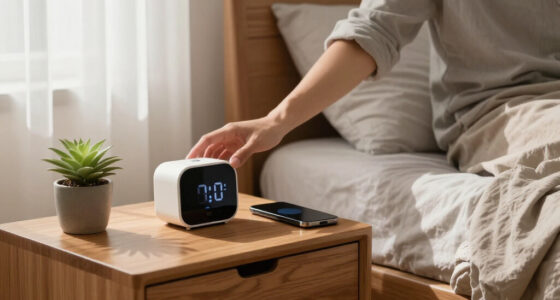
TL;DR

Get wellness gear delivered free with Prime
- Fast, free delivery on millions of items
- Prime Video, Amazon Music and more included
- Member-only deals all year
Alarm clocks that require chasing, catching, or solving puzzles are proven to wake heavy sleepers more reliably. They add physical and mental engagement, making mornings less of a struggle and more of an active start.
Ever wake up, hit snooze, and drift back into sleep? You’re not alone. Traditional alarms often fail for heavy sleepers or early risers craving a little extra push. That’s where these inventive alarm clocks come in. They turn waking into a game, a chase, or a brain teaser—something your brain and body can’t ignore.
In this guide, you’ll discover three popular types: rolling alarms that run away, flying alarms that buzz around your room, and puzzle alarms that demand mental effort. You’ll see how they work, what makes them effective, and how to choose the right one for your mornings. Ready to make waking up less of a chore?
Physical activity, like chasing a rolling alarm, boosts alertness and helps heavy sleepers wake up.
Flying alarms turn waking into an interactive game, making mornings more engaging and less stressful.
Puzzle alarms demand mental effort, ensuring you’re truly awake before turning off the alarm.
Choose your wake-up challenge based on your sleep habits and personal preferences for best results.
Safety is essential—use these alarms in clear, obstacle-free spaces and follow manufacturer instructions.
Alarm Clocks That Make You Get Out of Bed
Rolling, flying, and puzzle alarms turn the morning alarm into a chase, a catch, or a brain teaser. By demanding physical or mental engagement, they make snoozing harder and give heavy sleepers a more active start.
Three ways to defeat the snooze reflex
Each design interrupts sleep inertia differently. Match the mechanism to the kind of stimulation that gets you alert without creating unnecessary morning friction.
Rolling alarms
The clock rolls away after ringing, forcing you to leave the bed, locate it, and physically stop it.
- Activates muscles and circulation
- Creates urgency through movement
- Strong fit for heavy sleepers
- Needs a clear, non-slip route
Flying alarms
A small flying component launches or moves around the room, requiring you to catch or retrieve it before silence returns.
- Stimulates coordination and alertness
- Adds novelty and game-like energy
- May use sensors or soft landings
- Needs open space and maintenance
Puzzle alarms
Math, pattern, riddle, or task-based controls require deliberate thought before the alarm can be dismissed.
- Engages attention and working memory
- Difficulty is often adjustable
- Works well in compact rooms
- Overly hard settings can frustrate
From alarm signal to active morning
The mechanism matters because it inserts meaningful action between hearing the alarm and reaching the off switch.
Which alarm fits your sleep style?
There is no universal winner. The best choice balances wake-up force, room constraints, tolerance for noise, and the kind of effort you can repeat every day.
| Decision factor | Rolling | Flying | Puzzle |
|---|---|---|---|
| Gets you out of bed | ✓ Strong | ✓ Strong | ~ Varies |
| Mental engagement | ~ Low | ~ Medium | ✓ High |
| Small-room friendly | ~ Depends | ✗ Limited | ✓ Yes |
| Low maintenance | ✓ Usually | ✗ More parts | ✓ Usually |
| Novelty and fun | ✓ High | ✓ Very high | ~ Task-based |
| Mobility-friendly | ✗ Often not | ✗ Often not | ✓ Best fit |
How each format applies wake-up pressure
Relative scores below illustrate the balance of physical movement, cognitive effort, novelty, and setup simplicity—not controlled clinical measurements.
Engagement intensity
Some users report up to a 70% improvement over traditional alarms. Individual outcomes vary with sleep habits, setup, and challenge difficulty.
Basic puzzle devices tend to occupy the lower end. Advanced rolling or flying systems may cost more because of motors, sensors, batteries, and app connectivity.
Basic puzzle Mid-range
Rolling $200+
Advanced
Pick a challenge you can sustain
Start with your actual sleep behavior, then account for space, mobility, other people, pets, and how much complexity you want in the first minutes of your day.
Start easier. Increase only when needed.
A challenge that is too simple invites snoozing; one that is too difficult creates frustration. Test for several mornings, note whether you stay awake, and adjust one variable at a time.
Keep the wake-up challenge controlled
These alarms work by creating friction. The goal is useful friction—not a collision, fall, damaged object, or distressed household.
Remove obstacles
Keep rolling paths free of cords and clutter. Give flying components open space away from fragile items, fans, pets, and faces.
Check noise levels
Set volume and vibration thoughtfully, especially in shared homes. Flying mechanisms can add mechanical noise beyond the alarm tone.
Inspect and test
Check batteries, moving parts, sensors, and soft-landing features. Follow the manufacturer’s setup and operating instructions.
Why Rolling Alarm Clocks Make You Chase Sleep Away
Rolling alarm clocks are designed to physically move away from you after ringing, transforming the act of waking into a dynamic, physical challenge. When the alarm sounds, the device starts rolling across the floor or desk, compelling you to get up and chase it down to turn it off. This process not only interrupts your sleep inertia but also introduces a sense of urgency. The physical act of chasing the device activates your muscles and stimulates circulation, which can help shift your brain from a sleep state to alertness more effectively than passive alarms. The tradeoff? It requires a bit of space and effort, which might be inconvenient in smaller rooms or for those with mobility issues. However, for many, this tradeoff is worth the enhanced wakefulness. The underlying principle is that physical movement, especially early in the morning, signals your body that it’s time to be awake, making rolling alarms a powerful tool for heavy sleepers who need more than just sound to wake up.
As an affiliate, we earn on qualifying purchases.
Flying Alarm Clocks: How Drones and Flying Objects Rouse You
Flying alarm clocks leverage advanced technology to create an engaging, active wake-up experience that demands physical interaction. These devices often use small drones or flying objects equipped with obstacle sensors, so they can hover, swoop, or buzz around your room when activated. The key implication is that waking up becomes an interactive game rather than a passive experience. By requiring you to reach out, catch, or deactivate these flying objects, they stimulate your motor skills and alertness simultaneously. This active engagement helps break through deep sleep cycles, especially for those who wake up feeling sluggish or unmotivated. However, the technology involves considerations like battery life, noise levels, and safety—since drones require careful handling to prevent accidents or damage. The tradeoff is that while they make waking fun and physically stimulating, they may also introduce complexity or cost. Overall, these alarms harness the power of novelty and movement to ensure you’re truly awake and ready to start your day.
flying alarm clock with moving parts
As an affiliate, we earn on qualifying purchases.
As an affiliate, we earn on qualifying purchases.
Puzzle Alarms: Wake Your Brain and Body Simultaneously
Puzzle alarms combine cognitive and physical stimuli to maximize wakefulness. These alarms require you to solve problems—such as math puzzles, pattern recognition, or riddles—before they turn off. The critical insight here is that mental effort activates your prefrontal cortex, increasing blood flow and alertness, while the physical act of interacting with the alarm (like pressing buttons or moving pieces) engages your motor systems. This dual approach ensures that both mind and body are stimulated, making it much harder to fall back asleep. The difficulty levels can be adjusted to match your sleep habits; simpler puzzles may suffice for light sleepers, while complex riddles can jolt even the heaviest sleepers awake. The tradeoff? More challenging puzzles might become frustrating if set too high, potentially leading to morning annoyance. But when calibrated correctly, puzzle alarms create a comprehensive wake-up process that promotes full consciousness, reducing the likelihood of hitting snooze repeatedly.
chase alarm clock for heavy sleepers
As an affiliate, we earn on qualifying purchases.
As an affiliate, we earn on qualifying purchases.
How To Pick the Perfect Wake-Up Challenge for You
- Assess your sleep habits—are you a heavy sleeper or a light sleeper? If you tend to oversleep, opt for alarms with more active challenges that require movement or mental effort to ensure you wake up fully. Understanding your sleep pattern helps tailor the challenge to your needs.
- Decide if you want physical activity, mental puzzles, or a mix. Consider your personal preferences—do you find physical movement more motivating, or do mental challenges better engage your mind? The right choice depends on what truly energizes you in the morning.
- Consider your safety and space. Flying alarms, especially drones, need room to operate safely without risking damage or injury. Rolling alarms should be placed on sturdy surfaces to prevent slips or falls, especially if you’re groggy and less coordinated. Ensuring your environment is suitable minimizes risks and maximizes effectiveness.
- Set difficulty levels thoughtfully. Many alarms allow customization—start with easier challenges to build confidence, then increase difficulty once you’re accustomed to the routine. This gradual progression helps prevent frustration and keeps the challenge motivating.
- Test and tweak your setup. It might take a few mornings to find the perfect balance between challenge and wakefulness. Pay attention to how you feel and adjust the difficulty or type of alarm accordingly for optimal results.
For example, a student who struggles to wake up might find a drone flying around their room to be a game-changer, forcing them to move actively. Conversely, a busy parent might prefer a puzzle that stimulates their mind without requiring physical exertion, fitting into a hectic morning routine.
As an affiliate, we earn on qualifying purchases.
Safety Tips and Common Pitfalls to Watch For
While these alarm clocks are innovative and potentially very effective, understanding safety considerations is crucial. Flying alarms, like drones, should be used in open, obstacle-free spaces to prevent crashes or damage to household items. Ensure they have obstacle sensors and soft landings to minimize risks. For rolling alarms, placing them on sturdy, non-slip surfaces reduces the chance of slips or falls, especially when you’re still groggy. The safety implications extend to noise levels—loud alarms might startle pets or disturb others, while some flying alarms can be noisy or vibrate intensely. Adjust volume or vibration settings if available. Additionally, mechanical parts or batteries require occasional maintenance—regularly check for wear and replace batteries as needed to prevent malfunctions. When setting up these devices, always read and follow manufacturer instructions carefully. Clearing the room of fragile or valuable objects before activating flying alarms minimizes potential accidents. The key implication is that safety and fun go hand in hand; neglecting safety can turn a helpful device into a hazard. Testing alarms in controlled environments first can prevent mishaps and ensure a safe, effective wake-up experience.
“Safety and fun go hand in hand. Always test new alarms in a safe space before relying on them to wake you up.”
Frequently Asked Questions
Are these alarm clocks suitable for heavy sleepers?
Yes, many heavy sleepers find that physical challenges like chasing or catching a drone or rolling alarm help wake them more reliably. The active element adds an extra push that static alarms often lack.Are flying alarms safe for indoor use?
Most flying alarms are designed with obstacle sensors and soft landings, making them safe for indoor environments. Still, it’s wise to clear fragile items and follow the manufacturer’s safety instructions.How hard are puzzle alarms?
Puzzle alarms range from simple math problems to complex riddles. Many allow you to set the difficulty level, so you can start easy and ramp up as you get used to the challenge.Can I control these alarms with my phone?
Many models offer app connectivity for customization, scheduling, and remote operation. Check if your preferred alarm has this feature before making your choice.Do these alarms cost more than regular ones?
Generally, yes. The added mechanical and electronic complexity makes them pricier—expect to pay from around $30 for basic puzzles up to $200 or more for advanced drone or rolling alarms.Conclusion
Waking up doesn’t have to be a battle every morning. With a little creativity and the right challenge, you can turn your alarm into an active, fun part of your routine. Imagine starting the day energized, not groggy—just by making the effort to chase, catch, or solve.
So, why settle for snooze buttons that let you drift back into sleep? Try a challenge that makes you get moving—your mornings will thank you for it.
Halloween Picks
halloween
As an affiliate, we earn on qualifying purchases.