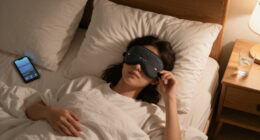
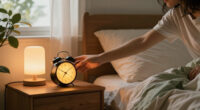
Sunrise alarm clocks for seniors can make waking easier by brightening the room gradually before an alarm sounds, but usability varies widely. My best overall pick is the Philips SmartSleep Wake-Up Light with Sunrise and Sunset Simulation, FM Radio, and Reading Lamp, which pairs a familiar bedside-light function with gradual wake-up features. The REACHER Wood Grain Sunrise Alarm Clock stands out for shoppers who want a nightlight and sound options, while the Emerson Sunrise SmartSet adds dual alarms and Bluetooth. The main tradeoffs are simple, readable controls versus a longer feature list, plus the choice between a stronger light-focused design and a more affordable multifunction clock. Read on for the full breakdown of all 15 options and guidance on matching a clock to the user’s vision, hearing, and routine.

Get wellness gear delivered free with Prime
- Fast, free delivery on millions of items
- Prime Video, Amazon Music and more included
- Member-only deals all year
Key Takeaways
- Philips SmartSleep with FM radio and reading lamp is my overall choice for a familiar bedside setup; shoppers who want a more feature-rich Philips light can compare it with the HF3650/60.
- REACHER’s wood-grain model stands apart for buyers who want a nightlight and sound machine in one bedside device, rather than a clock centered mainly on wake-up lighting.
- Emerson SmartSet and the dual-alarm models better suit households with different schedules, but extra settings may be less appealing to someone seeking the simplest controls.
- Many picks combine sunrise lighting with white noise, nature sounds, or Bluetooth; those additions can be useful, but they do not replace checking display readability and button clarity.
- The list spans light-focused Philips models, compact multifunction clocks, and sound-rich options, so the best choice depends more on bedside habits and sensory needs than on the number of features.
| Vivilumens Sunrise Alarm Clock and Sound Machine |  | Best for a Simple, Sound-Focused Routine | Display: Digital | Alarms: Dual alarms | Sunrise simulation: Gradually brightens 10 minutes before the alarm | VIEW LATEST PRICE | See Our Full Breakdown |
| Philips SmartSleep Wake-Up Light with Sunrise and Sunset Simulation, FM Radio, and Reading Lamp |  | Best for a Bedside Reading and Wind-Down Routine | Model: HF3520/60 | Display: Digital with automatic dimming | Light simulation: Sunrise and sunset | VIEW LATEST PRICE | See Our Full Breakdown |
| Sunrise Alarm Clock with White Noise Machine and Bluetooth Speaker, Khaki |  | Best for Adjustable Light and Phone Audio | Display: Digital | Sunrise simulation: 10–60 minutes before alarm | Wake-up sounds: 10 | VIEW LATEST PRICE | See Our Full Breakdown |
| JALL Sunrise Alarm Clock with White Noise, Nature Sounds, FM Radio and Bluetooth Speaker |  | Best for Flexible Schedules and Multiple Audio Sources | Display: LED | Sunrise simulation: Adjustable from 10 to 60 minutes | Alarms: Dual; everyday, weekday, or weekend routines | VIEW LATEST PRICE | See Our Full Breakdown |
| Odokee Sunrise Alarm Clock and White Noise Machine |  | Best for App-Free Physical Controls | Sunrise simulation: 5–60 minutes | Wake-up modes: 3 | Alarm sounds: 7 | VIEW LATEST PRICE | See Our Full Breakdown |
| REACHER Wood Grain Sunrise Alarm Clock with Sound Machine and Nightlight |  | Best for a Bedroom-Friendly Design | Model: R7W | Material and color: Wood; wood grain | Power: Corded electric | VIEW LATEST PRICE | See Our Full Breakdown |
| Emerson Sunrise SmartSet Dual Alarm Clock with Nature Sounds, White Noise, and Bluetooth |  | Best for Couples with Different Wake Times | Model: CKSS7801WM | Display: Digital LED dot matrix; 8 colors; 4 dimmer levels | Sunrise light: 5 dimmer levels | VIEW LATEST PRICE | See Our Full Breakdown |
| ARUQO Sunrise Alarm Clock and Sound Machine with Night Light | 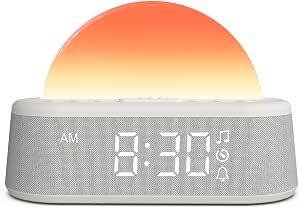 | Best for Fine-Tuned Light and Volume Controls | Model: ZH199 | Sunrise simulation: Gradual red-to-warm-white light over 10–60 minutes | Sound options: 30 soothing sounds; 7 alarm sounds | VIEW LATEST PRICE | See Our Full Breakdown |
| HOUSBAY Sunrise Alarm Clock with White Noise Sound Machine |  | Best for Simple, Phone-Free Operation | Functions: Sunrise alarm clock, sound machine, and nightlight | Alarm sounds: 5 nature-inspired sounds | Sleep sounds: 20, including white noise and nature sounds | VIEW LATEST PRICE | See Our Full Breakdown |
| Rotating Windmill Sunrise Alarm Clock with White Noise and Night Light |  | Best for a Decorative Moving Light | Display: Digital | Power: Corded electric | Alarm: One alarm; 10-minute snooze, up to 3 snoozes per day | VIEW LATEST PRICE | See Our Full Breakdown |
| Philips SmartSleep Wake-Up Light with Sunrise and Sunset Simulation (HF3650/60) |  | Best for a Personalized Bedside Routine | Brand: Philips | Model: HF3650/60 | Light features: Simulated sunrise and sunset | VIEW LATEST PRICE | See Our Full Breakdown |
| Sunrise Alarm Clock and Sound Machine with Dual Alarms |  | Best for Shared Wake-Up Schedules | Display type: Digital | Alarms: Two | Sunrise simulation: Adjustable from 0 to 60 minutes | VIEW LATEST PRICE | See Our Full Breakdown |
| Magicteam Sunrise Alarm Clock Wake Up Clock Natural Sunset Simulation 21 Soothing Sounds Dual Alarm 6 Times Snooze 28 Ringtones Dimmable 12 Colors Night Light 10 Timer Options Adjustable Volume |  | Best for Flexible Snoozing and Night Lighting | Alarm schedules: Dual alarms with weekday, Monday–Saturday, everyday, and weekend modes | Sunrise simulation: Light brightens 10 minutes before the alarm | Snooze: Up to 6 snoozes, with 9 minutes per interval | VIEW LATEST PRICE | See Our Full Breakdown |
| Vicsoon Sunrise Alarm Clock with Wake-Up Light |  | Best Compact, Simple Setup | Brand and model: Vicsoon A300 | Display: LED | Sunrise simulation: 30 minutes | VIEW LATEST PRICE | See Our Full Breakdown |
| APUZOM Sunrise Alarm Clock with Wake-Up Light and Sound Machine |  | Best for Dim-Display Control | Brand and model: APUZOM ZH181 | Display: Digital, dimmable from 0% to 100% | Alarms: Dual alarms with weekday, weekend, or everyday schedules | VIEW LATEST PRICE | See Our Full Breakdown |
| sunrise alarm clocks for senior | Display | Sunrise simulation |
|---|---|---|
| Vivilumens Sunrise Alarm Clock | Digital | Gradually brightens 10 minutes before the alarm |
| Philips SmartSleep Wake-Up Lig | Digital with automatic dimming | — |
| Sunrise Alarm Clock with White | Digital | 10–60 minutes before alarm |
| JALL Sunrise Alarm Clock with | LED | Adjustable from 10 to 60 minutes |
| Odokee Sunrise Alarm Clock and | — | 5–60 minutes |
| REACHER Wood Grain Sunrise Ala | — | — |
| Emerson Sunrise SmartSet Dual | Digital LED dot matrix; 8 colors; 4 dimmer levels | — |
| ARUQO Sunrise Alarm Clock and | — | Gradual red-to-warm-white light over 10–60 minutes |
| HOUSBAY Sunrise Alarm Clock wi | — | — |
| Rotating Windmill Sunrise Alar | Digital | — |
| Philips SmartSleep Wake-Up Lig | Auto-dimming | — |
| Sunrise Alarm Clock and Sound | — | Adjustable from 0 to 60 minutes |
| Magicteam Sunrise Alarm Clock | — | Light brightens 10 minutes before the alarm |
| Vicsoon Sunrise Alarm Clock wi | LED | 30 minutes |
| APUZOM Sunrise Alarm Clock wit | Digital, dimmable from 0% to 100% | Gradual brightening 10–60 minutes before the alarm |
More Details on Our Top Picks
Vivilumens Sunrise Alarm Clock and Sound Machine
I’d choose the Vivilumens for a senior who wants a straightforward light-and-sound routine without a crowded list of extras. Its sunrise lasts 10 minutes, so it offers a gentle lead-in to the alarm, though less timing flexibility than the JALL or Odokee, both of which let you adjust the sunrise period. Two alarms can suit partners or changing schedules, while 12 alarm-volume levels give more control over how assertively the clock wakes someone.
The 20 soothing sounds and 30-, 60-, or 90-minute timers make it useful at bedtime too. Compared with the Philips HF3520/60, it has more listed sound choices and a USB charging port, but lacks that model’s sunset simulation, FM radio, and reading lamp. The tradeoff is a compact feature set that still depends on corded power; the touch controls may also be awkward if cables crowd the bedside area.
Pros:- Dual alarms accommodate two people or different daily schedules.
- Twelve alarm-volume levels allow more control over wake-up loudness.
- Twenty soothing sounds offer bedtime listening choices with three timer lengths.
- Three display-brightness levels and an adjustable night light support a dimmer bedroom setup.
Cons:- Sunrise timing is fixed at 10 minutes rather than adjustable.
- Corded power limits placement and does not provide alarm operation during a power outage.
- Touch controls may be affected by nearby cables.
Best for: Seniors who want dual alarms, bedtime sounds, and adjustable alarm volume in a tabletop clock with a relatively simple feature set.
Not ideal for: People who want to choose a longer or shorter sunrise period, or anyone who needs a battery-powered clock during an outage.
- Display:Digital
- Alarms:Dual alarms
- Sunrise simulation:Gradually brightens 10 minutes before the alarm
- Sound options:20 soothing sounds
- Sound timer:30, 60, or 90 minutes
- Alarm volume:12 levels
- Display brightness:3 levels
- Power:Corded electric
- Dimensions:8.9 × 8.9 inches
Our verdict“Choose the Vivilumens if dual alarms and plentiful sleep sounds matter more than adjustable sunrise timing or radio features.”
Philips SmartSleep Wake-Up Light with Sunrise and Sunset Simulation, FM Radio, and Reading Lamp
The Philips SmartSleep HF3520/60 is the strongest fit here for seniors who use their clock for more than waking up. Its reading lamp has 20 brightness settings, giving more fine control for bedtime reading than the Vivilumens night light, while sunset simulation adds a wind-down feature the Vivilumens does not list. FM radio and five natural wake-up sounds provide familiar audio choices without relying on Bluetooth.
This is less suited to someone who wants many sound options: the JALL offers 25 sleep sounds, and Vivilumens lists 20 soothing sounds. The Philips instead prioritizes a guided light routine, with an automatically dimming display and tap snooze. Its plastic build and corded power are meaningful limits for buyers seeking a more durable-feeling or outage-independent setup. I’d favor it for a reader who values dedicated lighting controls over a broad sound library.
Pros:- Sunrise and sunset simulations support both waking and bedtime routines.
- Reading lamp offers 20 brightness settings for adjusting bedside light.
- FM radio and five natural wake-up sounds provide multiple audio choices.
- Automatically dimming display and tap snooze simplify common bedside adjustments.
Cons:- Five wake-up sounds are fewer than the sound choices listed for Vivilumens or JALL.
- Plastic construction may not suit buyers seeking a more substantial-feeling clock.
- Requires corded electric power.
Best for: Seniors who read in bed and want sunrise and sunset lighting, FM radio, and a dedicated adjustable reading lamp.
Not ideal for: Buyers who want a large library of sleep sounds, dual alarms, or backup alarm operation during a power failure.
- Model:HF3520/60
- Display:Digital with automatic dimming
- Light simulation:Sunrise and sunset
- Wake-up sounds:5 natural sounds
- Brightness settings:20
- Additional features:FM radio, tap snooze, reading lamp
- Power:Corded electric
- Weight:1113 g
- Material:Plastic
Our verdict“Pick the Philips HF3520/60 if an adjustable reading lamp and sunset routine are more useful to you than a larger sound library.”
Sunrise Alarm Clock with White Noise Machine and Bluetooth Speaker, Khaki
For seniors who want to tailor the wake-up light and play audio from a phone, this model offers a broader adjustment range than the Vivilumens: its sunrise can begin 10–60 minutes before the alarm, and brightness has 21 levels from 0 to 20. The Bluetooth 5.3 speaker adds phone-based listening, while 10 wake-up sounds and 30 sleep sounds cover more options than the Philips HF3520/60’s five wake-up sounds.
Its flexibility comes with a few practical compromises. The alarm will not sound during a complete power outage, despite its backup memory retaining settings after an interruption. Also, white noise cannot play while sunrise simulation is active, so it cannot combine those two functions at wake-up. Bluetooth handles audio only, not alarm or lighting controls. I’d rank it for adjustability and phone playback, not for someone who wants the most dependable outage backup or a simple, all-in-one control experience.
Pros:- Sunrise timing adjusts from 10 to 60 minutes before the alarm.
- Thirty sleep sounds and 10 wake-up sounds provide broad audio choice.
- Bluetooth 5.3 supports audio playback from a phone.
- Backup memory retains settings after a power interruption.
Cons:- Alarm does not sound during a complete power outage.
- White noise cannot operate while sunrise simulation is active.
- Bluetooth does not control alarm or lighting settings.
Best for: Seniors comfortable with basic Bluetooth audio who want a customizable sunrise duration, many lighting settings, and varied sleep sounds.
Not ideal for: People who need an alarm to sound during a power outage or want white noise to continue while the sunrise light runs.
- Display:Digital
- Sunrise simulation:10–60 minutes before alarm
- Wake-up sounds:10
- Sleep sounds:30
- Light options:17: 8 solid and 9 RGB
- Brightness:Levels 0–20
- Connectivity:USB-C and Bluetooth 5.3
- Sleep timer:10–480 minutes
- Dimensions:7.08 in W × 6.3 in H
Our verdict“Choose this model if adjustable sunrise timing and phone audio matter more than outage-proof alarms or simultaneous white noise and sunrise.”
JALL Sunrise Alarm Clock with White Noise, Nature Sounds, FM Radio and Bluetooth Speaker
The JALL earns its place for households that need flexible alarm routines as well as a sunrise light. Its dual alarms can be set for everyday, weekday, or weekend schedules, and the sunrise period adjusts from 10 to 60 minutes. That combination is more adaptable than the Vivilumens, which has dual alarms but a fixed 10-minute sunrise. A screen blackout mode also gives light-sensitive sleepers a way to darken the display.
Audio options are another point of difference: JALL combines 25 sleep sounds and white noise with FM radio and Bluetooth audio, while the Philips HF3520/60 adds a reading lamp and sunset simulation instead. The JALL is better for schedule and media variety, but its USB power means it is not a self-sufficient outage alarm. It also requires an AA battery, and the supplied dimension details conflict, making bedside fit harder to judge from the listing.
Pros:- Dual alarms support everyday, weekday, or weekend routines.
- Sunrise duration adjusts from 10 to 60 minutes before the alarm.
- Combines 25 sleep sounds with FM radio and Bluetooth audio.
- Screen blackout mode can reduce nighttime display light.
Cons:- Requires USB power and a separate AA battery.
- Conflicting listed dimensions make bedside space requirements unclear.
- Does not list a reading lamp or sunset simulation like the Philips HF3520/60.
Best for: Seniors or couples who need weekday and weekend alarm schedules, adjustable sunrise timing, and several ways to play audio.
Not ideal for: Buyers seeking a reading lamp, a clearly documented compact footprint, or an alarm that operates through a complete power loss.
- Display:LED
- Sunrise simulation:Adjustable from 10 to 60 minutes
- Alarms:Dual; everyday, weekday, or weekend routines
- Snooze:5–20 minutes
- Sleep sounds:25 natural sounds and white noise
- FM radio:76–108 MHz with auto-scan
- Light modes:17: 8 solid colors and 9 dynamic RGB modes
- Power:USB corded electric; requires 1 AA battery
- Bluetooth speaker:5W
Our verdict“Choose the JALL if adaptable weekly alarms and varied audio matter more than a reading lamp or clearly specified dimensions.”
Odokee Sunrise Alarm Clock and White Noise Machine
The Odokee is the clearest choice for seniors who would rather use physical controls than manage an app. Its buttons and dials handle setup directly on the clock, while the sunrise interval adjusts from 5 to 60 minutes—a wider starting range than the JALL or the Bluetooth sunrise model, both of which begin at 10 minutes. Three wake-up modes and customizable alarm sounds and volume give the routine added flexibility.
It also pairs 25 soothing sounds with Bluetooth streaming through a 5W stereo speaker, plus a display that dims from 0–100% and a 12-color night light. Compared with the Philips HF3520/60, it emphasizes sound and direct controls rather than a dedicated reading lamp, FM radio, and sunset simulation. The 5W speaker is modest, and physical setup may take patience for someone who prefers large, clearly labeled controls. The provided details do not specify power or alarm backup behavior, so I would not select it for outage reliability.
Pros:- Physical buttons and dials operate the clock without an app.
- Sunrise timing adjusts from 5 to 60 minutes.
- Twenty-five soothing sounds and Bluetooth streaming support bedtime audio.
- Display brightness adjusts from 0–100%, with 12 night-light colors.
Cons:- The 5W speaker may not suit listeners seeking room-filling audio.
- Manual setup may be less convenient than a simpler preset-based clock.
- Provided product data does not specify power source or alarm behavior during an outage.
Best for: Seniors who prefer on-device buttons and dials, want adjustable sunrise timing, and listen to sleep sounds or Bluetooth audio.
Not ideal for: People who need a dedicated reading lamp, FM radio, or clearly specified power-outage alarm backup.
- Sunrise simulation:5–60 minutes
- Wake-up modes:3
- Alarm sounds:7
- Soothing sounds:25
- Bluetooth speaker:5W stereo
- Display dimming:0–100%
- Night light:12 colors
- Controls:Physical buttons and dials; no app required
Our verdict“Pick the Odokee if app-free physical controls and a wide sunrise adjustment range outweigh the Philips’s reading lamp and radio.”
REACHER Wood Grain Sunrise Alarm Clock with Sound Machine and Nightlight
I’d choose the REACHER R7W for a senior who wants a gradual wake-up light without a conspicuous, gadget-like look. Its sunrise timing adjusts from 5 to 60 minutes, and the display can dim all the way to 0%, which helps limit bedroom glow overnight. The 26 sleep sounds and eight-color nightlight give it more bedtime flexibility than the HOUSBAY, whose description lists fewer sleep sounds and focuses on simple button controls. REACHER’s tradeoff is a narrower sunrise range than some buyers may want, and it must stay plugged in. Its 6.7-inch-wide footprint is also less compact than a basic bedside clock, though the wood-grain finish may blend more naturally with bedroom furniture.
Pros:- Adjustable 5–60-minute sunrise ramp supports a gentler wake-up routine.
- Twenty-six sleep sounds provide a broad selection for bedtime listening.
- Display brightness dims from 0–100%, with eight nightlight colors.
- Wood-grain styling is less overtly electronic than many plastic clocks.
Cons:- Corded electric power limits placement and does not provide standalone operation during an outage.
- The sunrise duration tops out at 60 minutes.
- The display and light settings may take more setup than a senior seeking a basic alarm.
Best for: Seniors who want a gradual wake-up, varied sleep sounds, and a bedside clock that blends with traditional bedroom decor.
Not ideal for: People who need a battery-powered clock for power outages or want a sunrise ramp longer than 60 minutes.
- Model:R7W
- Material and color:Wood; wood grain
- Power:Corded electric
- Sunrise duration:5–60 minutes
- Sleep sounds:26
- Nightlight:8 colors
- Display brightness:0–100% dimmable
- Dimensions and weight:6.7 × 2.7 × 6 inches; 11.2 ounces
Our verdict“Choose the REACHER if bedroom-friendly styling and plentiful sleep sounds matter more than battery backup or a longer sunrise ramp.”
Emerson Sunrise SmartSet Dual Alarm Clock with Nature Sounds, White Noise, and Bluetooth
For two people who need separate wake times, I’d put the Emerson SmartSet ahead of the single-alarm HOUSBAY and the windmill clock, which also has just one alarm. Its dual alarms can support different schedules, while SmartSet automatically sets the time and date to reduce clock-setting chores. Bluetooth 5.4 adds a practical way to play personal audio, although its four soothing sounds are fewer than the REACHER’s 26 or the ARUQO’s 30. The sunrise light has five brightness levels, and the display offers four dimmer levels across eight colors. This is a more feature-focused pick, but its plastic construction feels less decor-oriented than REACHER’s wood-grain case, and the button-cell backup preserves settings rather than powering the clock itself.
Pros:- Dual alarms accommodate different wake times or routines.
- SmartSet automatically sets the time and date.
- Bluetooth 5.4 allows wireless audio streaming.
- Separate sunrise and display brightness controls offer adjustment for different light preferences.
Cons:- The button-cell backup maintains settings but cannot run the clock without corded power.
- Four soothing sounds offer less built-in variety than the REACHER or ARUQO.
- The manufacturer warranty is 91 days with valid proof of purchase.
Best for: Couples or caregivers sharing a room who need two alarm schedules and appreciate automatic time setting.
Not ideal for: Seniors who want a long backup power source, a large selection of built-in sleep sounds, or a longer warranty.
- Model:CKSS7801WM
- Display:Digital LED dot matrix; 8 colors; 4 dimmer levels
- Sunrise light:5 dimmer levels
- Alarms:Dual
- Soothing sounds:4
- Connectivity:Bluetooth 5.4
- Power and backup:Corded electric; button-cell battery for time and alarm settings
- Dimensions:7.09 × 3.42 × 6.31 inches
Our verdict“Pick the Emerson for shared bedrooms and automatic time setting, but skip it if built-in sound variety or outage operation is a priority.”
ARUQO Sunrise Alarm Clock and Sound Machine with Night Light
The ARUQO ZH199 is the strongest fit here for someone who needs more control over brightness and alarm loudness. Its display dims continuously from 0–100%, its light has 20 brightness levels, and its alarm volume has 16 settings, reaching up to 110 dB. That adjustment range is more detailed than the Emerson’s four display dimmer levels and five sunrise-light levels. The gradual red-to-warm-white sunrise runs for 10–60 minutes, and a light-only alarm is available for people who prefer not to wake to sound. Thirty soothing sounds add bedtime choice, though the USB-powered setup also calls for two AAA batteries, which are not included. The tabletop-only design is straightforward, but it offers no stated dual-alarm feature like Emerson.
Pros:- Stepless 0–100% display dimming helps tailor nighttime visibility.
- Twenty light brightness levels and 16 alarm-volume levels allow fine adjustment.
- Thirty soothing sounds and several sleep-timer settings support bedtime routines.
- Light-only alarm option avoids requiring sound at wake-up.
Cons:- Two AAA batteries are required but not included.
- No dual-alarm capability is listed, unlike the Emerson.
- Designed for indoor tabletop use rather than flexible mounting.
Best for: Seniors who want detailed control over display glow, nightlight brightness, and alarm volume, including a light-only wake-up.
Not ideal for: Couples who need separate alarm schedules or buyers who want a ready-to-use clock without sourcing AAA batteries.
- Model:ZH199
- Sunrise simulation:Gradual red-to-warm-white light over 10–60 minutes
- Sound options:30 soothing sounds; 7 alarm sounds
- Alarm volume:16 levels, up to 110 dB
- Nightlight:8 colors; 20 brightness levels
- Display brightness:Stepless 0–100% dimming
- Sleep timer:15, 30, 60, 90, or 120 minutes
- Power:USB; requires 2 AAA batteries, not included
Our verdict“Choose the ARUQO when fine-grained light and volume adjustment matters more than dual alarms or included backup batteries.”
HOUSBAY Sunrise Alarm Clock with White Noise Sound Machine
I’d steer a senior who dislikes app-based setup toward the HOUSBAY sunrise alarm. Its bedside buttons handle routines, volume, and snooze, with no phone or app required; that makes it more direct than the Bluetooth-enabled Emerson if wireless features would only add clutter. A gradually brightening light pairs with five gentle alarm sounds and 20 sleep sounds, including white noise and nature options. The bedtime reminder can help anchor a regular routine, while the lack of stated brightness levels or a sunrise duration leaves less adjustment detail than the ARUQO provides. HOUSBAY’s strength is a simpler control approach, not a long feature list. Buyers who want to stream personal audio or choose among many alarm tones should compare it with Emerson or ARUQO instead.
Pros:- No phone or app is required for bedside operation.
- Physical controls cover routines, volume, and snooze.
- Twenty built-in sleep sounds include white noise and nature sounds.
- A bedtime reminder supports a repeatable nighttime routine.
Cons:- Sound selection is limited to the built-in options, with no listed Bluetooth streaming.
- The product data does not specify sunrise duration or brightness adjustment levels.
- Five alarm sounds provide less wake-up variety than the ARUQO’s seven.
Best for: Seniors who prefer physical bedside controls and want a sunrise alarm and sound machine without a phone or app.
Not ideal for: People who want Bluetooth streaming, extensive alarm-sound choices, or published details on sunrise timing and brightness adjustment.
- Functions:Sunrise alarm clock, sound machine, and nightlight
- Alarm sounds:5 nature-inspired sounds
- Sleep sounds:20, including white noise and nature sounds
- Controls:Bedside buttons for routines, volume, and snooze
- Phone or app required:No
- Wake-up light:Gradually brightening sunrise light
Our verdict“Choose HOUSBAY for direct, phone-free bedside controls, but look elsewhere for Bluetooth audio or more detailed light adjustments.”
Rotating Windmill Sunrise Alarm Clock with White Noise and Night Light
The Rotating Windmill Sunrise Alarm Clock is a niche choice for a senior who finds gentle motion and a nightlight more appealing than detailed alarm scheduling. It combines 20 sounds—including 10 nature sounds and 10 white noises—with a rotating windmill, four light brightness levels, and a light-only alarm option. That last feature gives it a different role from the Emerson, which centers on dual alarms and Bluetooth audio. Its simpler single-alarm setup may suit an individual routine, but it is a poor match for couples needing separate wake times. The windmill also stops after three hours of continuous operation, and the alarm turns off after 30 minutes. A USB output can charge a small device, but the clock itself remains corded.
Pros:- Combines a nightlight, sound machine, and alarm in one bedside device.
- Twenty sounds include both nature options and white noise.
- Light-only alarm mode supports wake-ups without an alarm sound.
- USB output provides up to 5V/2A charging for a small device.
Cons:- Only one alarm can be set, unlike the Emerson’s dual alarms.
- The alarm automatically turns off after 30 minutes.
- The windmill stops after three hours of continuous operation.
Best for: Seniors who want a decorative moving bedside light, built-in white noise, and a light-only alarm for one wake schedule.
Not ideal for: Couples needing dual alarms, people who prefer a still and uncluttered bedside device, or buyers who need battery-powered operation.
- Display:Digital
- Power:Corded electric
- Alarm:One alarm; 10-minute snooze, up to 3 snoozes per day
- Soothing sounds:20: 10 natural sounds and 10 white noises
- Sound volume:12 levels
- Light brightness:4 levels
- Timers:30, 60, or 90 minutes
- USB output and dimensions:5V/2A, 10W maximum; 6 × 8 inches
Our verdict“Pick this clock for its moving light and single-person routine, not for dual scheduling or a conventional, still bedside display.”
Philips SmartSleep Wake-Up Light with Sunrise and Sunset Simulation (HF3650/60)
I’d choose the Philips SmartSleep HF3650/60 for a senior who wants more than a gradual wake-up: its customizable sunrise and sunset profiles, multiple sounds, and RelaxBreathe light-guided breathing support a fuller bedtime-to-morning routine. The auto-dimming display and midnight light are useful bedside touches when bright screens or overhead lights are unwelcome. Compared with the simpler Vicsoon A300, Philips offers more ways to tailor sound and relaxation, along with an FM radio and phone charging dock. That extra flexibility comes with a larger bedside footprint and a more feature-rich setup, which may take longer to learn. It also needs a regular power connection; backup power is included, but this isn’t the pick for someone seeking a small, uncomplicated clock.
Pros:- Customizable sunrise, sunset, and sound profiles support different wake and bedtime preferences.
- RelaxBreathe offers a light-guided breathing routine before sleep.
- Combines a speaker, FM radio, phone charging dock, and midnight light.
- Auto-dimming display and backup power add useful bedside convenience.
Cons:- Its multiple features may feel complicated to someone who wants basic controls.
- Requires bedside space and a power connection for regular operation.
- The charging dock and FM radio may be unnecessary extras for some buyers.
Best for: Seniors who want customizable light and sound routines, guided breathing, and bedside features in one device.
Not ideal for: Anyone with limited nightstand space or who wants only a straightforward alarm without a charging dock or FM radio.
- Brand:Philips
- Model:HF3650/60
- Light features:Simulated sunrise and sunset
- Sound features:Multiple sounds and FM radio
- Relaxation feature:RelaxBreathe light-guided breathing
- Display:Auto-dimming
- Additional features:Phone charging dock, backup power, speaker, midnight light, smart snooze
Our verdict“Choose Philips if you value a personalized light-and-sound routine and will use its extra bedside features.”
Sunrise Alarm Clock and Sound Machine with Dual Alarms
For two people who need separate wake times, I’d put this clock ahead of the Vicsoon A300: it has dual alarms, a sunrise period adjustable from 0 to 60 minutes, and a broad selection of sounds for bedtime or waking. Its 20 brightness levels make it easier to tune the light to personal comfort, while the digital display and tabletop format keep it familiar. The tradeoff is power dependence: USB power is required for normal operation, and the two AAA batteries only preserve time settings during an outage; they are not included. Compared with the more feature-rich Philips SmartSleep HF3650/60, this model offers a more direct alarm-and-sound-machine setup, but lacks the Philips breathing guide and bedside charging dock.
Pros:- Dual alarms accommodate different wake-up times.
- Sunrise duration can be adjusted from 0 to 60 minutes.
- Thirty sleep sounds and seven alarm sounds offer choices for sleep and waking.
- Twenty brightness levels and a sleep timer support a customizable bedtime setup.
Cons:- USB power is required for normal operation.
- Two AAA batteries for time-setting backup are not included.
- Backup batteries preserve settings only, rather than powering normal clock operation.
Best for: Couples or caregivers who need two alarm schedules and want adjustable sunrise light with a variety of sleep sounds.
Not ideal for: People who need a clock to operate normally without USB power or who want an included battery backup.
- Display type:Digital
- Alarms:Two
- Sunrise simulation:Adjustable from 0 to 60 minutes
- Sleep sounds:30
- Alarm sounds:7
- Light settings:20 brightness levels and 8 RGB colors
- Sleep timer:15, 30, 60, 90, 120, or 180 minutes
- Power and backup:USB corded electric; requires 2 AAA batteries (not included) to preserve time settings
- Dimensions:5.47 in W × 6.3 in H
Our verdict“Pick this model for two alarm schedules and flexible light and sound, provided USB power is available at the bedside.”
Magicteam Sunrise Alarm Clock Wake Up Clock Natural Sunset Simulation 21 Soothing Sounds Dual Alarm 6 Times Snooze 28 Ringtones Dimmable 12 Colors Night Light 10 Timer Options Adjustable Volume
The Magicteam suits seniors who want several ways to soften both bedtime and waking, especially those who rely on a repeat snooze. Its sunrise begins just 10 minutes before the alarm, while sunset mode gradually dims the light and lowers sleep-aid sound volume. Dual alarms offer several day-group schedules, and the six snooze intervals provide repeated nine-minute extensions. That makes it more schedule- and snooze-focused than the Vicsoon A300, whose supplied details list a 30-minute sunrise and a smaller set of wake options. Magicteam also has adjustable night lighting in 12 colors, but its many modes and 28 ringtones could be more choices than a buyer wants to manage. The sunrise duration is fixed at 10 minutes, unlike the adjustable 0–60-minute option on the dual-alarm sound machine.
Pros:- Dual alarms support weekday, weekend, and other day-group schedules.
- Six snooze uses provide additional nine-minute intervals.
- Sunset mode gradually dims light and reduces sleep-aid sound volume.
- Night light offers 12 colors and adjustable brightness.
Cons:- Sunrise simulation begins only 10 minutes before the alarm.
- Numerous ringtones and lighting modes may add control complexity.
- The supplied product data does not specify a display size or backup power details.
Best for: Seniors who use snooze regularly and want sunset sound-and-light routines, multiple schedule options, and adjustable night lighting.
Not ideal for: Anyone who wants a longer, adjustable sunrise period or prefers a very simple clock with few settings.
- Alarm schedules:Dual alarms with weekday, Monday–Saturday, everyday, and weekend modes
- Sunrise simulation:Light brightens 10 minutes before the alarm
- Snooze:Up to 6 snoozes, with 9 minutes per interval
- Sound options:21 soothing sounds and 28 ringtones
- Volume:10 adjustable levels
- Night light:12 colors with brightness levels from 0 to 10
- Timer:10 options from 10 to 90 minutes, plus continuous playback
- Power:5-volt DC corded electric
- Controls:Seven buttons; dimmable display
Our verdict“Choose Magicteam if repeat snoozing and a gradual sunset routine matter more than adjusting the sunrise duration.”
Vicsoon Sunrise Alarm Clock with Wake-Up Light
I’d favor the Vicsoon A300 for a small nightstand or for someone who wants a shorter list of wake-up choices rather than dozens of sounds and colors. Its 4.09-inch square footprint is notably compact beside the broader feature set of the Philips SmartSleep, and its seven modes include light-only and sound-only waking. That flexibility can help a senior who prefers waking to light without an audible alarm, or the reverse. The 30-minute sunrise is less adjustable than the 0–60-minute range on the dual-alarm sound machine, and the supplied specs do not list dual alarms. Its three warm-light brightness levels are also less finely tunable than models with many brightness steps. The plastic construction and wired AC power are practical tradeoffs for its compact, uncomplicated format.
Pros:- Compact 4.09-inch square size takes up little tabletop space.
- Seven wake-up options include light-only and sound-only modes.
- Combines a 30-minute sunrise with a sleep timer.
- Includes warm-light settings and six RGB colors.
Cons:- Requires wired AC power from an adapter.
- Three warm-light brightness levels offer less fine adjustment than some alternatives.
- Plastic construction may feel less substantial than a wood-finish bedside clock.
Best for: Seniors with limited nightstand space who want a compact clock and the choice of light-only, sound-only, or combined waking.
Not ideal for: Couples needing separate alarms or users who want many brightness steps, a longer adjustable sunrise, or cordless operation.
- Brand and model:Vicsoon A300
- Display:LED
- Sunrise simulation:30 minutes
- Wake-up options:Beep, birdsong, stream, rain, ocean wave, sound only, or light only
- Sleep timer:10, 30, or 60 minutes
- Lighting:3 warm-light brightness levels and 6 RGB colors
- Power and connectivity:AC adapter; wired
- Dimensions and weight:4.09 × 4.09 in; 9.92 oz
- Materials and warranty:ABS, polycarbonate, and polypropylene; 2-year limited warranty
Our verdict“Choose the Vicsoon for a compact, straightforward wake-up light with separate light-only and sound-only modes.”
APUZOM Sunrise Alarm Clock with Wake-Up Light and Sound Machine
For a senior bothered by glowing screens at night, the APUZOM ZH181 stands out because its display can dim all the way to 0%. It also pairs gradual light—set to begin 10 to 60 minutes before the alarm—with light-only, sound-only, or combined waking. Dual alarms and weekday, weekend, or everyday schedules make it more adaptable to changing routines than the Vicsoon A300, which has a more compact footprint but no dual alarms listed. Thirty soothing sounds and eight mood-light colors broaden its bedtime options, though the array may be unnecessary for someone who wants only a clear time display and one alarm. USB power is required, and the AAA backup batteries are not included, so it is not a standalone choice during an outage.
Pros:- Display dims from 0% to 100%, including a fully dark setting.
- Dual alarms support weekday, weekend, or everyday schedules.
- Sunrise timing adjusts from 10 to 60 minutes, with light-only, sound-only, and combined modes.
- Includes 30 soothing sounds, a sleep timer, and eight mood-light colors.
Cons:- USB power is required for regular use.
- Two AAA backup-memory batteries are not included.
- Numerous sound, light, and schedule choices may take time to set up.
Best for: Seniors sensitive to nighttime display glow who need dual alarms, flexible schedules, and selectable light or sound waking.
Not ideal for: People who need normal clock operation during a power outage or who prefer a minimal alarm with few settings.
- Brand and model:APUZOM ZH181
- Display:Digital, dimmable from 0% to 100%
- Alarms:Dual alarms with weekday, weekend, or everyday schedules
- Wake-up modes:Light only, sound only, or light and sound
- Sunrise simulation:Gradual brightening 10–60 minutes before the alarm
- Sounds:7 alarm tones and 30 soothing sounds
- Alarm volume:16 levels, up to 85 dB
- Mood lighting and timer:8 colors with 20 brightness levels; sleep timer of 15, 30, 60, 90, 120, or 180 minutes
- Power and backup memory:USB power; requires 2 AAA batteries (not included) for backup memory
Our verdict“Pick APUZOM if a fully dimmable display and dual, flexible alarms matter more than simple controls or outage operation.”

How We Picked
I compared the 15 listed clocks through the needs that most affect older users: whether the wake-up light can support a gradual morning routine, how clearly the product communicates its controls and display features, and whether the alarm can be paired with sound for people who may not wake to light alone. I also considered practical bedside value, including nightlights, reading-light functions, radios, sound machines, Bluetooth, and dual alarms. A long feature list only helped a product when it offered a clear use case rather than adding setup complexity.
The ranking gives priority to products with a more complete, familiar bedside role and then distinguishes options by their specific strengths. Philips models lead for shoppers focused on the wake-up-light experience, while REACHER and Emerson earn attention for different combinations of light, sound, and daily convenience. Multi-feature clocks remain useful alternatives, but I place less emphasis on features such as numerous tones or color choices when they can make selection and operation harder. Product names and listed features guide this comparison; individual needs, room lighting, and control design should still be checked before buying.
| sunrise alarm clocks for senior | Display |
|---|---|
| Vivilumens Sunrise Alarm Clock | Digital |
| Philips SmartSleep Wake-Up Lig | Digital with automatic dimming |
| Sunrise Alarm Clock with White | Digital |
| JALL Sunrise Alarm Clock with | LED |
| Odokee Sunrise Alarm Clock and | — |
| REACHER Wood Grain Sunrise Ala | — |
| Emerson Sunrise SmartSet Dual | Digital LED dot matrix; 8 colors; 4 dimmer levels |
| ARUQO Sunrise Alarm Clock and | — |
| HOUSBAY Sunrise Alarm Clock wi | — |
| Rotating Windmill Sunrise Alar | Digital |
| Philips SmartSleep Wake-Up Lig | Auto-dimming |
| Sunrise Alarm Clock and Sound | — |
| Magicteam Sunrise Alarm Clock | — |
| Vicsoon Sunrise Alarm Clock wi | LED |
| APUZOM Sunrise Alarm Clock wit | Digital, dimmable from 0% to 100% |
Factors to Consider When Choosing Sunrise Alarm Clocks For Seniors
A good choice is not simply the clock with the most sounds or lighting modes. I would start with the user’s morning routine and sensory needs, then decide which extras make the bedside setup easier rather than more complicated.
Match the light to the room and the user
Sunrise simulation is meant to provide a gradual cue, but the room’s conditions shape how noticeable that cue feels. A bright, open bedroom may respond differently from a room with blackout curtains or a clock tucked behind furniture. Before choosing, think about where the unit can sit and whether its light will face the bed without shining directly into the user’s eyes. A common mistake is assuming every wake-up light will be bright enough for every room or person. If light sensitivity is a concern, look for clear adjustment options and a separate sound alarm. Buyers who need a dependable wake-up signal should treat light as one part of the alarm, not the only part.
Prioritize readable displays and straightforward controls
For someone with reduced vision or dexterity, a clock that is easy to set can matter more than one with many modes. Check whether the product description specifies display dimming, button layout, or accessible controls; do not infer those qualities from a product photo alone. Small buttons and menus with many options can turn routine alarm changes into a frustrating task. A multifunction model may offer useful sounds and colors, yet those options can add steps when setting the time or alarm. If a family member will help with setup, ask whether the user can later adjust the alarm independently. Choosing a simpler interface can support confidence and reduce reliance on reminders from others.
Choose sound features around hearing and sleep habits
White noise and nature sounds may help mask household noise or create a familiar bedtime routine, while an audible alarm can supplement the gradually increasing light. These functions are not interchangeable: a soothing sound for falling asleep may not be loud or distinct enough to wake someone. Consider whether the user prefers radio, nature sounds, a conventional alarm, or a quiet room before paying for a broad sound library. Bluetooth can add flexibility, but it may also introduce pairing and device-management steps. If hearing loss is a concern, confirm the alarm’s volume controls and sound choices in the product details rather than assuming that a speaker feature guarantees an effective alert. The right setup is the one the user can hear and operate comfortably.
Decide whether dual alarms solve a real scheduling need
Dual alarms are useful when two people share a bedside clock or one person follows different schedules across the week. They can prevent repeated resetting, but each extra alarm also creates another setting that can be accidentally left on or turned off. For a single user with one consistent wake time, a simpler model may be easier to manage. If schedules vary, consider who will set the alarms and how clearly the clock distinguishes them. A clock with many alarm options is not automatically a better fit if the user only needs one dependable wake-up. Match the number of alarms to the household’s actual routine, not a hypothetical future need.
Treat bedside extras as useful only when they replace clutter
A reading lamp, nightlight, radio, or sound machine can reduce the number of separate devices on a bedside table. That consolidation may be helpful where space is limited or reaching several controls is inconvenient. Still, each added function can make the clock more complex, and a feature is less valuable if the user already has a preferred lamp or radio. Compare what the clock would replace, not just what it can do. Consider whether its light serves as a nightlight, a reading light, or only a wake-up cue, since those roles call for different placement and brightness. Paying for a feature that fits an established habit can be worthwhile; paying for a long list of rarely used modes often is not.
Check daily setup and backup needs before choosing
Alarm clocks need to fit the user’s everyday routine, including what happens after a power interruption or when the alarm time changes. Check the product details for power requirements and any backup provisions rather than assuming settings will be retained. Also consider whether the user can reach the controls from bed and whether the clock’s placement leaves cords safely out of the way. A common buying error is evaluating only the morning light while overlooking how often the clock must be adjusted. If a caregiver will handle setup, a model with a stable routine may be more practical than one that invites frequent changes. These practical checks can matter more to long-term satisfaction than an extra set of sounds.
Frequently Asked Questions
Can a sunrise alarm clock replace a regular alarm for an older adult?
Not necessarily. A gradual light can provide a gentle morning cue, but its effect depends on room placement, brightness, and the user’s vision and sleep patterns. Someone who sleeps through visual cues may still need an audible alarm, and a person with hearing loss may need to rely more on light or another alert method. Check that the chosen clock offers a usable combination of light and sound for the individual. If waking at a specific time is important for medication or care, keep a dependable backup routine until the user knows the clock works for them.
Which features matter most if the user has low vision?
Start by checking the display’s readability, dimming options, and the size and clarity of the controls. Product listings do not always provide enough detail to judge those points, so consult the manual or manufacturer information when they are important. A reading lamp or separate nightlight may help with bedside tasks, but it does not guarantee that the clock face or buttons are easy to see. Avoid assuming that a feature-rich model will be easier to operate. If possible, prioritize a simple interface and confirm that the user can identify the alarm and time settings without help.
Is a sound machine useful if the clock already has a sunrise light?
It can be, especially for someone who likes steady background sound at bedtime or needs an audible cue alongside the light. The two features serve different purposes: sleep sounds may mask noise, while the morning light supports a gradual wake-up. Check whether the clock offers sound choices and volume adjustment that suit the user, and whether those settings are easy to operate. Bluetooth can provide more listening options but may require extra setup. If the user prefers a quiet bedroom, sound features may add little value and a simpler light-focused model could be a better fit.
Should I choose a dual-alarm clock for a single senior?
Only if the person has more than one regular wake time, such as weekday and weekend schedules. A second alarm can save repeated setup, but it also adds a setting that may be left active by mistake. For someone who wakes at the same time every day, a single alarm may be easier to manage. If a caregiver helps set the clock, ask whether the user can tell which alarms are active and change them independently. The Emerson SmartSet and other dual-alarm options suit shared or varied schedules better than they suit every user by default.
What should I check before buying a sunrise alarm clock as a gift?
Ask about the recipient’s bedroom setup, vision, hearing, and comfort with electronic controls before choosing a model. Confirm whether they want a nightlight, radio, reading lamp, or bedtime sounds, rather than selecting extras on their behalf. Check power and backup details, display controls, and how the alarm is adjusted; those practical matters are easy to miss when shopping from a feature list. If the user may need help with setup, plan to configure the clock and explain how to change the alarm. A simpler device that matches familiar habits is often a more thoughtful gift than a model with many unused modes.
Conclusion
For most shoppers, I recommend the Philips SmartSleep Wake-Up Light with FM Radio and Reading Lamp as the best overall because it combines the wake-up-light role with familiar bedside functions. For a best value pick, compare the multifunction options such as the JALL or Odokee if white noise and extra sound choices matter more than a dedicated Philips-style light experience. The Philips HF3650/60 is my best premium direction for buyers who want a light-centered Philips model, while the Vivilumens is a sensible beginner-friendly candidate for someone seeking a sunrise clock and sound machine without prioritizing a long list of extras. For shared schedules, choose the Emerson SmartSet or another dual-alarm model; for a combined nightlight and sound-machine bedside setup, consider the REACHER Wood Grain. Before deciding, verify display legibility, controls, and power details against the user’s needs.