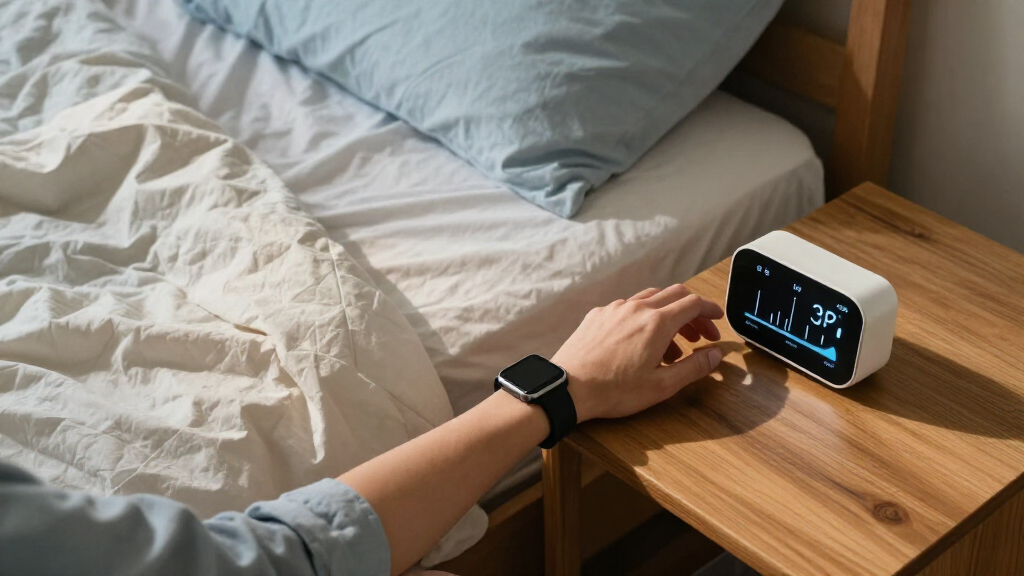
When I compare smart alarm clocks with sleep tracking, the first distinction is whether you want a dedicated bedside routine, contactless sleep insights, or a wearable that tracks sleep alongside daytime activity. The Hatch Sleep Clock with Contactless Sleep Tracking is the clearest fit for shoppers who want sleep measurements without wearing a device. The Hatch Restore 3 is a stronger choice if sunrise lighting and a large library of sleep sounds matter more than tracking, while the TRAUSI TG08 smartwatch adds sleep and activity data in a much more general-purpose format.

Get wellness gear delivered free with Prime
- Fast, free delivery on millions of items
- Prime Video, Amazon Music and more included
- Member-only deals all year
These products do not offer the same kind of sleep tracking, so I rank them by how closely they suit the bedside sleep-and-wake job in the title—not by how many unrelated features they list. The main tradeoff is simple: dedicated bedside features versus wearable flexibility. The two Hatch devices are built around light, sound, and alarm routines, but only the contactless model is described as tracking sleep. TRAUSI tracks sleep, but it is a smartwatch rather than a clock. I also factor in subscription dependence, corded power, and how much a buyer needs to wear or interact with another device overnight.
Key Takeaways
- Best match for sleep tracking without a wearable: Hatch Sleep Clock monitors movement and breathing from the nightstand and provides personalized insights, alongside a sunrise alarm and sleep sounds.
- Best for a polished bedtime and wake routine: Hatch Restore 3 combines customizable lighting, more than 80 sleep sounds, and a sunrise alarm, but the supplied details do not list sleep tracking.
- Best wearable alternative: TRAUSI TG08 records sleep, heart rate, and steps while adding calls and notifications, but it is not a bedside alarm clock.
- Subscription and power are real ownership tradeoffs: Restore 3 has some Hatch+ content behind a subscription after its 30-day trial, and both Hatch clocks require corded power.
- Choose by the data you actually want: Contactless tracking suits people who dislike sleeping in a watch; TRAUSI makes more sense if daytime activity tracking matters as much as sleep.
| Hatch Sleep Clock with Contactless Sleep Tracking, Personalized Insights, and Sunrise Alarm, Putty |  | Best Overall for Contactless Sleep Tracking | Tracking method: Contactless movement and breathing tracking from the nightstand | Sleep features: Personalized insights and recommendations | Alarm: Sunrise alarm | VIEW LATEST PRICE | See Our Full Breakdown |
| Hatch Restore 3 Sunrise Alarm Clock and Sleep Sound Machine, Putty |  | Best for Bedtime and Sunrise Routines | Display: Digital, dimmable clock | Sleep sounds: More than 80 | Lighting: Customizable lighting | VIEW LATEST PRICE | See Our Full Breakdown |
| TRAUSI TG08 Smartwatch, 1.83-Inch Display, 120 Workout Modes, Bluetooth Calling, IP67 Water Resistance, Black |  | Best Wearable Alternative for Sleep and Activity Data | Display: 1.83-inch LCD, 240 × 284 resolution | Health tracking: Sleep, heart rate, and steps | Workout modes: 120 | VIEW LATEST PRICE | See Our Full Breakdown |
| smart alarm clocks with sleep tracking | Connectivity | Alarm | Power | Dimensions |
|---|---|---|---|---|
| Hatch Sleep Clock with Contact | Wi-Fi | Sunrise alarm | Corded electric | 3 in W × 5.69 in H |
| Hatch Restore 3 Sunrise Alarm | 2.4 GHz Wi-Fi and Bluetooth | Sunrise alarm | Corded | 2.43 in W × 5.31 in H |
| TRAUSI TG08 Smartwatch | Bluetooth | — | — | — |
More Details on Our Top Picks
Hatch Sleep Clock with Contactless Sleep Tracking, Personalized Insights, and Sunrise Alarm, Putty
The Hatch Sleep Clock is the most direct match for this roundup because it pairs an actual bedside alarm and sleep-routine system with contactless tracking. It is described as monitoring movement and breathing from the nightstand, then using that information to offer personalized sleep insights and recommendations. That makes it a better fit than the Restore 3 for someone who specifically wants sleep data, and a better fit than the TRAUSI for someone who does not want to wear a watch to bed.
Its strongest distinction is how it brings tracking into the same place as the wind-down and wake-up routine. The clock combines circadian-inspired lighting, sleep sounds, bedtime reminders, and a sunrise alarm, so a buyer can use it as more than a sensor sitting on a nightstand. Those features may help someone keep a regular schedule: reminders can cue the start of a routine, while gradual light offers an alternative to relying only on an abrupt alarm. The product description also states 97% sensor accuracy, but I would treat that as a manufacturer-stated figure rather than a guarantee of identical results in every bedroom or for every sleeper.
Compared with Restore 3, this model has the clearer sleep-tracking case; Restore 3 is described around audio, light, and alarms, without sleep measurement in the supplied details. Compared with TRAUSI, the Hatch clock avoids requiring a wearable, but it does not provide the smartwatch’s stated heart-rate, step, and workout tracking. The choice turns on the data source: bedside movement and breathing versus body-worn activity tracking.
The drawbacks are practical rather than surprising. It is a corded indoor tabletop device, so placement depends on access to an outlet and it is not a portable sleep tracker. The listing describes Wi-Fi connectivity, but the supplied information does not spell out subscription requirements, detailed reporting, or how insights are delivered over time. I would choose it for a wearable-free bedside routine, not for clinical-grade measurement or a device to take on trips.
Pros:- Tracks movement and breathing from the nightstand without a wearable.
- Combines personalized sleep insights with a sunrise alarm and bedtime reminders.
- Includes lighting and sleep sounds for a more complete bedside routine.
- The stated 97% sensor accuracy provides a specific manufacturer claim to compare, though it is not an independent validation.
Cons:- Requires corded power and is designed for indoor tabletop placement.
- Contactless sleep insights are not a substitute for clinical sleep assessment.
- The supplied details do not explain reporting limits or any ongoing content requirements.
Best for: People who want a dedicated bedside alarm and sleep routine with contactless movement and breathing tracking, and who would rather not wear a watch overnight.
Not ideal for: Travelers, people who need a battery-powered device, shoppers seeking a wearable’s daytime heart-rate and activity metrics, or anyone who needs clinically validated sleep measurements.
- Tracking method:Contactless movement and breathing tracking from the nightstand
- Sleep features:Personalized insights and recommendations
- Alarm:Sunrise alarm
- Routine features:Circadian-inspired lighting, sleep sounds, bedtime reminders
- Connectivity:Wi-Fi
- Power:Corded electric
- Placement:Indoor tabletop
- Dimensions:3 in W × 5.69 in H
- Color:Putty
Our verdict“I rank the Hatch Sleep Clock first because it is the only option here explicitly combining a bedside alarm with contactless sleep tracking and personalized insights.”
Hatch Restore 3 Sunrise Alarm Clock and Sleep Sound Machine, Putty
The Restore 3 is the stronger pick for shoppers who care most about shaping the hours around sleep: softer evening lighting, audio for winding down, and a gentler way to wake. It pairs a dimmable digital clock with customizable lighting, a sunrise alarm, and more than 80 sleep sounds. That breadth gives it a more developed sound-and-light routine than the TRAUSI smartwatch, which is not presented as a dedicated bedside sleep machine.
It does not, however, earn the top spot in a roundup focused on sleep tracking. The supplied description explains app-based audio and lighting settings but does not say that Restore 3 measures sleep. I would not assume that a sleep sound machine tracks sleep just because its routines are sleep-oriented. The Hatch Sleep Clock is the better of the two Hatch choices if your priority is sleep insights; Restore 3 makes more sense if you want to customize the environment and wake-up experience without needing tracking data.
The app connection gives the clock more flexibility than a basic alarm: buyers can pair lighting and audio settings to their routine rather than settling for a single sound or brightness level. More than 80 sounds also gives a broader range of options for people who use audio regularly, though a large library is less useful if you prefer quiet or want to avoid managing app settings. Its sunrise alarm and dimmable display are the features most likely to set it apart in daily use, since they serve a clear purpose at bedtime and in the morning.
There are two ownership catches. Some premium content requires a Hatch+ subscription after the 30-day trial, so I would check which sounds and features are available without ongoing membership before choosing it. It also needs corded power, which limits placement and makes it less convenient to move than a battery-operated clock. Compared with the contactless Hatch Sleep Clock, Restore 3 is the more routine-centered option but the less complete answer for a buyer who expects actual sleep tracking.
Pros:- Combines a dimmable clock, customizable lighting, sleep sounds, and a sunrise alarm.
- More than 80 sleep sounds provide a wide choice for bedtime routines.
- The Hatch Sleep app supports customized audio and lighting settings.
- A focused bedside alternative to wearing a smartwatch overnight.
Cons:- The supplied description does not list sleep-tracking or sleep-insight features.
- Some premium content requires a Hatch+ subscription after the 30-day trial.
- Corded power limits placement and portability.
Best for: People who want customizable bedtime lighting, a large sleep-sound selection, and a sunrise alarm, and who do not require sleep measurement.
Not ideal for: Buyers whose main requirement is sleep tracking, people who want all content without a subscription, or anyone who needs a portable or battery-powered clock.
- Display:Digital, dimmable clock
- Sleep sounds:More than 80
- Lighting:Customizable lighting
- Alarm:Sunrise alarm
- Connectivity:2.4 GHz Wi-Fi and Bluetooth
- App:Hatch Sleep app for audio and lighting settings
- Power:Corded
- Dimensions:2.43 in W × 5.31 in H
- Warranty:1-year limited
Our verdict“I recommend Restore 3 for buyers who value a customizable sound-and-light routine more than sleep data, but the contactless Hatch Sleep Clock is the better match for tracking.”
TRAUSI TG08 Smartwatch, 1.83-Inch Display, 120 Workout Modes, Bluetooth Calling, IP67 Water Resistance, Black
The TRAUSI TG08 is the outlier in this lineup: it tracks sleep, but it is a smartwatch, not a smart alarm clock. I include it because some shoppers searching for sleep tracking may prefer a wrist-worn device that follows them through the day. It records sleep alongside heart rate and steps, and its 120 workout modes, notifications, Bluetooth calling, Alexa support, and music and camera controls make it a broader everyday companion than either Hatch clock.
That versatility comes with a different sleep experience. You need to wear the watch overnight, which may suit someone already comfortable sleeping with a wearable but will be a dealbreaker for people who find wrist devices distracting. The Hatch Sleep Clock has the opposite approach: it monitors movement and breathing from the bedside, avoiding an overnight wearable but offering a different set of measurements. TRAUSI is more relevant if you want sleep data tied to daytime activity; the Hatch clock is more relevant if your goal is a dedicated bedroom routine.
The TG08 also should not be mistaken for a replacement for a sunrise alarm clock. The supplied description lists sleep and health tracking, calls, notifications, and other smartwatch functions, but it does not specify a sunrise alarm or the lighting and sleep-sound features found on the Hatch models. Its 1.83-inch LCD and customizable watch faces help with at-a-glance use, while its stated 5–7 days of normal-use battery life means regular charging still belongs in the routine. The standby figure of up to 30 days is not the same as expected daily-use runtime.
For exercise, the listing gives it a substantial range of workout modes, but GPS depends on a connected smartphone rather than being built into the watch. The stated IP67 rating is framed for sweat, rain, and splashes, so I would not choose it for swimming or treat it as a dedicated water-sport watch. Compared with Restore 3, it has more explicit health tracking but lacks the listed bedside sound and sunrise system; compared with the contactless Hatch Sleep Clock, it offers more daytime functions but asks you to wear and charge a device.
Pros:- Tracks sleep, heart rate, and steps in a wearable format.
- Lists 120 workout modes and everyday features such as calls and notifications.
- The 1.83-inch display supports customizable watch faces.
- Battery life is specified at 5–7 days with normal use and up to 30 days on standby.
Cons:- It is a smartwatch, not a dedicated bedside sleep clock or sunrise alarm.
- Sleep tracking requires wearing the watch overnight and charging it regularly.
- GPS uses a smartphone, and the stated water use is limited to sweat, rain, and splashes.
Best for: People who are comfortable sleeping in a watch and want sleep, heart-rate, step, and workout tracking alongside calls and notifications.
Not ideal for: Shoppers seeking a dedicated bedside alarm with sunrise lighting or sleep sounds, people who dislike wearing a device to bed, or buyers who need built-in GPS or clearly specified swim use.
- Display:1.83-inch LCD, 240 × 284 resolution
- Health tracking:Sleep, heart rate, and steps
- Workout modes:120
- Connectivity:Bluetooth
- Battery:350 mAh; 5–7 days normal use, up to 30 days standby
- Compatibility:iOS 9.0+ and Android 5.0+
- Water resistance:IP67; described for sweat, rain, and splashes
- GPS:Uses a connected smartphone
- Additional features:Bluetooth calling, Alexa, music and camera controls, notifications
Our verdict“I would choose the TRAUSI TG08 only when wearable health and activity tracking matter more than a dedicated bedside alarm and sleep routine.”
How We Picked
I ranked these three options by how well they answer the specific combination in the title: a smart alarm clock experience paired with sleep tracking. I gave the most weight to whether sleep tracking is actually described, whether the device supports a useful bedtime and wake routine, and whether the product can serve as a practical bedside alarm. That means the Hatch Sleep Clock leads because it is explicitly described as a tabletop clock that tracks movement and breathing without a wearable, then adds sleep insights, sound, lighting, reminders, and sunrise waking.
The Restore 3 earns a place because it is a strong smart alarm and sleep-routine device, but I do not treat its sound library or lighting controls as proof of sleep tracking. The supplied product details describe those features without naming sleep measurement, so I rank it below the tracking-focused Hatch clock for this search. TRAUSI comes third for a different reason: its sleep tracking is stated, but the product is a smartwatch rather than a dedicated bedside clock. I include it as a relevant alternative for people who prefer wearable data and want workout, heart-rate, and notification features too.
I also weighed drawbacks that can change daily use: subscription access to some Hatch content, corded power for the Hatch products, reliance on wearing the TRAUSI overnight, and its smartphone-dependent GPS. I have not treated the stated sensor accuracy figure for the Hatch Sleep Clock as independently verified. The ranking reflects the supplied descriptions and specs, not hands-on testing or a claim that one device can diagnose sleep conditions.
| smart alarm clocks with sleep tracking | Power |
|---|---|
| Hatch Sleep Clock with Contact | Corded electric |
| Hatch Restore 3 Sunrise Alarm | Corded |
| TRAUSI TG08 Smartwatch | — |
Factors to Consider When Choosing Smart Alarm Clocks With Sleep Tracking
I would start by separating sleep tracking from sleep-friendly features. A sunrise alarm, sound machine, and bedtime lighting can support a routine, but they do not automatically measure sleep. Once that distinction is clear, the choice among these three becomes much easier: one Hatch is tracking-focused, the other is routine-focused, and TRAUSI is a wearable with sleep data.
Decide whether you want a wearable or contactless tracking
The most important choice is where you want sleep data to come from. The Hatch Sleep Clock is described as tracking movement and breathing from the nightstand, so it suits people who do not want another device on their wrist overnight. The TRAUSI TG08 requires wearing a smartwatch, but it also tracks heart rate, steps, and workouts, connecting sleep with a wider set of daily activity features. These approaches are not interchangeable: a bedside sensor and a wearable collect information in different ways, and the supplied descriptions do not establish that their results can be directly compared.
If you already wear a watch comfortably, TRAUSI may be a more versatile purchase for day and night. If you avoid wearables while sleeping, the contactless Hatch is the better match. I would not choose Restore 3 on the assumption that its sleep sounds or app-based routines mean it includes sleep tracking; that feature is not listed in the product details provided here.
Match the clock to your wake-up routine
Both Hatch products include a sunrise alarm, but their strongest selling points differ. The Sleep Clock combines sunrise waking with contactless tracking, sleep insights, bedtime reminders, lighting, and sounds. Restore 3 leans more heavily into customizable sound and lighting, with more than 80 sleep sounds and settings managed through the Hatch Sleep app. If you mainly want help making bedtime and wake-up feel less abrupt, Restore 3 may be enough. If you also want sleep-related measurements, the contactless clock is the more appropriate choice.
TRAUSI should be treated as a wearable alarm and tracking option rather than a bedside light-and-sound system. The supplied details do not list sunrise lighting or a sleep-sound library. That distinction matters for people who want their alarm itself to shape the morning, rather than simply wanting a watch that records sleep and supports notifications.
Check what sleep data means to you
Think about whether you want a basic record, personalized recommendations, or broader health and activity data. The Hatch Sleep Clock explicitly offers personalized sleep insights and recommendations based on contactless monitoring. TRAUSI lists sleep, heart-rate, and step tracking, but the supplied details do not describe the depth or format of its sleep reports. Restore 3 focuses on sounds and lighting rather than documented tracking. I would compare the stated function, not infer advanced reporting from the word “smart.”
The Hatch Sleep Clock listing states 97% sensor accuracy. That is a product-description claim, not independent validation or a promise that every user will receive the same results. None of these options should replace professional advice for persistent sleep concerns, and a consumer tracker should not be treated as a diagnostic device.
Account for subscriptions, charging, and placement
Routine features are useful only if their ownership requirements fit your habits. Restore 3 includes some premium content through Hatch+, with a 30-day trial before subscription access is required for that content. I would check what remains available without a subscription if a particular sound or setting is central to your routine. The supplied Hatch Sleep Clock details do not specify whether any features require a subscription, so verify the current terms before relying on a specific service.
Both Hatch clocks require corded power and are designed for tabletop use, which favors a permanent nightstand setup but limits portability. TRAUSI is battery-powered as a wearable, though the stated normal-use battery life is 5–7 days, so it still needs periodic charging. Its standby estimate of up to 30 days describes a different use condition. Choose the format that works with your bedroom and your willingness to charge or keep a clock near an outlet.
Treat secondary features as tie-breakers
TRAUSI’s workout modes, calls, Alexa support, notifications, and camera controls may make it attractive if you want one device for several daily tasks. Those additions do not make it a better bedside alarm than the Hatch products, though. Its GPS depends on a smartphone, and its IP67 use is described for sweat, rain, and splashes. I would treat those limits as part of the buying decision rather than assuming it has standalone navigation or unrestricted water use.
For the Hatch models, sound libraries and lighting customization are more relevant tie-breakers. Restore 3 gives a specific library size of more than 80 sounds, while the Sleep Clock’s stronger differentiator is its combination of contactless tracking and insights. If you never use sleep audio, a large sound collection may not sway you; if you want tracking but do not want a wearable, the contactless approach matters more than the sound count.
Frequently Asked Questions
Which option here actually tracks sleep without a wearable?
The Hatch Sleep Clock with Contactless Sleep Tracking is the option explicitly described as monitoring movement and breathing from the nightstand and providing personalized insights. The TRAUSI TG08 tracks sleep on the wrist, so it requires wearing and charging a smartwatch. Restore 3 includes sleep sounds and routine features, but the supplied description does not list sleep tracking.
Does the Hatch Restore 3 track sleep?
The product details supplied for Restore 3 describe a dimmable clock, customizable lighting, more than 80 sleep sounds, app-based settings, and a sunrise alarm. They do not specify sleep measurement or sleep insights. I would select it for its bedtime and wake-up routine, not on the assumption that it records sleep.
Is a contactless sleep clock better than a smartwatch for tracking?
Neither approach is automatically better for every buyer. A contactless clock suits someone who does not want to sleep in a wearable and wants bedside insights tied to movement and breathing. A smartwatch such as the TRAUSI TG08 makes more sense for someone comfortable wearing a device overnight who also wants heart-rate, steps, and workout features. The descriptions do not establish that their tracking methods produce directly comparable results.
Do the Hatch clocks need a subscription?
For Restore 3, some premium content requires a Hatch+ subscription after the 30-day trial. The supplied details do not identify which content is included without a subscription, so I would check the current terms if a specific sound or feature matters to you. Subscription requirements for the Hatch Sleep Clock are not stated in the information provided here.
Can any of these devices diagnose a sleep problem?
No. These products are consumer devices described as supporting sleep routines or tracking sleep-related information, not as diagnostic tools. The Hatch Sleep Clock’s stated sensor accuracy is a product-description claim and does not establish clinical validity. If sleep problems persist or affect your health, a consumer clock or smartwatch is not a replacement for advice from a qualified healthcare professional.
Conclusion
My recommendation depends on whether you want sleep data, a better wind-down routine, or a wearable for the whole day. For contactless sleep tracking beside the bed, choose the Hatch Sleep Clock: it is the closest match to a smart alarm clock with sleep tracking and combines insights with a sunrise alarm, reminders, lighting, and sounds. For customizable sound and light without a stated tracking feature, Restore 3 is the more focused routine-builder; just account for its corded power and subscription-gated premium content.
Choose the TRAUSI TG08 if you are comfortable wearing a watch to bed and want sleep tracking alongside steps, heart rate, workouts, calls, and notifications. Skip it if your priority is a dedicated sunrise clock or contactless tracking. For the most direct answer to the title, I would start with the Hatch Sleep Clock; for a sleep-friendly alarm without tracking, I would choose Restore 3; and for a wearable-first approach, I would consider TRAUSI.