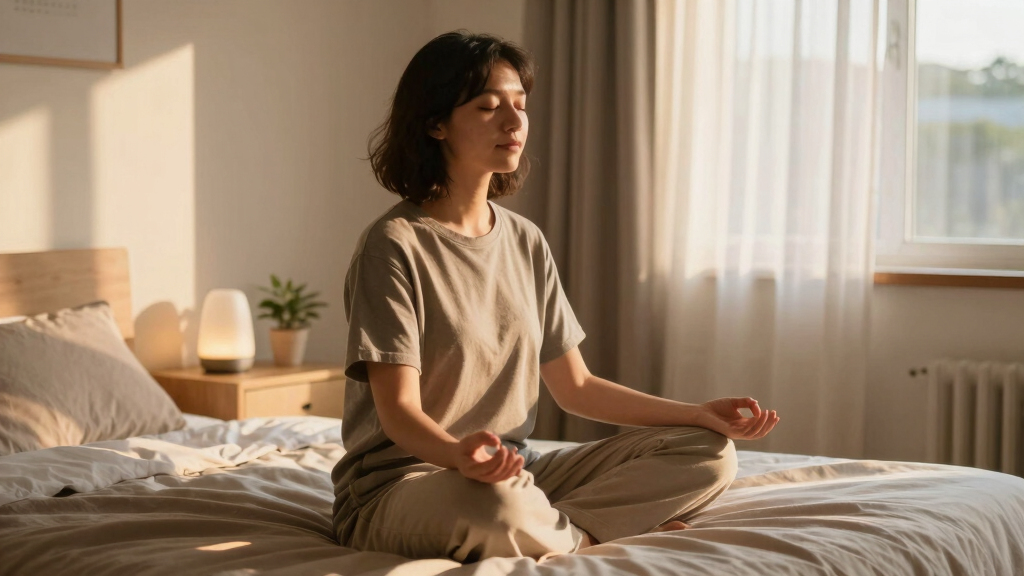

TL;DR

Get wellness gear delivered free with Prime
- Fast, free delivery on millions of items
- Prime Video, Amazon Music and more included
- Member-only deals all year
If you can’t fall asleep, a calm routine of relaxation, environment tweaks, and mindful habits can make a difference. This guide offers practical steps to ease into sleep without stress or medication.
Missing sleep because you just can’t drift off? You’re not alone. Many people face nights where their mind races or their body won’t cooperate.
Having a clear, calm checklist can turn the chaos into a gentle routine—one that signals your brain it’s time to rest. Let’s explore simple, effective steps to help you unwind tonight and every night.
Establish a consistent sleep schedule to train your body when to wind down.
Use relaxation techniques like deep breathing or visualization to calm racing thoughts.
Create a sleep-friendly environment: cool, dark, and quiet helps you fall asleep faster.
Avoid screens, caffeine, and heavy meals before bed to prevent interference with sleep hormones.
If sleeplessness persists beyond a few weeks, consult a healthcare professional for tailored strategies.
What to Do When You Can’t Fall Asleep
TL;DR: Stop trying to force sleep. Reduce stimulation, settle your body, quiet the mental noise, and let a familiar routine signal that the day is over. Small changes can make bedtime feel predictable instead of stressful.
An occasional longer night can still be normal.
Dim light and calmer inputs support the transition to sleep.
Reported reduction in sleep-onset time with relaxation practices.
About 18°C
Slow and controlled
Before bedtime
Pause and reset
Five calm signals for your brain
Sleep arrives more easily when your internal clock, nervous system, surroundings, and evening behavior all point in the same direction. Treat these as gentle cues—not a performance test.
Keep a steady schedule
Use similar sleep and wake times every day, including weekends, to train your internal clock.
Lower physical arousal
Try slow breathing, gentle stretching, or progressive muscle relaxation for ten minutes.
Go cool, dark, quiet
Dim lights, lower the temperature, block stray light, and soften unpredictable noise.
Reduce stimulation
Step away from screens, caffeine, nicotine, heavy meals, alerts, and clock-watching.
Know when to get help
Seek professional guidance if the problem lasts for weeks or disrupts daytime functioning.
Your calm nighttime routine
A repeatable sequence creates familiarity. Over time, the ritual itself becomes a cue that helps your body move from alertness toward rest.
Turn off screens
Put phones, tablets, and computers away 30–60 minutes before bed.
Dim and cool
Lower the lights and move the room toward roughly 65°F / 18°C.
Choose a quiet activity
Read a paperback, listen to gentle music, or take a warm bath.
Release tension
Breathe slowly or tense and release muscles from toes to shoulders.
Return to rhythm
Keep tomorrow’s wake time steady, even after an imperfect night.
Inhale gently through your nose for four counts, then exhale for six. Keep the breath comfortable rather than deep or forceful. A longer exhale can help signal your nervous system to settle.
Why your brain won’t shut up
Racing thoughts can create a loop: worry raises alertness, alertness delays sleep, and the delay creates more worry. The goal is not to empty your mind—it is to give attention somewhere quieter to rest.
Shift from control to permission
Trying hard to sleep can make bedtime feel like a test. Instead, notice the thought, loosen your body, and return attention to breathing or a peaceful scene. Visualization works like tuning away from static: picture a quiet beach, a slow train ride, or another simple scene with no problem to solve.
Mindfulness, breathing, and muscle relaxation reduce mental or physical arousal—the two common barriers that keep sleep just out of reach.
Relaxation techniques for faster sleep
No single technique wins for everyone. Choose the method that matches what is keeping you awake: fast thoughts, physical tension, or a recurring stress pattern.
| Technique | How it works | Practice curve | Best for |
|---|---|---|---|
| Deep breathing | Uses slow, controlled breaths to reduce arousal and anchor attention in the present. | Easy to begin |
Immediate calming when thoughts are racing |
| Progressive muscle relaxation | Tenses and releases muscle groups to expose and soften tension stored through the day. | Moderate focus |
Restlessness, tight shoulders, jaw tension, or physical stress |
| Meditation | Trains attention to notice thoughts without following them into another cycle of worry. | Benefits build |
Long-term stress reduction and recurring mental chatter |
| Visualization | Replaces problem-solving with calm sensory imagery and a simple, neutral mental scene. | Easy to adapt |
People who relax more easily through stories or imagery |
Make your bedroom sleep-ready
A cool, dark, quiet room can shorten the path to sleep. Environmental improvements may reduce sleep-onset time by as much as 15 minutes while reinforcing the room’s association with rest.
Think “quiet sanctuary”
Use blackout curtains to block streetlights, a fan or steady white noise to mask interruptions, and supportive bedding to reduce discomfort. Clear visual clutter and move electronic devices out of reach so the room signals sleep rather than activity.
Comfort target marker: around 65°F / 18°C
These bars show practical priority, not clinical scores. Start with the change most likely to remove a real disturbance in your room.
How the calm chain works
Each cue supports the next. The aim is a gradual reduction in stimulation—not an abrupt command to fall asleep on demand.
Still awake? Leave the struggle behind.
If you feel awake and frustrated after roughly 20 minutes, get out of bed and do something calm in dim light. Avoid screens and clock-watching. Return to bed when you feel sleepy so the bed stays associated with rest rather than worry.
When to talk with a healthcare professional
Ask for help if sleep difficulty continues for several weeks, affects mood or daily function, or occurs with loud snoring, breathing pauses, significant pain, or persistent daytime fatigue.
Ask about CBT-I
Cognitive behavioral therapy for insomnia is a leading non-medication treatment for chronic sleep problems. Sleep aids should be considered only with appropriate medical guidance.
Why Your Brain Won’t Shut Up and How to Calm It
When sleep eludes you, your mind might be stuck in a loop of worries or racing thoughts. This mental chatter creates a wave of stress that keeps you awake. Imagine trying to fall asleep while your brain is like a busy highway during rush hour—cars (thoughts) constantly moving, making it hard to find a clear path to rest.
This persistent mental noise not only delays sleep but can also lead to frustration and anxiety about not sleeping, which further compounds the problem. Techniques like deep breathing slow your heart rate and signal your nervous system to relax, much like a gentle breeze calming a storm. Visualizing peaceful scenes helps your mind shift focus from worries to tranquility—like imagining lying on a quiet beach at sunset, which can help break the cycle of racing thoughts and promote a sense of calm.
Understanding why your brain resists shutting down is key: it’s often a response to stress, an overactive mind, or a conditioned habit of worry. Recognizing these patterns helps you choose the right calming techniques—whether it’s deep breathing, visualization, or mindfulness—to gently coax your mind into relaxation. The goal is to create a mental environment where sleep can naturally take over, much like clearing a cluttered desk to find the important papers underneath.
As an affiliate, we earn on qualifying purchases.
Step-by-Step: Your Calm Nighttime Routine
- Turn off screens 30-60 minutes before bed. The blue light emitted by phones, tablets, and computers suppresses melatonin, the hormone your body produces to signal sleep. Think of blue light as a bright streetlamp shining directly into your eyes just as you’re trying to wind down—this makes your body think it’s daytime, delaying sleep onset.
- Dim the lights and lower the thermostat to around 65°F (18°C). A cooler environment mimics natural sleep conditions, much like the crisp air of early evening, which promotes the release of sleep hormones and helps your body prepare for rest.
- Engage in a relaxing activity, like reading a paperback book or listening to gentle music. For example, replacing scrolling through social media with listening to soft instrumental tunes can help shift your brain into a more restful state, reducing overstimulation.
- Practice deep breathing or progressive muscle relaxation for 10 minutes. For instance, inhaling slowly through your nose for four counts, then exhaling gently, can lower your heart rate. Tensing and releasing muscle groups from your toes to your shoulders can physically release tension accumulated during the day, similar to unwrapping a tightly wound ball of string.
- Stick to your sleep schedule, even on weekends. Consistency trains your internal clock, much like a daily routine that signals to your body when it’s time to wind down and when to wake, leading to more predictable and restful sleep over time.
By following these steps, you create a reliable bedtime ritual that signals to your brain it’s time to transition from wakefulness to sleep. Each element supports your body’s natural circadian rhythms, making sleep more predictable and less stressful to achieve. Over time, these habits can reduce the frustration of sleepless nights by establishing a sense of control and familiarity—key factors in improving sleep quality.
As an affiliate, we earn on qualifying purchases.
Compare Your Options: Relaxation Techniques for Faster Sleep
| Technique | How It Works | Best For |
|---|---|---|
| Deep Breathing | Sends calming signals to your nervous system by focusing on slow, controlled breaths. Imagine your breath as a gentle tide washing over you, gradually lowering your anxiety and preparing your body for sleep. | Immediate calming for racing thoughts |
| Progressive Muscle Relaxation | Tenses and relaxes muscle groups, helping to physically ease tension accumulated from daily stressors. Think of it as gently unwrapping a tightly wound coil, allowing your muscles to relax naturally. | Reducing physical stress, especially if you feel tense or restless |
| Meditation | Focuses your attention inward, reducing mental noise. For example, using guided meditation apps that lead you through calming imagery can help quiet your mind, much like tuning a radio to a clear station amidst static. | Long-term stress reduction and improving sleep quality |
Each relaxation technique offers unique benefits, but understanding why they matter helps you choose the right one. Deep breathing is like a gentle wave that calms your nervous system quickly, making it ideal when your thoughts are racing. Progressive muscle relaxation acts as a physical reset, easing tension that might be stored in your muscles from a stressful day. Meditation, on the other hand, trains your mind to focus and detach from worries, fostering a mental environment conducive to sleep. The tradeoff is that some methods may require more practice to see benefits, but they all serve the core purpose of reducing mental and physical arousal, which are primary barriers to falling asleep. Experimenting with these techniques can help you discover the most effective way to relax based on your personal preferences and sleep patterns.
relaxation and meditation app for sleep
As an affiliate, we earn on qualifying purchases.
As an affiliate, we earn on qualifying purchases.
Why Your Sleep Environment Matters (And How to Make It Perfect)
Creating a sleep-friendly environment is like setting the stage for your nightly performance. A room that’s cool, dark, and quiet can cut your sleep onset time by as much as 15 minutes. Think of it as preparing a cozy nest—removing distractions and making the space inviting signals to your brain that it’s time to settle in.
For example, blackout curtains block out streetlights or early dawn, helping your body stay in a sleep-ready state. Using a fan or white noise machine masks disruptive sounds like barking dogs or traffic, much like a gentle lullaby that soothes the mind. A supportive mattress and comfortable pillows act as the foundation of this cozy nest, ensuring physical comfort so you can relax fully without aches or discomfort.
But beyond physical comfort, the mental environment matters too. A clutter-free space reduces visual stimuli that can trigger wakefulness. Removing electronic devices minimizes mental engagement—bright screens and notifications can send your brain signals that it’s daytime or alert mode. Think of your sleep space as a sanctuary designed to cue your body that it’s time to rest, much like dimming the lights to signal the end of the day. These environmental cues are powerful because they influence your subconscious, helping your body associate the space with sleep rather than stress or distraction. Over time, optimizing your environment becomes a subtle but effective way to reinforce your sleep routine and improve overall sleep quality.
As an affiliate, we earn on qualifying purchases.
Quick Fixes: What to Do Tonight if Sleep Won’t Come
- Get out of bed after 20 minutes of tossing. Do a calming activity in dim light—like folding laundry, which keeps your hands busy but avoids stimulating your mind, or listening to soft music that soothes your thoughts. This prevents you from associating your bed with frustration and helps reset your sleep readiness.
- Avoid clock-watching; it increases anxiety about sleep. For example, repeatedly checking the time can make you feel more anxious, like watching a pot that refuses to boil—adding unnecessary pressure that makes sleep even harder to achieve. This heightened awareness can create a feedback loop where anxiety about not sleeping makes it even harder to drift off.
- Try a warm bath or a cup of herbal tea (like chamomile), which can promote relaxation through physiological effects. Avoid caffeine or heavy snacks, as they can act like a stimulant, keeping your body alert instead of relaxed—similar to trying to sleep after drinking a strong coffee. Recognizing the right pre-sleep cues helps your body associate these routines with winding down, but overdoing caffeine or stimulating foods can sabotage this process.
- Use a sleep journal to track patterns and triggers over time. For instance, noting that you often wake up after late-night screen time can help you identify and modify habits that interfere with sleep, much like a detective gathering clues to solve a mystery. This insight can guide you to make targeted changes, such as reducing evening screen use or adjusting your bedtime routine, which can significantly improve sleep quality in the long run.
Each of these quick fixes addresses specific barriers—whether it’s mental frustration, environmental cues, or physiological triggers—that prevent sleep. Recognizing how your habits and environment interact with your body’s natural signals empowers you to make immediate adjustments, increasing your chances of falling asleep faster tonight and establishing healthier sleep patterns over time.
When to Seek Help for Chronic Sleep Troubles
If sleepless nights stretch into weeks or start affecting your daily life—like feeling exhausted, irritable, or unable to concentrate—professional guidance might be needed. Consider it similar to how persistent pain requires a doctor’s diagnosis—your sleep issues may be signs of underlying problems.
Chronic sleep problems can stem from various causes, including stress, anxiety, or medical conditions like sleep apnea or restless leg syndrome. These issues often aren’t resolved by simple routines alone and may require specialized treatment. Ignoring persistent sleep difficulties can lead to a cycle of worsening health, affecting mood, immune function, and overall well-being. Consulting a healthcare provider allows for a thorough evaluation—possibly including sleep studies or clinical assessments—to identify underlying causes. This step is crucial because addressing root issues can lead to more effective, long-lasting solutions, rather than temporary fixes. Recognizing when your sleep problems are more than just occasional trouble is important to prevent further health complications and to regain restful nights.
Frequently Asked Questions
What if I still can’t fall asleep after trying these tips?
If you’re still awake after 20 minutes, get out of bed and do a calming activity until you feel sleepy. Avoid forcing sleep, as it can increase frustration. Consistency over time often yields the best results.How long should I wait before considering sleep aids?
Sleep aids should only be used occasionally and under medical guidance. They aren’t a long-term fix and can cause dependency or side effects if overused. Focus on natural routines first.Can environment changes really make a difference?
Absolutely. A cool, dark, and quiet room can reduce sleep onset time by about 15 minutes, according to research. Small adjustments, like blackout curtains or white noise, can have a big impact.What’s the best relaxation technique for bedtime?
Deep breathing is quick and effective—try inhaling for four seconds, holding for four, then exhaling slowly. Progressive muscle relaxation or mindfulness meditation also work well for many sleepers.When should I see a doctor about sleep issues?
If you’re experiencing persistent trouble falling asleep over several weeks, or if sleep problems affect your daily life, it’s wise to consult a healthcare provider for personalized advice.Conclusion
When sleepless nights hit, a calm, deliberate routine can ease your mind and body into rest. Small changes—like turning off screens early, practicing relaxation, and optimizing your environment—add up over time. Remember, patience is key. Your nights of peaceful sleep are worth the effort—and worth waiting for.
So tonight, take a deep breath, turn down the lights, and trust that your body knows how to rest. Sweet dreams are just a calm checklist away.
Halloween Picks
halloween
As an affiliate, we earn on qualifying purchases.