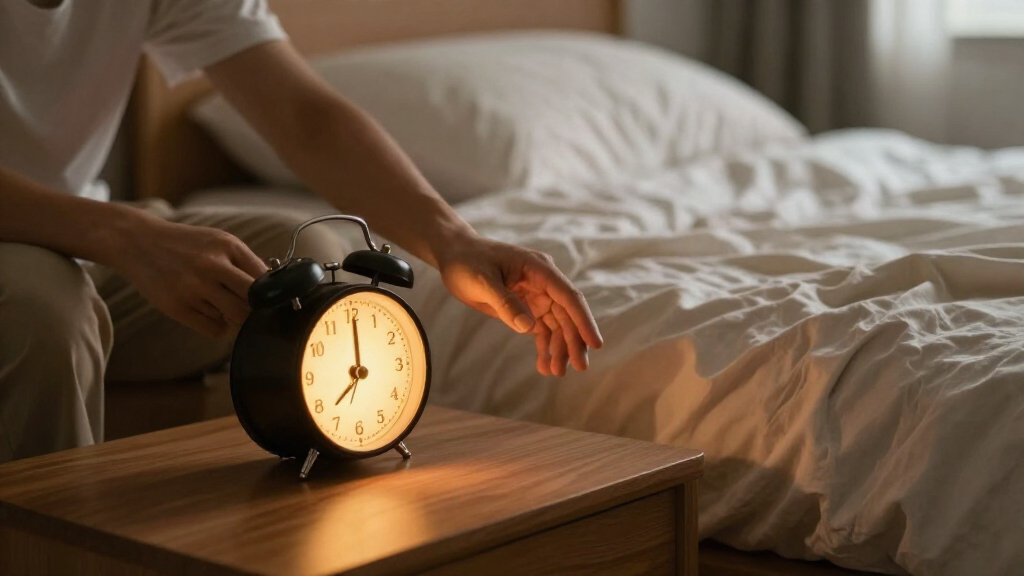

Choosing between a sunrise wake-up light and a standard alarm clock comes down to how you want mornings to begin. A wake-up light adds a gradual increase in brightness before the alarm, aiming to make the shift from sleep to wakefulness less abrupt. A standard clock usually keeps things simple: it sounds at the chosen time, often at a much lower cost. The light is the stronger fit if a sudden alarm feels harsh or dark mornings make waking difficult; the standard clock makes more sense if you mainly need a dependable time signal and do not want extra features.

Get wellness gear delivered free with Prime
- Fast, free delivery on millions of items
- Prime Video, Amazon Music and more included
- Member-only deals all year

REACHER Wood Grain Sunrise Alarm Clock and Sound Machine Nightlight
- ✔ Sunrise duration: 5–60 minutes
- ✔ Sound options: 26 sleep sounds, including white noise and nature sounds
- ✔ Nightlight: Adjustable, 8 colors

JALL Sunrise Alarm Clock with Wake Up Light, White Noise Machine, FM Radio, and Bluetooth Speaker
- ✔ Model: K8
- ✔ Screen size: 40 cm
- ✔ Light modes: 17, including 8 solid and 9 dynamic RGB modes
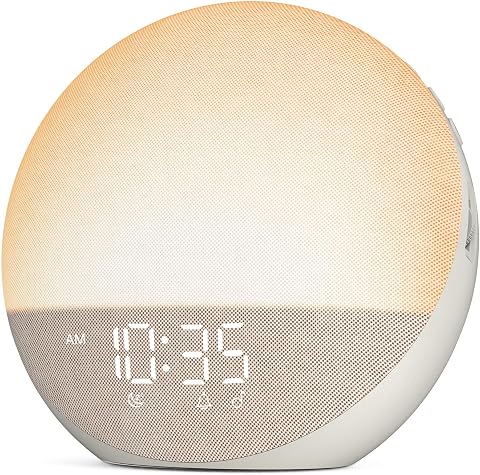
Odokee Sunrise Alarm Clock with White Noise Machine and Bluetooth Speaker
- ✔ Sunrise duration: 5–60 minutes
- ✔ Sound options: 25, including white, pink, brown, and blue noise plus nature sounds
- ✔ Speaker: 5W stereo Bluetooth
The tradeoff is comfort and added functionality versus simplicity and price. Across the comparison, the biggest questions are wake-up experience, reliability, control, bedtime use, room conditions, and value. Individual models vary, so check the specific light’s brightness, alarm options, and backup behavior before buying.
At a Glance
| Criteria | Sunrise Wake-Up Light Alarm Clock | Standard Alarm Clock | Winner |
|---|---|---|---|
| Wake-up experience | Gradual light before the alarm, often with optional sound | Usually a sound at the set time; some models vibrate | A |
| Dark-room usefulness | Can brighten the room before the set wake time | Works in darkness, but does not gradually brighten the room | A |
| Reliability and backup | Depends on model; check backup power and alarm behavior | Usually straightforward; battery backup varies by model | Depends |
| Controls and sound options | May offer light levels, sound choices, and multiple settings | Often limited to basic alarm and snooze controls | A |
| Bedtime lighting | Often includes a dimmable evening light or sunset feature | Typically none or limited to a basic display | A |
| Cost and value | Costs more; added value depends on whether light and extra features will be used | Usually the cheaper and simpler purchase | B |
REACHER Wood Grain Sunrise Alarm Clock and Sound Machine Nightlight
The REACHER Wood Grain is our leading choice when a wake-up light should blend into the bedroom and stay easy to operate. Its sunrise gradually rises from 1% to 100% over 5–60 minutes, letting us choose a short or longer ramp into morning. That range matches the Odokee’s listed sunrise timing, but REACHER pairs it with an adjustable nightlight, dimmable display, and one-handed operation, which keep the focus on everyday comfort rather than connectivity.Its 26 sleep sounds cover white noise and nature options, and the timer can switch them off after a selected interval. JALL has a larger collection of listed sound and lighting features, including FM radio and Bluetooth, so it makes more sense if we want a bedside entertainment device as well as an alarm. REACHER is more restrained: it does not list Bluetooth or radio, and its corded power means the clock needs to stay near an outlet. For buyers who want a relatively small clock with a clear sunrise routine, those omissions may be easy to accept.The wood-grain finish also gives it a different bedside feel from the more feature-forward JALL and Odokee. We would choose it for a bedroom where low-key controls and a dim display matter more than streaming. Its listed dimensions are notably smaller than JALL’s, though it is still a dedicated corded device rather than a portable alarm.
Pros:
- Sunrise duration adjusts from 5 to 60 minutes.
- 26 sleep sounds and a timer support a bedtime listening routine.
- Dimmable display and an eight-color nightlight allow lower-light settings.
- Compact listed dimensions and one-handed operation suit a simpler bedside setup.
Cons:
- Requires corded power and a nearby outlet.
- Does not list Bluetooth streaming or FM radio.
- Its sound selection is smaller than JALL’s listed combined audio options.
Best for: People who want an easy-to-operate sunrise alarm with sleep sounds, a dimmable display, and a compact bedside presence.
Not ideal for: Buyers who want Bluetooth streaming, FM radio, or the broadest listed mix of sound and lighting modes.
Bottom line: We recommend the REACHER for a compact, uncomplicated sunrise routine, provided Bluetooth and radio are not priorities.
“We recommend the REACHER for a compact, uncomplicated sunrise routine, provided Bluetooth and radio are not priorities.”
JALL Sunrise Alarm Clock with Wake Up Light, White Noise Machine, FM Radio, and Bluetooth Speaker
The JALL K8 makes the strongest case for buyers who want the sunrise itself to dominate the bedside experience. Its full-screen light simulation gradually brightens to wake sleepers, and the listed 40 cm screen is substantially larger than the compact REACHER unit. That scale is its defining advantage: if a more expansive glow is central to the routine, JALL stands apart from the other two clocks.It also bundles 25 nature sounds, FM radio, and a 5W Bluetooth speaker, so we can use it for more than a morning alarm. Compared with REACHER, it provides more ways to bring audio to the bedside; compared with Odokee, it adds FM radio and 17 listed light modes. Those extras may suit a person who wants several functions in one device. But they come with a substantial tradeoff: at 12.4 x 10.2 inches, JALL occupies far more surface area than REACHER’s listed 6.7 x 2.7 x 6 inches.Dual weekday and weekend alarms and Bluetooth time synchronization help with setup and changing schedules. The clock also offers snooze intervals of 5–20 minutes. Its corded USB or electric power requirement is shared by REACHER, so it is not a solution for an outlet-free nightstand. We place JALL below the more focused REACHER because the large size and broader feature set are most valuable to buyers who will actually use them. For a small bedside table or a minimal routine, Odokee’s physical controls and more moderate feature mix may be easier to accommodate.
Pros:
- Full-screen sunrise simulation is designed to provide a more expansive waking light.
- FM radio, Bluetooth audio, and 25 nature sounds offer several listening options.
- Dual weekday and weekend alarms support different schedules.
- Bluetooth time synchronization reduces manual time setting.
Cons:
- Its 12.4 x 10.2 inch footprint can take up considerable bedside space.
- Requires continuous USB or corded electric power.
- More functions may be unnecessary for buyers who want a simple sunrise and sound routine.
Best for: Heavy sleepers and multi-use bedside listeners who want a large sunrise display, dual alarms, FM radio, and Bluetooth audio.
Not ideal for: People with limited nightstand space or anyone seeking a small, minimal clock focused mainly on sunrise and sleep sounds.
Bottom line: JALL is the best fit for buyers who value a large sunrise surface and several audio functions enough to give up nightstand space.
“JALL is the best fit for buyers who value a large sunrise surface and several audio functions enough to give up nightstand space.”
Odokee Sunrise Alarm Clock with White Noise Machine and Bluetooth Speaker
The Odokee Sunrise Alarm Clock is a flexible middle ground for buyers who want more than a basic light alarm but do not need JALL’s large screen or radio. Its sunrise can be set for 5–60 minutes, the display dims from 0–100%, and the nightlight offers 12 colors. These adjustments let us tune the bedside light for different preferences, while its physical buttons and dials keep setup independent of a smartphone app.Odokee lists 25 sounds, including white, pink, brown, and blue noise alongside nature sounds, plus a 5W stereo Bluetooth speaker for personal audio. That makes its sound profile more varied than REACHER’s listed 26 sleep sounds in type, though REACHER is the more compact, decor-forward choice and does not require us to rely on Bluetooth. JALL goes further for radio listeners and offers a large full-screen sunrise, but its footprint is much larger. Odokee’s appeal is the combination of adjustable light, manual controls, and streaming in a single alarm.We would not choose it for smart-home routines: the supplied details list no app-based scheduling or smart home integration. Its 5W speaker may also be modest for filling a large room, and its physical controls may be less convenient for someone who specifically wants to change schedules from a phone. Since no dimensions or power source are provided in the product details here, we cannot compare its footprint or outlet requirements as precisely as we can for REACHER and JALL. It earns a role for hands-on, app-free adjustment rather than a claim to be the most complete clock.
Pros:
- Sunrise duration adjusts from 5 to 60 minutes.
- Physical buttons and dials provide app-free control.
- 25 sounds include multiple noise types and nature sounds.
- Dimmable display, 12 nightlight colors, and three wake-up modes offer flexibility.
Cons:
- No app-based scheduling or smart-home integration is listed.
- The 5W speaker may not suit buyers seeking room-filling audio.
- Product details provided do not specify dimensions or power source.
Best for: People who want adjustable sunrise and display settings, multiple noise types, and Bluetooth audio controlled directly on the device.
Not ideal for: Buyers who need app scheduling, smart-home integration, radio, or a speaker intended to serve a large room.
Bottom line: Odokee suits buyers who want configurable light and Bluetooth audio with direct physical controls, but not connected scheduling.
“Odokee suits buyers who want configurable light and Bluetooth audio with direct physical controls, but not connected scheduling.”
As an Amazon Associate we earn from qualifying purchases.
Key Differences
The largest difference is what happens before wake time. A standard alarm typically begins with a sound at the set hour. A sunrise light can start brightening earlier, so the room changes gradually before any optional sound begins. That may feel more comfortable for people who dislike being startled awake, especially during darker seasons. The effect depends on placement, room brightness, the light’s output, and whether the sleeper responds to light; it is not a guarantee of easier waking.
The standard clock’s advantage is uncomplicated operation. It is generally cheaper, takes less effort to configure, and serves the core purpose of signaling wake time. A wake-up light earns its higher cost when its gradual brightness or extra functions matter to the buyer. Some models add a sunset mode, selectable sounds, or a dimmable lamp, but those functions vary. A basic light with features the buyer never uses may be poor value.
Reliability is model-specific for both types. A standard clock can depend on its power source, and a wake-up light may also need power to produce its light. Check whether the alarm continues during an outage, whether settings survive a power loss, and whether batteries are required or included. For anyone who must wake at a fixed time, backup behavior matters more than a long feature list.
Detailed Comparison
Wake-up experience (Sunrise Wake-Up Light Alarm Clock wins — moderate)
The wake-up light wins by a moderate margin for people who prefer a gradual change. It can brighten the room ahead of the alarm, while a basic clock generally starts with sound at the set time. The practical difference is a potentially less abrupt morning; people who sleep through light may notice little benefit, so sound can remain useful.
Dark-room usefulness (Sunrise Wake-Up Light Alarm Clock wins — moderate)
The wake-up light wins by a moderate margin when mornings are dark. Its gradual brightness adds a visual cue that a standard sound alarm does not provide. The benefit depends on the light reaching the sleeper and being bright enough for the room; a clock’s alarm remains useful regardless of ambient light.
Reliability and backup (major difference)
This depends on the specific model, so there is no category-wide winner. Both types may need mains power, and battery backup varies. Compare whether the alarm still sounds during a power interruption and whether settings are retained. That practical safeguard can matter more than whether the clock includes a sunrise feature.
Controls and sound options (Sunrise Wake-Up Light Alarm Clock wins — minor)
The wake-up light often wins by a minor to moderate margin because many models offer adjustable brightness, multiple sounds, or staged alarms. A standard clock may be easier to set and operate. If you want a single alarm with minimal setup, the simpler controls are an advantage; if you want to tailor mornings, compare the exact feature set.
Bedtime lighting (Sunrise Wake-Up Light Alarm Clock wins — moderate)
The wake-up light wins by a moderate margin when the selected model includes a sunset setting or usable dimmable light. These features can support a bedtime routine and make the device useful beyond alarm time. They are not universal, and a standard clock that only displays time may suit someone who already has a bedside lamp.
Cost and value (Standard Alarm Clock wins — major)
The standard clock wins on upfront cost by a major margin in most comparisons. The higher price of a wake-up light is worth paying when gradual brightness or evening lighting will be used regularly. If the buyer needs only a sound alarm, the standard clock is the better value and avoids paying for unused functions.
Sunrise Wake-Up Light Alarm Clock: Pros and Cons
Pros:
- Gradual brightness can make waking feel less abrupt
- Useful for dark mornings and may add evening lighting
- Some models provide adjustable light and sound settings
Cons:
- Costs more than a basic alarm clock
- Light may not help people who sleep through it or have a bright bedroom
- Power backup and feature quality vary by model
Standard Alarm Clock: Pros and Cons
Pros:
- Usually less expensive and straightforward to use
- Sound alarm works without changing room brightness
- A good fit for buyers who need only timekeeping and an alarm
Cons:
- Typically gives no gradual light cue before wake time
- May feel abrupt to people sensitive to alarm sounds
- Usually offers fewer lighting and bedtime features
Who Should Choose What
Choose Sunrise Wake-Up Light Alarm Clock if:
- You find a sudden sound alarm unpleasant and want gradual brightness before wake time.
- Dark mornings make your current routine difficult, and you expect to use the light regularly.
- You want evening lighting or selectable sounds in the same bedside device.
Choose Standard Alarm Clock if:
- You need a dependable basic alarm and are comfortable waking to sound.
- You want to keep spending low or already use a separate lamp for bedtime.
- You prefer minimal setup and will not use sunrise or sunset features.
Skip both if: Skip both if you need a specialized alarm feature neither model provides, such as a verified loudness level for a specific hearing need, a strong bed shaker, or a particular smart-home integration; compare devices designed for that requirement.
Value for Money
A wake-up light costs more, and that extra spend is worthwhile for buyers who value gradual brightness enough to use it most mornings. Its value improves when the same model also serves as a useful bedside or evening light. Before paying a premium, check brightness adjustment, alarm sound choices, ease of setup, and backup behavior; features that look appealing but go unused do not add real value.
If the main requirement is simply waking at a chosen time, a standard alarm clock is the better value. It provides the core function at lower cost and avoids paying for a light-based routine the buyer may not want. For a modest price difference, a wake-up light can be a reasonable upgrade, but a large premium is hard to justify unless its light and additional functions address a real daily preference.
Final Verdict
Choose a sunrise wake-up light if dark mornings or abrupt alarms are a recurring problem and you will use the gradual brightness regularly. Choose a standard alarm clock if you want a simple, lower-cost signal and do not need light-based waking. The biggest deciding factor is whether waking to a brighter room is valuable enough to justify the extra cost; for most people who only need an alarm, the standard clock is the sensible buy, while the light is a targeted comfort upgrade.
Frequently Asked Questions
Does a wake-up light replace the alarm sound?
Often it can be set to brighten before an optional sound alarm, but the setup varies by model. If you need an audible alarm, confirm that the light can use sound as well and that its alarm behavior matches your routine.
Is a wake-up light worth the extra cost?
It can be worth paying more if gradual light makes mornings more comfortable or if you will use its evening lighting. If you only need a sound at a set time, a standard clock is usually better value.
Will a sunrise alarm wake someone who sleeps through light?
Not reliably. Light sensitivity, bedroom brightness, device placement, and the model’s output all affect the experience. Choose a model with an audible alarm if waking on time is essential.
What should I check before buying either type?
Check alarm volume and sound choices, snooze controls, display brightness, power requirements, and backup behavior. For a wake-up light, also check brightness adjustment, when the light begins, and whether the sunset or bedside light functions suit your routine.