
TL;DR

Get wellness gear delivered free — and shop member deals
- Fast, free delivery on millions of items
- Access to Prime Big Deal Days deals on October 6–7
- Prime Video, Amazon Music and more included
Researchers have uncovered a 1950s Japanese computer called the Parametron, which uniquely operated without transistors or vacuum tubes. This discovery offers new insights into early computing technology and Japanese innovation.
A Japanese computer from the 1950s, known as the Parametron, has been identified as a pioneering device that operated without transistors or vacuum tubes. This breakthrough was confirmed by researchers studying early post-war Japanese computing technology, highlighting a unique approach to electronic computation during that era.
The Parametron was developed in Japan during the mid-1950s, a period when most computers relied on vacuum tubes or the emerging transistor technology. Unlike its contemporaries, the Parametron used a novel magnetic logic device based on parametric oscillation principles, which enabled it to perform logic operations without the need for transistors or vacuum tubes. This innovation was reportedly driven by Japan’s post-war resource constraints and a desire to develop indigenous computing solutions.
Historians and engineers have verified the existence of the machine through archival research and analysis of surviving components. The device’s design included a series of magnetic cores and oscillators that could store and process information, representing an alternative approach to early computer engineering. The discovery sheds light on Japan’s technological experimentation during the 1950s, a time when most Western countries had already adopted vacuum tube or transistor-based systems.
Details about the size, capacity, and operational status of the Parametron remain limited, as the original documentation is scarce and the machine itself is not operational today. Researchers suggest that the device was likely used for specialized calculations or research purposes, but concrete use cases are still under investigation.
Implications of the Parametron for Early Computing History
The discovery of the Parametron highlights an alternative technological pathway in early computer development, demonstrating that innovations in magnetic logic could have offered a viable route outside of transistor and vacuum tube technology. This finding broadens understanding of post-war Japanese technological ingenuity and challenges the assumption that only Western countries led in early digital computing.
For modern technologists and historians, the Parametron provides a historical example of resourceful engineering under post-war constraints, emphasizing that multiple approaches to electronic logic were explored worldwide. It also raises questions about what other undiscovered or undocumented innovations may have existed during this period.
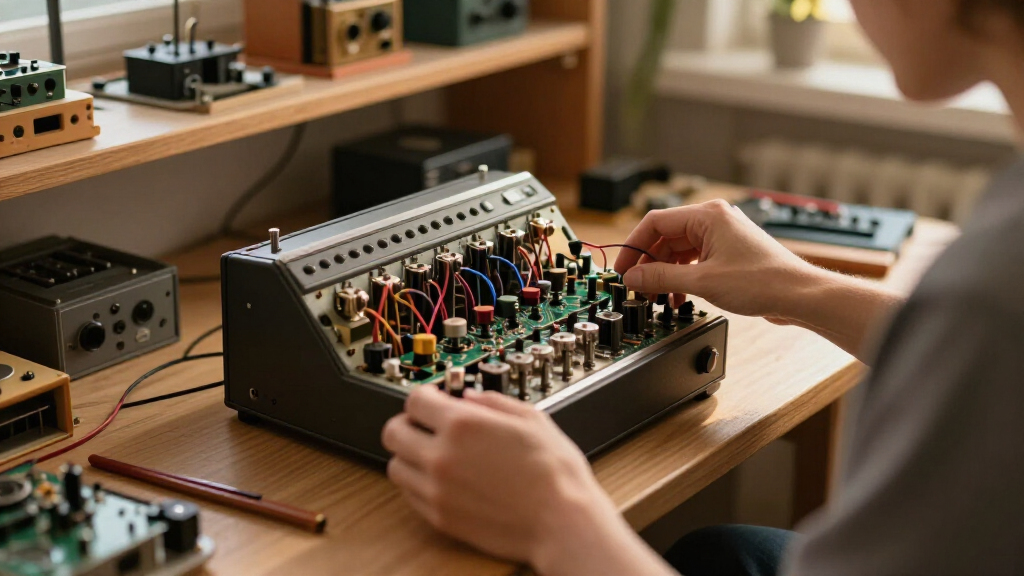
vintage magnetic logic computer kit
As an affiliate, we earn on qualifying purchases.
As an affiliate, we earn on qualifying purchases.
Japanese Computing Innovation in the 1950s
During the 1950s, Japan was rebuilding its industrial and technological base after World War II. While Western countries rapidly adopted vacuum tubes and transistors for computing, Japan faced resource limitations that prompted alternative solutions. The development of the Parametron was part of this broader trend of resourceful innovation, driven by researchers at institutions such as the University of Tokyo and the Electrotechnical Laboratory.
Prior to this discovery, most historical accounts focused on the adoption of transistor technology in Japan during the late 1950s and early 1960s. The Parametron’s existence was largely unknown outside specialized academic circles until recent archival research uncovered its components and design principles, suggesting that Japan explored magnetic logic as a viable computing technology.
“The discovery opens new avenues for understanding early post-war Japanese innovation and the diverse approaches to electronic logic used worldwide.”
— Professor Yuki Saito, electrical engineer
As an affiliate, we earn on qualifying purchases.
Remaining Questions About the Parametron’s Capabilities
Details about the operational status, specific applications, and full technical specifications of the Parametron remain limited. Researchers have not yet reconstructed the machine or confirmed its full functionality, and documentation is scarce. It is unclear how widely the device was used or whether similar devices were developed elsewhere in Japan.
As an affiliate, we earn on qualifying purchases.
Next Steps in Research and Historical Analysis
Researchers plan to locate more surviving components and archival materials related to the Parametron, aiming to reconstruct its design and understand its operational capabilities. Further investigations may reveal whether this magnetic logic technology influenced later Japanese or international computing developments. Additionally, scholars will explore other potential innovations from the same era.
As an affiliate, we earn on qualifying purchases.
Key Questions
What exactly is the Parametron?
The Parametron is a 1950s Japanese computer that used magnetic oscillation principles instead of transistors or vacuum tubes for logic operations, representing a unique technological approach of its time.
Why is the discovery of the Parametron important?
It broadens understanding of early computing history, showing that alternative magnetic logic technology was explored in Japan during the 1950s, challenging the notion that only Western countries led in digital innovation.
Are there any working examples of the Parametron today?
No, the original device is not operational, and details about its functionality are still under investigation. Researchers aim to reconstruct its design in future studies.
Did other countries develop similar magnetic logic computers?
There is limited evidence of similar devices elsewhere from that period, making the Parametron a unique case of magnetic logic technology in early computing history.
What impact could this discovery have on modern computing research?
While primarily historical, studying the Parametron’s approach could inspire alternative logic designs or materials for future low-power or resource-efficient computing systems.
Source: hn
Fall Picks
fall essentials
As an affiliate, we earn on qualifying purchases.