
TL;DR

Get wellness gear delivered free with Prime
- Fast, free delivery on millions of items
- Prime Video, Amazon Music and more included
- Member-only deals all year
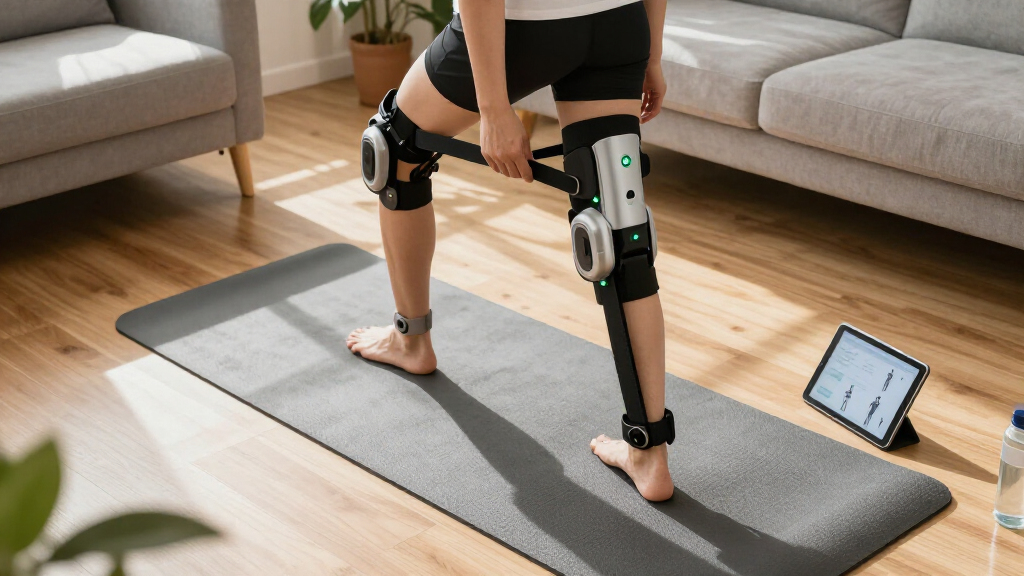
A newly published Samsung Electronics patent application describes a wearable exercise device that could use AI to adjust assistance or resistance during a workout. The filing outlines a possible system, not a confirmed product, and Samsung has not announced a release plan in the source material.
Samsung Electronics’ newly published patent application describes a wearable exercise device that could use artificial intelligence to adjust the assistance or resistance it provides while a person works out. The filing outlines a possible way to make exercise respond to a user’s performance in real time, but it does not confirm that Samsung plans to sell the device.
The application describes an exoskeleton that collects exercise data, including movement speed, joint angles and muscle signals. It could use those measurements to determine how much force the wearable should apply. According to the filing, a user could set an exercise goal before starting, after which the system would compare live performance with that target and adjust the device’s torque.
One example in the application describes helping a user complete an exercise while keeping the workout aligned with a predetermined goal. In practice, the concept would do more than record activity: it could change the force applied during the session. The application does not specify a finished device, consumer price, supported exercises or how the system would be tested.
The report was first highlighted by Patentlyze, which tracks technology patents. Patent filings describe proposed inventions, and companies may file for ideas that never become products. The material provided does not indicate that Samsung has announced a commercial launch or confirmed when, or whether, the exoskeleton might reach consumers.
Real-Time Control of Workout Force
If developed, a device that changes assistance or resistance during an exercise could make wearable equipment an active part of a workout rather than a passive tracker. It could respond when a user’s movement differs from a preset goal, potentially changing how the session feels and how much effort the equipment supplies. Those are possibilities described by the patent concept, not demonstrated outcomes.
The filing also points to a broader competition around personalized digital fitness. Samsung is building fitness services around Galaxy devices and Samsung Health, while Peloton has also filed patent applications for AI systems that could adjust workouts in real time. The Samsung filing suggests another possible layer: equipment that alters physical force as a session unfolds.
For readers, the key distinction is between a patent and a product announcement. The filing offers a view of what Samsung is exploring, but it gives no evidence that the system has been built, validated with users or made available for purchase.
Samsung’s Connected Fitness Plans
The exoskeleton application adds to a set of Samsung patent filings related to exercise technology. Previous filings described AI-generated exercise plans based on body-composition goals, digital workout demonstrations and wearable resistance systems. Together, the filings show areas of technical exploration; they do not establish that each idea is part of a planned product lineup.
Samsung is also expanding its fitness ecosystem through a partnership with iFIT. Earlier this year, the companies announced that iFIT’s AI personal trainer, Tailor, would come to compatible Galaxy devices. Tailor uses information such as a person’s goals, schedule, workout history and Samsung Health data to generate daily workouts and adjust training plans over time, according to the source report.
The arrangement builds on a partnership announced in 2025, when Samsung began bringing iFIT workout content into Samsung Health. The companies also described plans to connect Galaxy devices with iFIT-enabled equipment from brands including NordicTrack and ProForm. That service integration is separate from the patent’s proposed force-adjusting wearable.
Product Plans Remain Undisclosed
The filing does not establish whether Samsung has built a working prototype or intends to bring the exoskeleton to market. It also leaves open how the device would fit, which exercises it would support, how users would control its adjustments and what safeguards would govern changes in force during movement.
There are no reported test results, user feedback, performance measures or release dates in the source material. The patent describes possible data inputs and a method for changing torque, but it does not show how accurately the system would interpret movement or muscle signals. Those details would matter to understanding the device’s practical use.
It is also unclear whether Samsung would position the concept for home workouts, gyms, rehabilitation settings or another use. The application’s exercise example is not evidence of a tested benefit or of a particular intended market.
Watch for a Samsung Product Update
The next concrete development would be a Samsung announcement, product demonstration or additional filing that provides evidence of a working device and its intended use. Until then, the patent application is the reported milestone; the source material gives no schedule for a launch or further update.
Readers can also watch how Samsung develops its existing fitness partnerships and Galaxy integrations. Those services are already described as part of the company’s consumer fitness ecosystem, while the exoskeleton remains a proposed technology in a patent filing. Any future product details would help show whether the real-time adjustment concept moves beyond that stage.
Key Questions
What does Samsung’s patent application describe?
It describes a wearable exercise exoskeleton that could collect movement speed, joint angles and muscle signals, then use AI to adjust the assistance or resistance it supplies during a workout.
Has Samsung announced that it will sell the exoskeleton?
No product launch is confirmed in the source material. A patent application describes a proposed technology and does not by itself establish that a company will build or sell it.
How could the device adjust a workout?
The application says a user could set a goal before exercising. The system could compare real-time performance with that target and change the torque generated by the wearable device.
How does this relate to Samsung’s other fitness services?
Samsung has also partnered with iFIT to bring its Tailor AI personal trainer to compatible Galaxy devices, and previously began adding iFIT workout content to Samsung Health. Those services are described separately from the patent’s proposed wearable.
Source: rss
Cold & flu season Picks
humidifiers
As an affiliate, we earn on qualifying purchases.