
TL;DR

Get wellness gear delivered free with Prime
- Fast, free delivery on millions of items
- Prime Video, Amazon Music and more included
- Member-only deals all year
A Fit&Well writer says they now hold child’s pose and a standing forward fold for about a minute each after daily walks, after noticing stiffness following walks in a hilly area. Physiotherapist Helen O’Leary says the positions stretch lower-back soft tissue and may alleviate discomfort, but the report does not present clinical evidence that they work for everyone.
A Fit&Well writer has added child’s pose and a standing forward fold to the end of daily walks after experiencing stiffness in the hips, legs and back while walking in a hilly area. The personal report says the writer holds each stretch for about one minute; physiotherapist Helen O’Leary says both positions can stretch soft tissue around the lower back and may help alleviate discomfort.
The writer says walking is their daily form of exercise and that walks generally last no longer than an hour. They had assumed the low-impact activity did not require recovery, but noticed stiffness after moving to a hilly area. The report describes the stretches as a short addition to the routine, not as a treatment or a substitute for medical care.
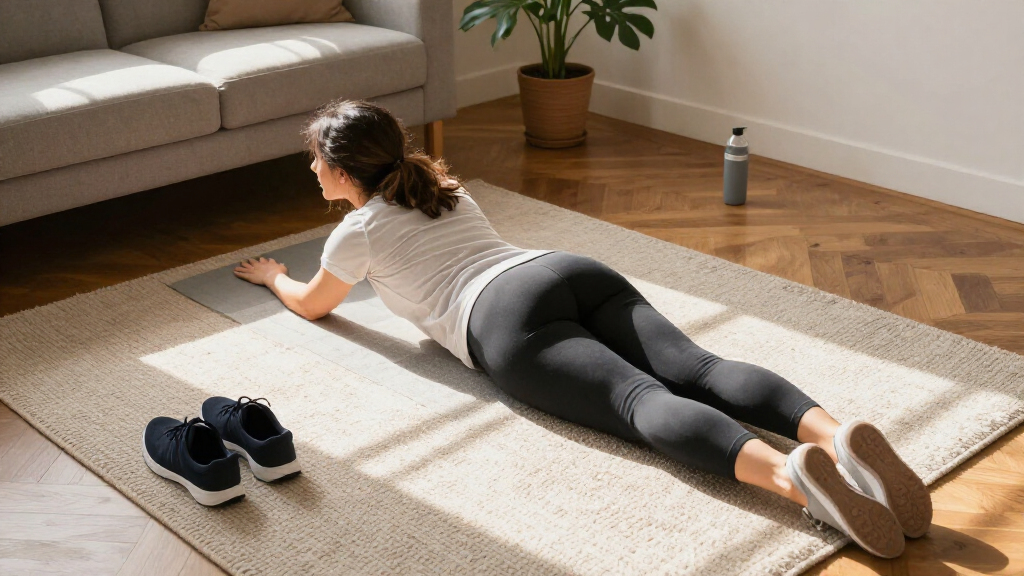
For child’s pose, kneel with the knees wider than hip-width apart, reach the arms forward and sit the hips back toward the heels. For the standing forward fold, stand with feet hip-width apart and lower the arms toward the feet, keeping the knees bent; stop at a comfortable hamstring stretch. The writer says they hold each position for around a minute.
O’Leary, identified in the report as a physiotherapist at Complete Pilates, says it is common to feel some stiffness or aching after walking, particularly after a long walk. She explains that both positions place the spine in flexion and stretch soft tissues in the lower back. Her comments describe a possible reason the stretches may feel helpful; they do not establish that the routine will relieve symptoms for every walker.
A Short Routine After Hilly Walks
The report offers a specific, brief routine for people who notice stiffness after walking, rather than a general claim that everyone needs to stretch. Its practical takeaway is to connect a short mobility habit to an existing daily activity. The writer calls this habit stacking and says pairing stretching with walking has helped make the stretches part of each day.
The distinction between personal experience and broader evidence matters: the reported improvement is the writer’s account, while O’Leary provides a professional explanation of how the positions affect the back. The source does not include a controlled comparison, measure changes in flexibility or pain, or show that these stretches prevent injury. Readers should treat the routine as an option for comfortable movement, not a guaranteed remedy.
non-slip yoga mat for stretching and child’s pose
As an affiliate, we earn on qualifying purchases.
As an affiliate, we earn on qualifying purchases.
Why Walking Can Leave Stiffness
The writer’s stiffness began after moving to a hilly area, despite walks being described as low-impact and generally under an hour. The report suggests that regular walking can still leave some people feeling stiff, particularly when routes or physical demands change. It does not give details about the hills, walking pace, footwear or the writer’s health, so those factors cannot be tied directly to the symptoms.
O’Leary says the lower back is in a neutral or slightly extended position while standing, which can load the small joints in the area. In her account, the two stretches move the spine into flexion and lengthen lower-back soft tissue. She also suggests an optional side bend in child’s pose: walk the hands to one side and sit back toward the opposite hip, then repeat on the other side. This is her suggested variation, not a required part of the writer’s two-stretch routine.
“It is quite common to feel a bit stiff or achy after walking, particularly following a long walk, and certain stretches can alleviate that discomfort.”
— Helen O’Leary, physiotherapist at Complete Pilates, as quoted by Fit&Well
yoga blocks for supported child’s pose and forward folds
As an affiliate, we earn on qualifying purchases.
As an affiliate, we earn on qualifying purchases.
Limits of the Personal Account
The report does not state its publication date, provide research testing these two stretches after walking, or quantify how much the writer’s stiffness changed. It is also unclear whether the routine helps other people, how long any relief lasts, or whether the writer has other factors contributing to the symptoms. O’Leary’s comments are attributed professional guidance, but the source does not describe a formal assessment of the writer.
The stretches should be kept within a comfortable range. The report does not offer guidance for people with pain, injury or medical conditions, and it does not say whether they should use the routine. Anyone whose symptoms persist, worsen or interfere with daily activity should seek advice from a qualified health professional rather than relying on stretching alone.
stretching strap for hamstring flexibility
As an affiliate, we earn on qualifying purchases.
As an affiliate, we earn on qualifying purchases.
How Readers Can Adapt the Stretches
The source describes no planned follow-up study or further reporting, so there is no announced next milestone. Readers interested in trying the routine can follow the described positions gently, bend the knees in the forward fold and stop if a movement causes pain. The optional side bend should be repeated on both sides, as O’Leary advises.
Whether the routine suits an individual depends on their comfort and circumstances; the report does not establish a standard duration or frequency beyond the writer’s own practice of holding each position for about a minute after walking. People with ongoing symptoms or relevant health concerns can ask a physiotherapist or another qualified professional for individual guidance.
Key Questions
Which two stretches does the report describe?
The writer describes child’s pose and a standing forward fold after daily walks.
How long does the writer hold each stretch?
The report says the writer holds each position for about one minute. That is their personal routine, not a duration shown to work for everyone.
What does the physiotherapist say the stretches may do?
Helen O’Leary says the positions put the spine into flexion and stretch soft tissue in the lower back, which may help alleviate post-walk discomfort. The article does not establish a guaranteed effect.
Can child’s pose be modified?
O’Leary suggests walking the hands to one side and sitting back toward the opposite hip to add a side bend. She advises repeating the movement on the other side.
Does the report prove the routine prevents pain or injury?
No. It is a personal account with comments from a physiotherapist, not a clinical test of prevention or treatment. People with persistent or worsening symptoms should seek professional advice.
Source: rss
Cold & flu season Picks
humidifiers
As an affiliate, we earn on qualifying purchases.