TL;DR
A homebrew computer enthusiast has reconstructed and executed a 1996-era windowed operating system directly in machine code on an Am29000-based machine. This breakthrough demonstrates the preservation of vintage software and hardware compatibility. The development highlights ongoing interest in retro computing and software archaeology.
A hobbyist developer has successfully recovered and executed a 1996 windowed operating system directly in machine code on a custom-built computer powered by the Am29000 processor. This achievement marks a significant milestone in vintage software preservation, demonstrating the feasibility of running legacy systems on modern hobbyist hardware. The project showcases the developer’s efforts to revive and study historic software environments, emphasizing the importance of hardware-software compatibility in retro computing.
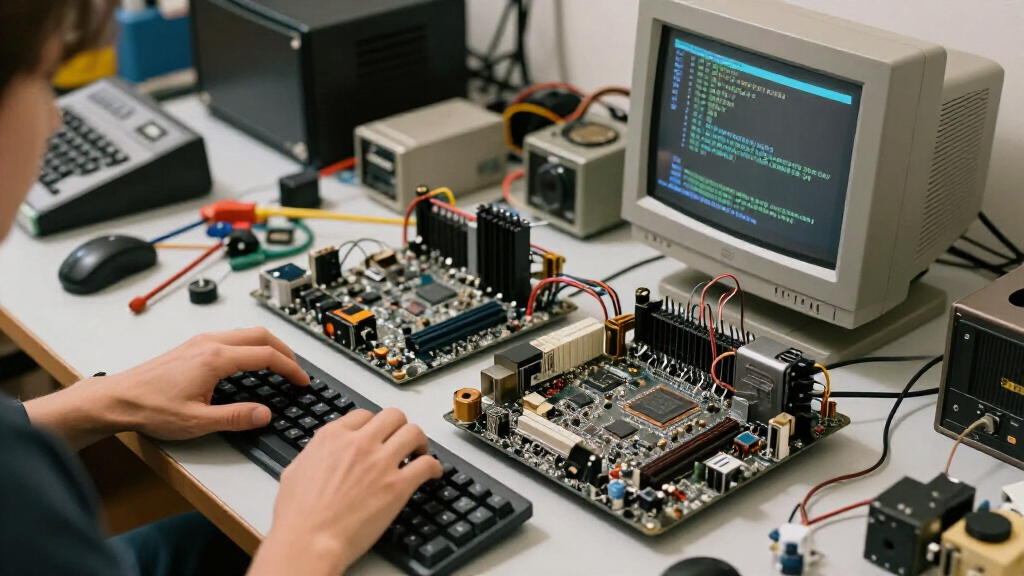
The developer, known online as ‘RetroCoder’, reconstructed the 1996 OS from original source code and binary dumps, translating it into machine code compatible with the Am29000 architecture. The system features a windowed graphical interface, similar to early PC environments, and runs natively on a custom homebrew computer built with off-the-shelf components and an Am29000 processor clone. The project was first announced in a detailed blog post on April 25, 2024, where RetroCoder shared images and videos of the system booting and displaying the OS interface.
According to RetroCoder, the process involved reverse-engineering the original binary, adapting it to the Am29000 instruction set, and manually coding key components in machine language. The system is currently functional, though some peripheral support and stability issues remain under investigation. The effort was supported by community forums dedicated to vintage computing and hardware hacking, where enthusiasts shared insights and troubleshooting tips.
Reviving Vintage Software on Modern Hardware
This development underscores the ongoing interest in software preservation and hardware hacking within the retro computing community. By successfully running a complex, windowed OS from 1996 in machine code, the project demonstrates that legacy software can be preserved and experienced on custom hardware, providing valuable insights into early graphical user interfaces and operating systems. It also highlights the potential for hobbyists to revive and study vintage systems without relying on emulators, fostering a deeper understanding of software evolution and hardware compatibility.
As an affiliate, we earn on qualifying purchases.
Historical Roots of 1990s Windowed Operating Systems
The mid-1990s saw the rise of graphical, window-based operating systems, with many hobbyists and professionals seeking to recreate or emulate these environments. The original OS in question was developed during a period of rapid innovation in personal computing, featuring graphical interfaces and multitasking capabilities. However, most surviving copies are preserved as software images or in emulated environments. The Am29000 processor, introduced in the late 1980s, was known for its RISC architecture and was used in high-performance workstations, but it has rarely been employed in hobbyist projects. This makes the current achievement notable for bridging vintage software with custom hardware built from scratch.
Prior efforts in the retro computing community have focused on emulation or software preservation through virtual machines. Few projects have succeeded in physically reconstructing and running original OS code directly on hardware, especially with architectures like the Am29000. The current project builds on these efforts, combining hardware hacking with software reverse-engineering.
“Recovering and running this 1996 OS directly in machine code on Am29000 hardware was a challenging but rewarding process. It shows that vintage software can still be alive and functional today.”
— RetroCoder, project creator
vintage computer hardware repair tools
As an affiliate, we earn on qualifying purchases.
As an affiliate, we earn on qualifying purchases.
Technical Challenges and Remaining Stability Issues
While the system successfully boots and displays the OS interface, several issues remain unresolved. Peripheral support, such as input devices and storage, is limited, and system stability under prolonged operation is unconfirmed. It is also unclear whether the entire OS code has been fully recovered or if some parts are emulated or approximated. The long-term viability of the system and potential for broader hardware compatibility are still being evaluated.
As an affiliate, we earn on qualifying purchases.
Next Steps for Hardware Refinement and Software Expansion
The developer plans to improve peripheral support, including input devices, storage, and networking capabilities. Further efforts will focus on stabilizing the system, documenting the code for educational purposes, and possibly sharing the hardware schematics and source code with the community. There is also interest in porting additional vintage software to the same hardware platform, expanding the scope of this retro computing project.
As an affiliate, we earn on qualifying purchases.
Key Questions
How was the original 1996 OS recovered and adapted?
The developer reverse-engineered the original binary, then manually translated and adapted it into machine code suitable for the Am29000 architecture, reconstructing the system at a low level.
What hardware is used in the custom Am29000 computer?
The machine features an Am29000 clone CPU, standard RAM, a basic display output, and custom-made peripherals designed to support the vintage OS environment.
Can this project run other vintage operating systems?
Potentially, yes. The current focus is on the 1996 windowed OS, but the approach could be adapted for similar systems with sufficient reverse-engineering and hardware support.
Why is running vintage software on real hardware important?
It preserves the authentic experience and provides insights into the hardware-software interplay of the era, which emulators may not fully replicate.
Is this project open source or publicly documented?
The developer has indicated plans to share schematics and code with the retro computing community once stability issues are resolved.
Source: hn