TL;DR

Get wellness gear delivered free with Prime
- Fast, free delivery on millions of items
- Prime Video, Amazon Music and more included
- Member-only deals all year
Senior-friendly alarm clocks now include loud sounds, visual signals, and smart features. They help ensure seniors wake up on time, even with hearing or vision impairments, by combining multiple cues for dependability.
Imagine waking up with the soft glow of a light, a gentle chime, or a vibrating nudge—every morning, a smooth start rather than a stressful scramble. That’s what the right alarm clock can do for seniors who struggle with hearing loss, memory, or dexterity.
Choosing the best wake-up clock means understanding what truly makes mornings easier: clear visuals, adjustable sounds, and features that fit unique needs. Today, more devices than ever combine these elements with modern tech to create dependable routines for seniors—and peace of mind for their families.
Prioritize large displays with high contrast and simple controls for ease of use.
Use a combination of visual, auditory, and vibrating cues to ensure wake-up success.
Assess sensory needs carefully before choosing features or device types.
Smart alarm clocks can add convenience but require simple interfaces and setup.
Latest devices combine wake-up functions with health and safety features for holistic support.
What Features Make an Alarm Clock Senior-Friendly?
Senior-friendly alarm clocks focus on simplicity and sensory cues. Large, high-contrast displays help those with vision loss. Easy-to-press buttons or touch controls make setup a breeze, even for those with limited dexterity. Adjustable volume and multiple alarm sounds, including gentle tones or familiar tunes, cater to hearing impairments and personal preferences.
Understanding why these features matter helps in selecting the right device. For example, a senior with mild hearing loss might benefit most from a clock with a loud, adjustable alarm combined with flashing lights, ensuring they don’t miss the wake-up call. Conversely, someone with cognitive challenges might need minimal controls and clear labels to avoid confusion. Recognizing these nuances allows caregivers to choose devices that not only sound the alarm but also support independence and confidence in daily routines. The tradeoff often lies in balancing simplicity with advanced features; more complex devices might offer customization but can overwhelm users with cognitive impairments. Prioritizing essential, user-friendly features ensures reliability and ease of use.
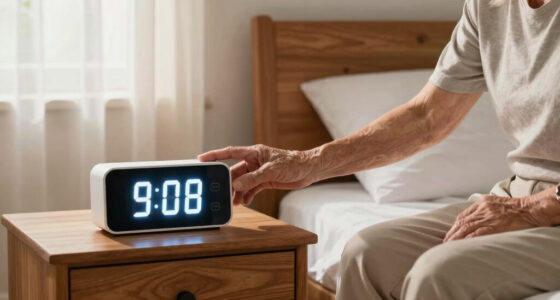
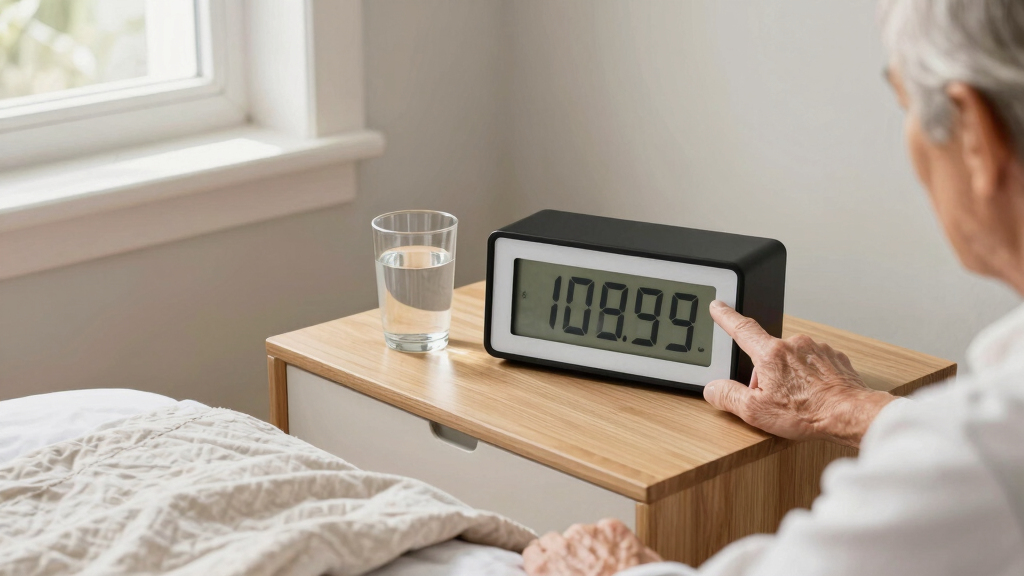
senior alarm clock with large display and loud alarm
As an affiliate, we earn on qualifying purchases.
As an affiliate, we earn on qualifying purchases.
How Do Visual and Vibrating Alerts Help Seniors Wake Up?
Visual alerts like flashing lights and vibrating cues serve as vital alternatives or supplements to sound, especially for seniors with hearing impairments. Bright, flashing LEDs or strobes can cut through ambient noise or hearing limitations, making the wake-up signal unmistakable. Vibrating pads, placed under pillows or mattresses, provide a gentle, silent nudge—ideal for those who prefer quiet cues or are sensitive to loud sounds.
Understanding the implications of these cues helps in designing effective wake-up routines. For instance, a senior who sleeps deeply or has moderate hearing loss might rely solely on flashing lights, but combining this with vibration can create redundancy, reducing the risk of missed alarms. This dual approach is particularly valuable because it accounts for variability in sensory abilities and preferences, increasing the dependability of waking routines. The tradeoff involves ensuring that visual signals are bright enough without being disruptive and that vibrations are strong enough to wake but not startling. Using a combination of these cues enhances reliability and provides peace of mind for caregivers, knowing that multiple sensory pathways reinforce the wake-up process.
vibrating alarm clock for seniors with visual cues
As an affiliate, we earn on qualifying purchases.
As an affiliate, we earn on qualifying purchases.
Compare the Best Alarm Clocks for Seniors in One Easy Table
| Feature | Basic Model | Smart Alarm Clock | Vibration & Light Alarm |
|---|---|---|---|
| Display | Large, high-contrast digital | Touchscreen with customizable visuals | Simple LED flashing |
| Sound Levels | Adjustable, loud alarm | Voice commands & alerts | Silent with vibration option |
| Visual Alerts | Flashing lights | Customizable color and brightness | LED strobe or flashing lights |
| Connectivity | Battery backup, easy setup | Wi-Fi, app control, health tracking | Vibration pad, optional app control |
| Best For | Basic needs & simplicity | Tech-savvy seniors & health monitoring | Hearing impairments & silent waking |
When choosing among these options, consider how each feature aligns with the senior’s specific needs and daily routines. A basic model offers simplicity and reliability, ideal for those who prefer straightforward devices. Smart clocks add convenience and integration with health tracking but may require initial setup and familiarity with technology. Vibration and light alarms are invaluable for those with hearing impairments or deep sleep patterns, providing multiple redundant cues to ensure wake-up success. Evaluating these tradeoffs helps in selecting a device that not only wakes the senior but also promotes independence and confidence in managing their mornings.
smart alarm clock for elderly with safety features
As an affiliate, we earn on qualifying purchases.
As an affiliate, we earn on qualifying purchases.
Simple Steps to Pick the Perfect Alarm Clock for Your Senior Loved One
- Assess their sensory needs: hearing, vision, mobility.
- Decide on preferred alert types: sound, light, vibration.
- Look for models with large displays and easy controls.
- Check for backup power options to prevent missed alarms.
- Test the device with your loved one, ensuring they can operate it comfortably.
To make this process more effective, create a checklist based on their specific impairments and routines. For example, if your loved one has significant hearing loss but good vision, prioritize models with loud alarms and visual signals. If they have cognitive challenges, focus on devices with minimal controls and clear labels. Involving them in the selection process fosters confidence and ensures the device suits their preferences. Additionally, consider setting up a trial period where they can test the alarm in their typical sleeping environment, making adjustments as needed. This practical approach minimizes frustration and maximizes the likelihood of consistent use, ultimately supporting their independence and safety.
As an affiliate, we earn on qualifying purchases.
Are Smart Alarm Clocks Safe and Easy for Seniors to Use?
Smart alarm clocks can be highly beneficial for seniors when set up correctly, offering features like voice control, remote management, and integration with health devices. These capabilities can reduce caregiver intervention and promote independence. However, their safety and ease of use depend on choosing models designed with seniors in mind—those with simple interfaces, clear instructions, and reliable connectivity.
From a practical standpoint, caregivers should evaluate whether the senior is comfortable with technology or if additional support is needed during setup. For example, a senior who can follow step-by-step instructions may benefit from a clock that can be controlled via voice commands or an app, allowing easy adjustments without complex menus. To enhance safety, always review privacy settings, ensure firmware updates are applied, and educate the user on basic security practices. The key is balancing technological advantages with usability—overly complex smart features can backfire if the user feels overwhelmed. By selecting intuitive, well-supported models and providing initial guidance, caregivers can maximize the benefits while minimizing potential frustrations or security concerns.
What Are the Latest Innovations Making Wake-Up Clocks Better?
Recent advancements in wake-up clocks focus on integrating sensory cues with health and safety features to create comprehensive routines. Some devices now include sleep tracking, heart rate monitoring, and integration with health apps, offering insights that go beyond waking—such as detecting irregular sleep patterns or stress levels. These features can help caregivers identify issues early and tailor routines accordingly, promoting overall wellbeing.
Voice assistants like Alexa or Google Nest have become more sophisticated, allowing seniors to set routines that gradually brighten the room, play familiar music, or remind them to take medication—all through simple voice commands. These innovations aim to make mornings more predictable, safe, and even enjoyable. For practical use, caregivers should consider how these features align with the senior’s daily habits, ensuring that technology enhances rather than complicates their routine. The tradeoff involves balancing advanced health features with ease of use; overly complex systems may require ongoing support. The latest clocks are designed to be intuitive, helping seniors wake up gently and start their day with confidence, which is crucial for maintaining independence and safety.
Frequently Asked Questions
What features should I look for in an alarm clock for an elderly person?
Focus on large, high-contrast displays, easy-to-use controls, adjustable volume, and multiple alert types like lights or vibrations. These features help accommodate sensory impairments and cognitive challenges.Are there alarm clocks specifically designed for seniors with hearing or vision impairments?
Yes, many models include flashing lights, vibrating pads, and loud adjustable alarms. Some even combine visual, tactile, and auditory cues to ensure wake-up success regardless of impairments.How can I make sure the alarm clock is easy for my elderly loved one to operate?
Choose devices with simple controls, large buttons, and clear labels. Involve them in the setup process and test it together to confirm they feel confident using it every morning.What are some reliable options with visual alerts or vibrations?
Look for clocks with bright LED flashing lights, strobes, or vibrating pads that can be placed under pillows. Many models combine these features for dependable wake-up signals.Are smart alarm clocks safe for seniors?
They are generally safe when properly set up, offering remote control and integration with health devices. Ensure they have simple interfaces, and keep software updated for security and ease of use.Conclusion
The right alarm clock isn’t just about waking up—it’s about creating confidence and comfort in every morning. Whether it’s a loud buzzer, flashing lights, or a gentle vibration, choose what suits your loved one best.
Think of mornings as a fresh start, not a battle. A dependable alarm clock can turn that start into a peaceful, energizing moment. After all, waking up should be simple, safe, and even a little comforting.
Halloween Picks
halloween
As an affiliate, we earn on qualifying purchases.