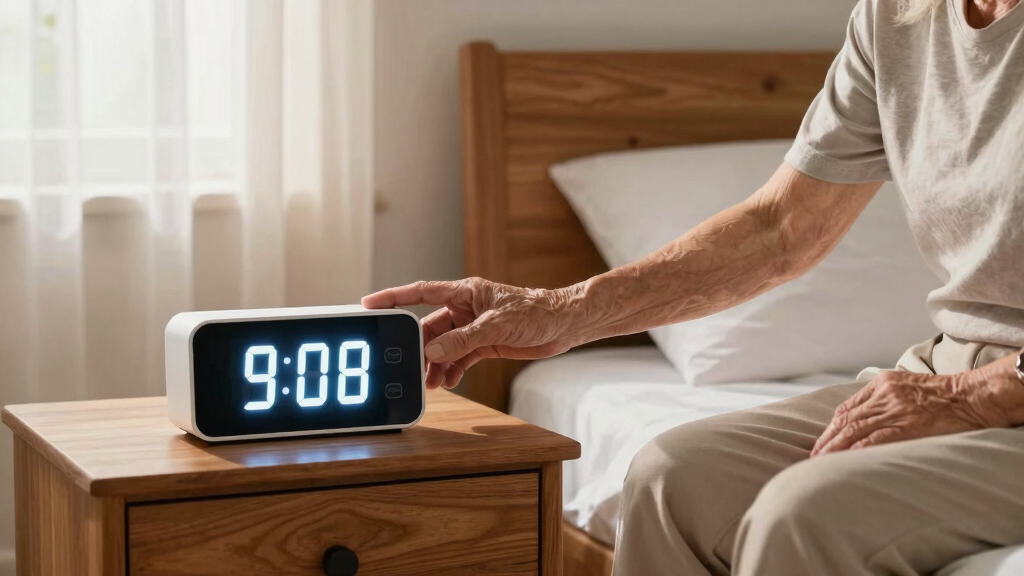
This guide explains how to set up alarm clocks tailored for seniors, ensuring they wake up on time every morning. It is ideal for caregivers or seniors themselves who want a simple, reliable wake-up solution. The instructions focus on easy-to-use devices and customization options to suit individual needs.

Get wellness gear delivered free with Prime
- Fast, free delivery on millions of items
- Prime Video, Amazon Music and more included
- Member-only deals all year

Acedeck Super Loud Alarm Clock with Dual Alarms and USB Charging
- ✔ Alarm Volume: 115dB
- ✔ Alarm Sounds: 6
- ✔ Display Size: 4.2 inches

Tinload 5.5" Large No Ticking Analog Alarm Clock, Silent, Readable for Seniors, Easy to Set, Gradual Rise Alarm, Big Numbers, Gen…
- ✔ Size: 5.5" x 5.5" x 2.2"
- ✔ Power: 1x AA battery (not included)
- ✔ Display: Large numbers on white background

Peakeep Digital Alarm Clock for Bedroom with Large LED Numbers, Loud Alarm, USB Charger, Battery Backup, and Adjustable Brightnes…
- ✔ Display Size: 2 inches
- ✔ Alarm Volume: 60-103dB
- ✔ Brightness Levels: 5
Difficulty: Beginner | Time: 10-15 minutes
What You’ll Need
Tools & Materials:
- Alarm clock device (digital or analog)
- Power source
- Batteries (if needed)
- User manual for the alarm clock
Knowledge:
- Basic understanding of how to operate a clock or device
- Ability to read simple instructions or labels
Acedeck Super Loud Alarm Clock with Dual Alarms and USB Charging
<p>The <strong>Acedeck Super Loud Alarm Clock</strong> stands out for its exceptional 115dB volume, making it ideal for seniors who struggle to wake up with softer alarms. Its dual alarms offer flexibility for different schedules, and the large, adjustable LED display enhances visibility. Compared to other options, it excels in loudness but requires an external power source, which could be a limitation during power outages. Its USB charging port adds convenience, especially for those who use multiple devices overnight. However, it does not include batteries for backup, so its alarm reliability during outages depends on continuous power supply.</p>
Pros:
- Extremely loud 115dB alarm for deep sleepers
- Dual alarms for personalized scheduling
- Battery backup ensures alarms work during power outages
- Includes USB port for charging devices
Cons:
- Requires external power—no rechargeable battery option
- No built-in battery for backup during outages
- Loud volume might be disruptive for light sleepers or partners
Best for: Seniors who are heavy sleepers or need a very loud alarm to wake up reliably.
Not ideal for: Those seeking a battery-powered device or with limited access to AC power at night.
Bottom line: Best suited for seniors who need an extremely loud alarm and have reliable power access, but less ideal for those preferring battery independence.
“Best suited for seniors who need an extremely loud alarm and have reliable power access, but less ideal for those preferring battery independence.”
Tinload 5.5" Large No Ticking Analog Alarm Clock, Silent, Readable for Seniors, Easy to Set, Gradual Rise Alarm, Big Numbers, Gen…
<p>The <strong>Tinload Analog Alarm Clock</strong> offers a simple, silent design with a large, high-contrast display perfect for seniors with poor eyesight. Its gradual wake-up feature helps reduce startling, making it ideal for peaceful mornings. Compared with digital counterparts, it’s straightforward to set, but it relies solely on one AA battery, which is not included. Its lack of advanced features means it’s best for those who prefer a no-frills, easy-to-read clock. However, its limited functionality and battery dependence make it less suitable for seniors who want multiple alarms or additional tech features.</p>
Pros:
- Large, easy-to-read numbers for visual clarity
- Silent operation prevents sleep disruption
- Gradual alarm reduces sudden waking shock
- Lighted on demand for nighttime visibility
Cons:
- Batteries (AA) not included, requiring additional purchase
- Limited to basic alarm settings
- No power adapter or backup beyond batteries
Best for: Seniors needing a straightforward, silent clock with large numbers and gentle wake-up.
Not ideal for: Those who want multiple alarms, advanced features, or prefer an AC-powered device.
Bottom line: A perfect choice for seniors prioritizing simplicity, silence, and clarity, but not for those seeking multi-functionality.
“A perfect choice for seniors prioritizing simplicity, silence, and clarity, but not for those seeking multi-functionality.”
Peakeep Digital Alarm Clock for Bedroom with Large LED Numbers, Loud Alarm, USB Charger, Battery Backup, and Adjustable Brightnes…
<p>The <strong>Peakeep Digital Alarm Clock</strong> combines a large, 2-inch LED display with adjustable brightness and a loud alarm that can be customized within a range of 60-103dB. Its USB port for charging devices and battery backup for settings retention make it a versatile choice for tech-aware seniors. Compared to analog options, it offers more control over volume and lighting, but it depends on AC power for full operation and batteries for backup. Some users might find the brightness too intense at night, and the need for power outlets could limit placement options.</p>
Pros:
- Large, bright LED display for easy reading
- Adjustable alarm volume and brightness
- Includes USB port for charging devices
- Battery backup preserves settings during outages
Cons:
- Batteries for backup are not included
- Display brightness may be too intense for night use
- Requires AC power for full functionality
Best for: Seniors who want a modern, customizable alarm with additional features like USB charging.
Not ideal for: Those preferring a purely battery-operated device or with limited access to power outlets.
Bottom line: A top pick for seniors seeking a highly customizable, modern alarm clock with smart features, but less ideal for those needing battery-only operation.
“A top pick for seniors seeking a highly customizable, modern alarm clock with smart features, but less ideal for those needing battery-only operation.”
As an Amazon Associate we earn from qualifying purchases.
Before You Start
Ensure the alarm clock is plugged in or has working batteries. Test the device by turning it on and verifying that the display is clear and the volume is adjustable. Keep the device within easy reach for the senior or caregiver setting it up.
Step-by-Step Instructions
Step 1: Select an appropriate alarm clock
Choose an alarm clock with large, easy-to-press buttons, a clear display, and adjustable volume. Prefer devices with a simple interface to prevent confusion.
Tip: Opt for a model with a loud, adjustable alarm tone and a visual indicator like flashing lights if hearing impairment is a concern.
Check: You have a device that is easy to operate, and the display and controls are clearly visible and accessible.
Step 2: Set the correct time on the alarm clock
Press the ‘Set’ button, then use the ‘+’ and ‘-‘ buttons to adjust the hour and minutes to match the current time. Confirm by pressing ‘Set’ or ‘OK’.
Tip: Use a clock or watch to verify the current time before setting. Ensure AM/PM is correct if applicable.
Check: The display shows the current accurate time, and there are no errors or misaligned digits.
Step 3: Program the wake-up alarm time
Press the ‘Alarm’ or ‘Set Alarm’ button. Use the ‘+’ and ‘-‘ buttons to select the desired wake-up time. Confirm by pressing ‘Set’ or ‘OK’.
Tip: Set the alarm for a time 10-15 minutes earlier than the latest wake-up time needed to allow for any delays or confusion.
Check: The alarm time is displayed correctly and matches the intended wake-up time.
Step 4: Adjust the alarm volume and tone
Locate the volume control and tone selection options. Turn the volume to a level loud enough to wake the senior, and select a tone that is distinctive and easy to recognize.
Tip: Test the alarm sound by activating it briefly. Consider using a combination of sound and flashing lights if hearing is impaired.
Check: Alarm sounds loudly and clearly at the set volume, and the tone is distinctive enough to wake the person.
Step 5: Test the alarm setup
Activate the alarm manually to verify it rings at the correct time with the correct volume and tone. Confirm the senior can hear and recognize it.
Tip: Observe if the alarm is loud enough and if the senior responds appropriately. Adjust volume or tone if necessary.
Check: Alarm activates correctly, and the senior demonstrates awareness of the alarm sound.
Step 6: Position the alarm clock appropriately
Place the alarm clock in a location within easy reach and where the sound can be heard clearly, such as bedside table or a prominent spot in the room.
Tip: Ensure the device is stable and not obstructed by other objects that could dampen the sound or make it hard to operate.
Check: The alarm clock is accessible and the alarm sound is audible from the intended waking area.
Common Mistakes to Avoid
- Setting the alarm for the wrong time or AM/PM confusion — Double-check the set time against the current time and verify AM/PM if applicable.
- Choosing a volume or tone that is too soft or unrecognizable — Test the alarm after setting, ensuring it is loud enough and distinctive for the user.
- Placing the alarm in a location where it can’t be heard — Position the device within easy reach and ensure it is placed where sound can travel clearly.
- Not testing the alarm before the first use — Always activate and listen to the alarm after setup to confirm proper operation.
Troubleshooting
Problem: Alarm does not ring at the set time
Solution: Check if the alarm is enabled, properly programmed, and the device is powered or has fresh batteries. Reset the alarm if needed.
Problem: Alarm volume is too low or not loud enough
Solution: Increase the volume setting and test again. Confirm the speaker is unobstructed and working correctly.
Problem: Alarm tone is not recognizable or too harsh
Solution: Change the tone to a more distinctive sound or use a device with multiple tone options.
What Success Looks Like
The alarm rings loudly at the programmed time, the volume and tone are appropriate, and the senior responds by waking up or acknowledging the alarm. The device is easy to use and reliably activates each morning without errors.
Next Steps
Regularly verify the alarm settings to accommodate any changes in routine or hearing ability. Clean the device periodically and replace batteries as needed. If using multiple alarms or devices, ensure they are synchronized and functioning correctly.
Frequently Asked Questions
How do I change the alarm time on the device?
Press the ‘Alarm’ or ‘Set Alarm’ button, then use the ‘+’ and ‘-‘ buttons to adjust the time. Confirm with ‘Set’ or ‘OK’. Refer to the device’s manual for specific instructions.
What if the senior can’t hear the alarm?
Use a device with a high-volume setting, flashing lights, or vibrations if available. Place the alarm in a location where the sound can be heard easily.
Can I set multiple alarms for different times?
Yes, many alarm clocks allow programming multiple alarms. Follow the device’s instructions to set each alarm separately.
How do I turn off or cancel the alarm?
Press the ‘Off’ or ‘Snooze’ button, or disable the alarm in the settings menu, depending on your device. Consult the manual for specific steps.
Columbus Day / Indigenous Peoples' Day Picks
long weekend sales
As an affiliate, we earn on qualifying purchases.