
TL;DR

Get wellness gear delivered free with Prime
- Fast, free delivery on millions of items
- Prime Video, Amazon Music and more included
- Member-only deals all year
Shift workers face unique sleep challenges. This checklist highlights simple yet effective ways to create a sleep-friendly bedroom—dark, quiet, cool, and distraction-free—to improve rest during daytime hours.
Imagine trying to sleep when the sun is blazing outside, and your neighbors are mowing the lawn. It’s tough. Shift workers know this all too well. The secret isn’t just in how long you sleep, but in how you set up your bedroom for success.
This guide is your practical toolkit—covering everything from blackout curtains to noise control—so your daytime sleep feels as restorative as a night’s rest. Whether you’re on a rotating schedule or night shifts, these tips help you reclaim your sleep quality and protect your health.
Use blackout curtains and eye masks to block daylight and create a dark sleep environment.
Maintain a consistent sleep schedule, even on days off, to stabilize your circadian rhythm.
Control light exposure with smart lighting or light therapy to help your body adapt to shift work.
Reduce noise with earplugs or white noise machines for a deeper, more restorative sleep.
Stay updated with new tech like sleep trackers and blue light filters to enhance your rest.
How to Make Your Bedroom a Sleep Sanctuary During the Day
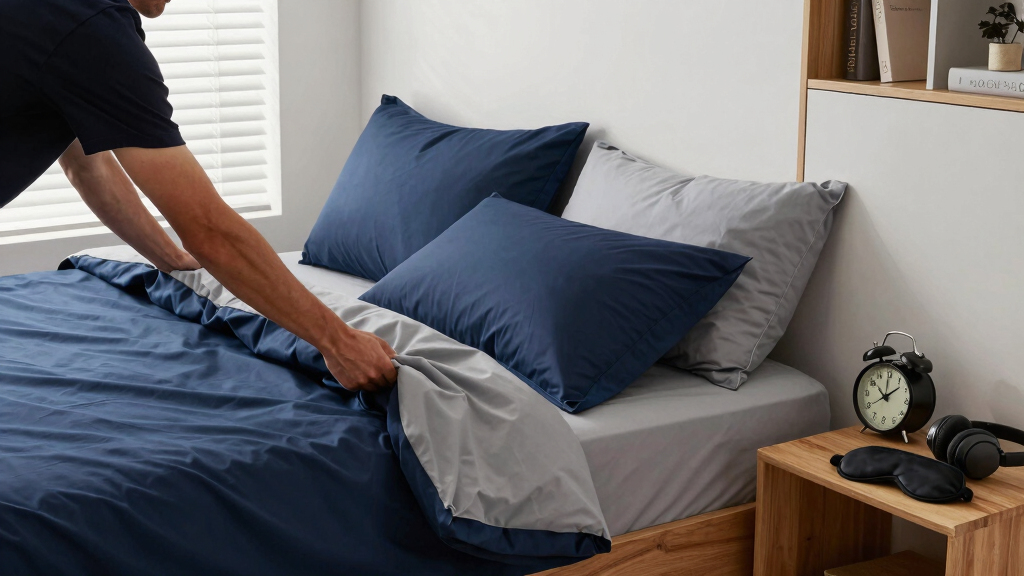
The first step? Transform your bedroom into a dark, quiet retreat. Daylight and noise are your enemies when trying to sleep during daylight hours. Use blackout curtains or eye masks to block out sunlight, which is crucial because exposure to light during sleep hours can suppress melatonin production, making it harder to fall asleep or stay asleep. A white noise machine or earplugs can drown out traffic, barking dogs, or household chatter, which can cause micro-awakenings—small disruptions that fragment sleep and reduce restorative deep sleep stages. Setting your room temperature between 60-67°F (15-19°C) is essential because a cooler environment promotes faster sleep onset and prevents you from waking up sweaty, which can disturb sleep cycles. Investing in a supportive mattress and plush pillows is not just about comfort; it impacts sleep quality directly. An unsupportive or uncomfortable bed can cause frequent awakenings, leading to less restorative sleep and increased fatigue. Think of your sleep setup as an investment in your recovery—better setup means better sleep, which translates into better health and alertness during your shift.
As an affiliate, we earn on qualifying purchases.
Create a Consistent Sleep Routine That Works for Your Shifts
Sticking to a consistent sleep schedule—even on days off—helps your body develop a predictable pattern, which is essential because shift work inherently disrupts your natural circadian rhythm. When your sleep times vary widely, your internal clock struggles to synchronize, leading to poorer quality sleep, increased fatigue, and difficulty waking up refreshed. By going to bed at the same time each day—even if it’s at unconventional hours—you reinforce your body’s expectations for rest. For example, if you finish a night shift at 7 a.m., aiming to sleep from 8 a.m. to 4 p.m. consistently helps your body anticipate sleep during that window. Using alarms or sleep tracking apps can help enforce this routine, making it easier to stick to your schedule. Over time, this consistency can help your body adapt, reducing the mental and physical stress of irregular sleep patterns. Keep in mind, however, that rigid routines may sometimes conflict with social or family obligations, so balancing flexibility with consistency is key to maintaining both your sleep health and your social life.
As an affiliate, we earn on qualifying purchases.
Lighting Hacks to Reset Your Circadian Rhythm
Light exposure is the primary cue your body uses to regulate its internal clock—known as the circadian rhythm. Proper management of light can dramatically improve your ability to sleep during the day and wake up refreshed. When waking up after a night shift, exposing yourself to bright light within the first 30 minutes is crucial because it signals to your brain that it’s time to be alert, helping to suppress melatonin and promote wakefulness. Using a smart light or a light therapy box that mimics natural sunlight can be especially effective, as it enhances alertness and helps reset your internal clock more quickly. Conversely, before sleep, blocking out light with blackout curtains or a sleep mask prevents your brain from receiving daytime signals, which can delay sleep onset and reduce sleep quality. Maintaining a regular light schedule on days off—exposing yourself to natural light during waking hours—helps your body establish a stable circadian rhythm, making shift transitions smoother and decreasing the likelihood of sleep disturbances. Proper light management is a tradeoff: too much light exposure at the wrong times can delay sleep, while insufficient light when waking can impair alertness—finding the right balance is key.
As an affiliate, we earn on qualifying purchases.
Practical Tips to Minimize Distractions and Improve Sleep Quality
Distractions—especially electronic devices—are one of the biggest barriers to restful sleep. The blue light emitted by screens inhibits melatonin production, which is vital for sleep initiation. This suppression can delay sleep onset by up to an hour or more, making it harder to fall asleep even if you’re exhausted. To combat this, keep electronic devices out of the bedroom or turn off notifications at least an hour before sleep. Using apps that block blue light or enabling ‘night mode’ on your devices can help maintain melatonin levels, facilitating quicker sleep onset. Additionally, having your sleepwear, glasses, medications, or water bottle nearby reduces stress and minimizes wake-ups during the night. When you wake, the instinct might be to turn on bright lights or search for essentials, which can further disrupt your sleep cycle. By organizing your sleeping environment so everything you need is within reach, you minimize these disruptions, making it easier to fall back asleep and complete the necessary rest cycles. These small adjustments can significantly improve sleep quality by reducing the cognitive and environmental barriers to restful sleep during daylight hours.
smart lighting for sleep regulation
As an affiliate, we earn on qualifying purchases.
As an affiliate, we earn on qualifying purchases.
Compare Bedroom Environment Options for Shift Sleep
| Feature | Blackout Curtains | White Noise Machine | LED Light Therapy |
|---|---|---|---|
| Purpose | Block daylight to create a dark environment essential for sleep during the day, preventing light from disrupting melatonin production. This is especially important because even small amounts of light can significantly suppress melatonin, which is vital for initiating and maintaining sleep. Proper blackout measures ensure your sleep environment mimics night-time conditions, helping your body produce sleep hormones naturally. | Mask ambient sounds such as traffic or household noise, which can cause micro-awakenings and fragment sleep cycles, reducing overall sleep quality. By minimizing auditory disruptions, white noise machines help sustain deep sleep stages, which are crucial for physical and mental restoration. The choice of sound and volume can be tailored to personal preferences, making it a versatile tool for various environments. | Regulate circadian rhythm by simulating natural light patterns, helping your body recognize when to wake and sleep, especially during shift changes or irregular schedules. Proper use of LED light therapy can accelerate adaptation to new schedules, reduce sleep latency, and improve mood and alertness during waking hours. However, incorrect timing or intensity can have the opposite effect, so understanding how to use these devices effectively is key. |
| Best For | Day sleepers who need complete darkness to fall asleep and stay asleep during daylight hours. If even small light leaks occur, they can substantially impair melatonin secretion, so investing in high-quality blackout solutions is often worthwhile. This is especially true for those living in urban areas or with windows facing direct sunlight. | Environments with unpredictable or loud background noise that can disturb sleep continuity. White noise provides a consistent sound environment that masks disruptive noises, promoting uninterrupted sleep cycles. It’s particularly beneficial in shared living spaces or noisy neighborhoods, where external sounds can easily wake you up. | Shift workers adjusting to new schedules or those who want to reinforce natural sleep-wake cues for better adaptation. When used correctly, LED light therapy can help advance or delay your internal clock, making shift transitions less disruptive. It’s especially helpful for those experiencing jet lag-like symptoms or difficulty waking up. |
| Pros | Easy to install, highly effective at blocking light, affordable options available. High-quality blackout curtains can be entirely blackout, which is crucial for consistent sleep quality. They also prevent light leaks that can undermine sleep, especially in rooms with streetlights or early morning sun. | Portable, customizable sound options, easy to turn on/off, and can be used in various settings. White noise machines are versatile and can be tailored to personal preferences, improving sleep continuity. They are particularly useful for travel or in shared bedrooms, where external noises are unpredictable. | Natural light simulation can improve mood and alertness during wake periods, aiding in schedule adjustments. LED therapy can be programmed to mimic sunrise or sunset, helping your body adjust gradually. However, the effectiveness depends on correct timing and intensity, and some models may be costly or require space and power sources. |
| Cons | Can be costly if opting for high-quality blackout curtains, may block emergency lighting or vents if not installed carefully. Some cheaper options might not fully block light, reducing their effectiveness. Poor installation can result in light leaks, which can undermine sleep quality. | Requires power source and maintenance, some may find the constant noise distracting if not properly set. Overuse or inappropriate volume can disturb sleep cycles or cause discomfort. Finding the right sound level and type is essential for maximizing benefits without introducing new disruptions. | Cost varies depending on technology, and inconsistent use may diminish benefits; some models require a power outlet and space. If not used consistently or set correctly, the benefits can be minimal. Additionally, some users may find the light stimulation uncomfortable or disruptive if misused. |
Recent Advances That Can Help Your Sleep Setup
Technology keeps improving. Smart lighting systems now adjust brightness based on your schedule, mimicking natural light patterns to signal wakefulness or sleep. These systems can be programmed to gradually dim or brighten, helping your body transition between sleep and wake states more naturally. Sleep trackers, often integrated into wearable devices or apps, provide insights into your sleep quality, including duration, interruptions, and sleep stages. By analyzing this data, you can identify environmental or behavioral factors that may be disrupting your rest, allowing for targeted adjustments. Blue light filtering glasses and screen filters are increasingly effective at reducing eye strain and melatonin suppression, especially when you need to use screens during your waking hours. Natural aids like melatonin supplements or herbal teas are gaining popularity—though always check with a healthcare provider first—to support your body’s natural sleep processes and ease schedule transitions. These innovations make it easier than ever to tailor your sleep environment to your unique shift schedule, enhancing both quality and quantity of rest.
What You Need to Know About Sleep and Health Risks
Disrupted sleep isn’t just about feeling tired. It’s linked to increased risks of heart disease, metabolic issues, and accidents. When your bedroom environment isn’t optimized, your sleep becomes fragmented, leading to chronic fatigue and impairing your immune function, which can make you more susceptible to illnesses. Poor sleep quality has been associated with higher blood pressure, insulin resistance, and increased inflammation—factors that contribute to long-term health problems. Additionally, sleep deprivation impairs cognitive function and decision-making, increasing the risk of accidents, especially for shift workers operating machinery or driving during irregular hours. Creating a sleep-friendly environment can lessen fatigue, improve mood, and boost overall safety. Remember, your bedroom isn’t just a place to crash—it’s your health safeguard during challenging schedules. Neglecting these environmental factors can have long-term consequences, making it crucial to prioritize your sleep setup for your physical and mental well-being.
Answering Your Top Shift Sleep Questions
- How can I sleep better during the day? Use blackout curtains, earplugs, and keep the room cool. Stick to a routine even on days off. Consistency reinforces your body’s expectation of sleep, making it easier to fall asleep and stay asleep during daylight hours. Additionally, consider using a sleep mask and maintaining a quiet, cool environment to enhance sleep quality, as these factors directly influence melatonin production and sleep depth.
- What’s the best way to adjust to rotating shifts? Shift your sleep gradually—preferably in small increments—expose yourself to bright light when awake to reset your internal clock, and maintain a consistent schedule as much as possible. These strategies help your circadian rhythm adapt more smoothly, reducing fatigue and sleep disturbances. Using light therapy and maintaining regular sleep times, even on days off, can help your body adjust more comfortably to changing schedules.
- Are sleep aids safe for shift workers? Natural options like melatonin or herbal teas can support your sleep, but consulting with a healthcare provider is essential—especially if you have underlying health conditions or take medications. Proper guidance ensures safety and effectiveness, avoiding potential interactions or dependency. Avoid relying solely on sleep medications, as they can lead to dependency or mask underlying issues. Instead, integrate behavioral strategies and environmental adjustments for sustainable sleep health.
Conclusion
Your bedroom isn’t just a sleeping space—it’s a vital tool for your health during shift work. Small changes, like blackout curtains and a regular routine, can dramatically improve your daytime sleep quality. Think of your bedroom as your secret weapon against fatigue and health risks.
Now, take a moment—look around your space. Is it set up for success? The better your sleep environment, the stronger you’ll feel, ready to face whatever your shift throws at you. Sleep well, and stay safe.
Fall Picks
fall essentials
As an affiliate, we earn on qualifying purchases.