TL;DR

Get wellness gear delivered free with Prime
- Fast, free delivery on millions of items
- Prime Video, Amazon Music and more included
- Member-only deals all year
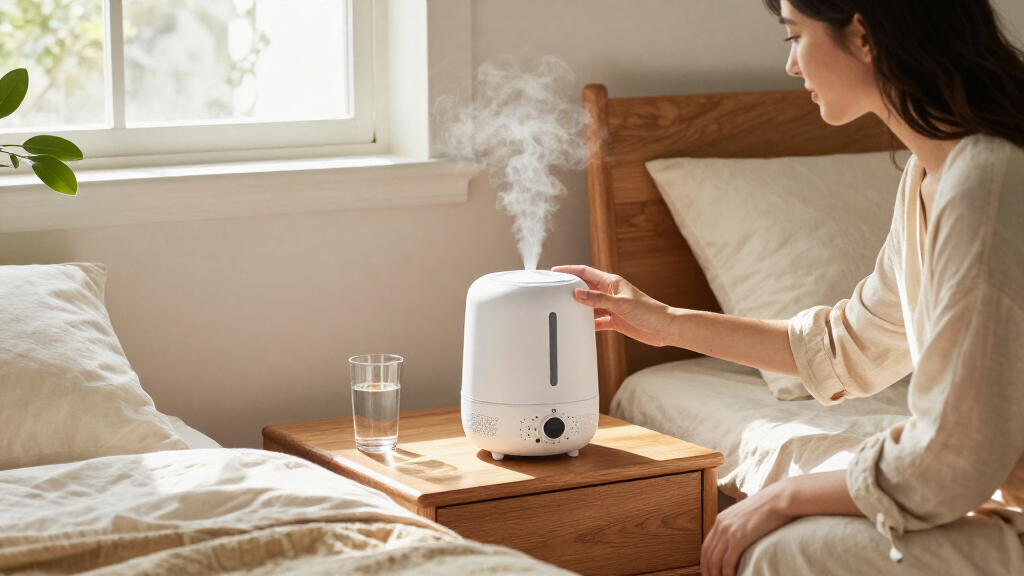
A bedside humidifier adds moisture to indoor air and may ease discomfort from dry air, but it does not treat illness. Aim for roughly 30–50% relative humidity, keep the unit clean and safely placed, and choose a model that fits your room and comfort needs.
When winter heating leaves your lips tight and your throat scratchy, a bedside humidifier can seem like a small fix with a big payoff. It adds moisture to indoor air, which may make a dry-feeling bedroom more comfortable. But more mist does not always mean more comfort.
This guide covers how to tell whether your room needs a humidifier, what the main types do, and how to place and care for one. You’ll also learn how to keep humidity in a sensible range and what signs mean the room has become too damp.
Check bedroom humidity with a hygrometer; a common target range is roughly 30–50%.
Reduce output or improve ventilation if you notice condensation, damp bedding, or musty odors.
Choose a mist type and room coverage that fit your sleep, household, and cleaning routine.
Place the unit on a stable, water-resistant surface and keep mist away from beds, walls, and electronics.
Empty and clean the humidifier as directed; use only approved water additives, if any.
Know When Your Bedroom Could Use More Moisture
Bedside humidifiers for bedrooms can help when the air feels dry, especially in heated or air-conditioned rooms. They add water vapor to the room; they do not cure a cold, allergies, or another illness. Dry nose, chapped lips, or a scratchy throat can suggest discomfort from dry air, but those symptoms have other possible causes. Treat them as a reason to check the room, not proof that a humidifier is needed.
Indoor relative humidity is commonly kept around 30–50%. A small hygrometer on a shelf gives you a more useful starting point than judging by mist or symptoms alone. For example, if it reads 28% after the heat has been running all evening and you wake with a dry throat, trying a low setting may improve comfort. If it already reads 45%, adding moisture may offer little benefit and could push the room toward dampness.
That upper limit matters because persistently high humidity can support mold and dust mites, while water beading on a cold window suggests moisture is accumulating on a surface. A reading above 50% or visible condensation is a cue to reduce output and consider ventilation, not to run the unit harder. You don’t need a humidifier in every bedroom: measure first, then respond to the room’s conditions.
Products Worth Considering

Greenworks 24V 6-Tool Combo Kit with 4.0Ah and 2.0Ah Batteries, USB-C Power Bank, and 65W Charger

Greenworks 24V 5-Tool Combo Kit with 4.0Ah and 2.0Ah Batteries, USB-C Power Bank, and 65W Charger

Greenworks 24V 8-Tool Cordless Combo Kit with Power Bank Batteries and 65W Charger
As an affiliate, we earn on qualifying purchases.
Choose a Mist Type That Fits Your Bedroom
Ultrasonic, evaporative, and warm-mist models all add moisture, but their different mechanisms affect noise, residue, and household safety. Ultrasonic units use vibration and are often quiet and energy efficient, which can suit light sleepers. Evaporative units pull air through a damp wick with a fan; the airflow helps evaporate water, but the fan may be more noticeable. Warm-mist models heat water before releasing vapor, so they use heat as part of the process.
If a soft fan hum keeps you awake, an ultrasonic unit may suit your bedside routine. Its quiet operation has a tradeoff: minerals in tap water can be carried into the air as fine white dust that settles on a dark nightstand. Distilled or demineralized water may reduce that residue, though it adds a recurring cost. An evaporative model tends to retain more mineral residue in its wick and reservoir, but the fan can be audible and the wick needs care or replacement as directed.
Warm mist involves a different tradeoff: heated water creates a burn risk if a child or pet can reach or tip the unit. Cool mist avoids a hot-water reservoir, though no type is automatically the right choice for everyone. Compare rated room coverage, sound, controls, automatic shutoff, and how easily you can clean the tank. A large tank can reduce refill frequency, but it may be heavier to lift and still needs regular emptying and cleaning. Choose the features that fit both the bedroom and the care you can sustain.
Place the Humidifier Where Mist Can Spread Safely
Set a humidifier on a stable, water-resistant surface with space around it, and follow the manufacturer’s distance instructions. A bedside table is convenient, but if the unit is crowded against a wall or aimed at one spot, moisture can collect there before it spreads through the room. Over time, repeated dampness may damage paint, wallpaper, or furniture. Direct mist away from bedding, curtains, furniture, and electronics, which can absorb moisture or be affected by droplets.
Imagine waking to a cool, clammy corner of your pillowcase. That can happen when mist points straight at the bed instead of mixing with room air. Put the humidifier on a sturdy dresser or stand, check that its cord won’t become a trip hazard, and leave enough clearance to fill and operate it safely. A higher surface may help mist disperse, but the unit must remain stable and within the placement guidance in its manual.
After the first night, inspect nearby surfaces. A dry tabletop and clear window suggest the placement may be working; droplets on the wall or condensation on the glass show that moisture is reaching surfaces faster than it can disperse. Reduce output, move the unit farther from those surfaces, or improve ventilation. The goal is comfortable air throughout the room without creating a damp zone that can damage belongings or encourage mold.
Keep Humidity Comfortable Without Making the Room Damp
A hygrometer and a low starting setting help you manage moisture based on room conditions instead of guessing from visible mist. Take a reading before running the humidifier, then start low and check again after it has had time to affect the room. Mist can look substantial while humidity remains low, or it can settle nearby and dampen a surface even when the room average seems comfortable.
For instance, Maya runs the heat in a small bedroom and wakes with dry lips. Her hygrometer reads 32%, so she tries a modest setting and checks the room before bed the next evening. If humidity rises toward or above 50%, or the window starts to bead with water, she turns the output down or switches the unit off. This gradual approach lets her see whether the added moisture improves comfort without overshooting the range.
Also watch for damp bedding, musty smells, or visible mold. These signs can point to excess moisture, even if a hygrometer elsewhere in the room shows a moderate reading, or they may indicate another moisture source such as a leak. Reducing humidifier output may not solve that underlying problem. Keep the room ventilated as appropriate, investigate persistent dampness, and avoid using a humidifier when humidity is already adequate.
Clean the Tank So Your Nighttime Routine Stays Fresh
Empty standing water and follow the manual’s cleaning schedule to care for your humidifier. Water left sitting in a tank can support microbial growth, and a unit that disperses moisture can spread contaminants along with it. A quick rinse may leave deposits or growth in corners and other parts, so check which components need cleaning, which products are safe to use, and how to dry them.
A simple morning habit can help: unplug the unit, pour out leftover water, and let the tank dry as directed. At the interval in the manual, clean the device using the method and products it specifies; using an unsuitable cleaner can damage parts or leave residue. Fresh water matters, too. Distilled or demineralized water can reduce mineral dust in many ultrasonic models, while tap-water suitability depends on the unit and your local water.
Do not add essential oils, medicines, or disinfectants unless the humidifier is specifically designed for them and its manual allows them. Some oils can damage equipment, and a standard water tank is not a general-purpose diffuser. If a product permits oils, follow its directions; patch-test any topical oil separately and seek professional guidance before using oils around someone with a pre-existing condition.
Use Comfort Features as Helpers, Not Shortcuts
Night controls, automatic shutoff, and a built-in humidistat can make a humidifier easier to use, but they do not replace sensible setup or cleaning. A humidistat may adjust output toward a selected level, while automatic shutoff can stop operation when water runs low. These features can reduce routine guesswork, but readings and controls vary by model and may not reflect conditions across the whole bedroom. Some newer models offer app or voice controls, displays, and top-fill tanks; their value depends on whether they make the unit easier for you to operate and maintain.
Picture a shift worker who sleeps during the day and needs a quiet room. A low-noise setting and easy-to-reach control may matter more than an app connection that adds little to the routine. For a parent, a stable base and automatic shutoff may help with practical use, though they do not remove the need to keep the unit out of a child’s reach. Match features to the way you use the room and the problems you want them to solve.
A separate hygrometer offers a practical check if you want to verify room humidity independently, especially since a built-in sensor may be close to the mist source. Also compare rated coverage with your bedroom’s size, tank capacity, expected runtime, and access for cleaning. A larger capacity can mean fewer refills but may make the tank harder to handle; easy-to-clean parts can matter more over time than a long feature list. An antimicrobial-material claim or an air-quality screen does not remove the need to empty, dry, and clean the unit as directed.
Frequently Asked Questions
What humidity should I keep in a bedroom?
A commonly recommended indoor range is 30–50% relative humidity. Use a hygrometer as a guide, and reduce output if you notice condensation or damp surfaces.
Is it safe to leave a humidifier on all night?
It can be used overnight when you follow the manufacturer’s directions, keep it clean, place it safely, and prevent the room from becoming too humid. A humidistat or separate hygrometer can help you monitor the room.
Should I choose cool mist or warm mist?
Both add moisture. Cool-mist models avoid hot water, while warm-mist models heat water and need extra care around children and pets because of burn risk.
Can a humidifier help a stuffy nose or dry throat?
Moist air may ease discomfort caused by dryness for some people. A humidifier does not treat the underlying cause of a cold, cough, or other illness.
How often should I clean my humidifier?
Follow the cleaning schedule and method in the manufacturer’s manual. Empty standing water regularly, dry the tank as directed, and use fresh water when you refill it.
Can I put essential oils in the water?
Only do so if the model is designed for oils and the manual permits them. Oils can damage some humidifiers, so use a separate diffuser if you want scent and your device instructions allow it.
Conclusion
Before you buy or switch on a humidifier, check your bedroom’s humidity and think about what would make your nights more comfortable. If you use one, start low, keep it clean, and watch for signs that the room is becoming damp.
Let the hygrometer guide the mist: a comfortable bedroom should feel soft and easy to breathe in, not leave a wet window shining in the morning light.