
TL;DR

Get wellness gear delivered free with Prime
- Fast, free delivery on millions of items
- Prime Video, Amazon Music and more included
- Member-only deals all year
White noise helps both focus during studying and deep sleep by masking distractions. Adjust volume, sound type, and duration based on activity for best results. Personal preferences vary, so experiment to find what works.
Ever notice how some sounds seem to sharpen your focus or help you drift off faster? That’s the magic of white noise. It’s more than just static—this steady sound can transform your environment. But did you know that the best settings for studying aren’t the same as for sleeping?
In this guide, you’ll learn how to tweak white noise for each purpose—making your mornings more productive and your nights more restful. It’s about customizing your soundscape for maximum comfort and effectiveness.
Adjust the type and volume of white noise based on whether you’re studying or sleeping.
Personal preferences heavily influence how effective white noise will be—try different sounds and settings.
Continuous white noise works best for sleep, while intermittent use suits studying sessions.
Experiment with alternatives like pink or brown noise if white noise feels irritating or ineffective.
Moderation in volume is key—play white noise at a comfortable level to avoid hearing fatigue or discomfort.
White Noise for Studying vs. Sleeping
One steady sound, two very different jobs. For study, white noise should fade behind attention and mask minor distractions. For sleep, it should remain gentle and consistent enough to soften sudden nighttime sounds.
Use during focused work blocks and pause it during breaks.
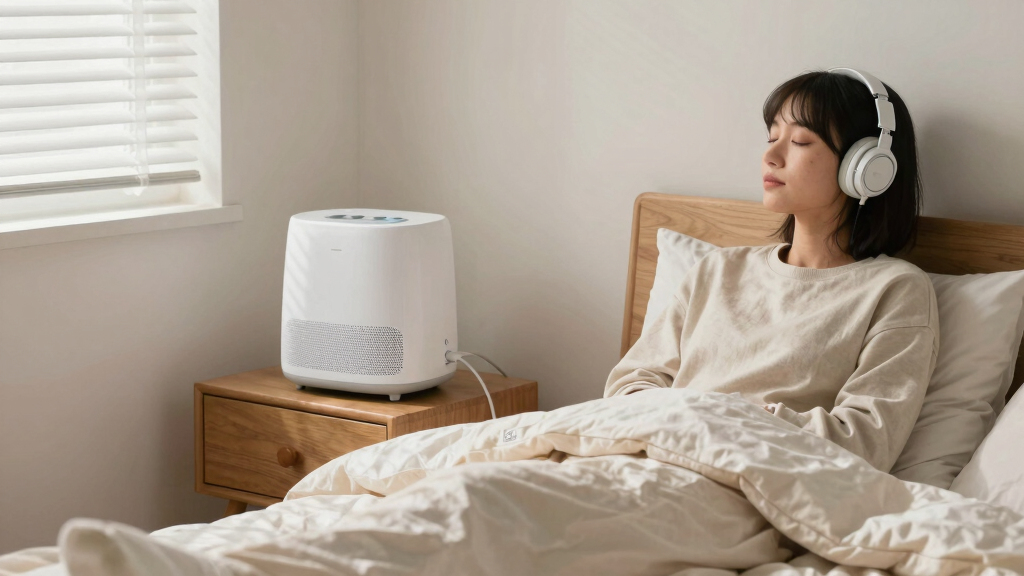
Maintain a stable backdrop across the sleep cycle.
The best profile is the one your brain stops actively noticing.
Same principle. Different settings.
White noise contains audible frequencies at broadly equal intensity. Its practical value comes from masking environmental variation—but focus benefits from restraint, while sleep benefits from continuity.
A quiet attention shield
Choose an unobtrusive sound that smooths over nearby conversations, traffic, or household activity without becoming a new object of attention.
A stable nighttime blanket
Choose a steady, soothing profile that softens unpredictable sounds such as doors, traffic, voices, or a snoring partner.
Build the right profile
There is no universal preset. Use these starting points, then adjust one variable at a time until the sound feels protective but easy to ignore.
| Feature | Studying | Sleeping |
|---|---|---|
| Sound type | ✓Softer, less intrusive fan-like or neutral noise | ✓Steady rain, brown noise, ocean, or gentle white noise |
| Volume | ~Moderate and below the level of active attention | ~Low to moderate, just enough to soften disruptions |
| Duration | ✓Intermittent use during defined focus sessions | ✓Continuous use for a consistent sleep environment |
| Avoid | ✗Noticeable loops, dramatic sounds, or harsh intensity | ✗Sudden changes, short timers, or excessive loudness |
| Primary job | ✓Mask distractions and preserve concentration | ✓Mask sudden noise and reduce awakenings |
Tune your soundscape
Change settings deliberately. Start with the sound character, introduce only enough volume to do the masking, then match playback duration to the activity.
Choose the texture
Try a soft fan for study. For sleep, test rain or warmer brown noise. Avoid sounds that demand attention.
Set the volume
Raise it only until distracting sounds lose their sharp edge. Comfort matters more than maximum masking.
Match the duration
Use focus-session playback for study and stable, continuous playback for sleep. Reassess if the sound becomes irritating.
The right setting creates an auditory bubble—not an auditory wall. If you keep noticing the noise, lower it, soften the sound profile, or try an alternative.
Masking, not overpowering
Think in relative terms rather than chasing one fixed number. Your room, speaker placement, hearing sensitivity, and competing noise all change the ideal setting.
How each setting shifts
Conceptual profiles show where each activity places the most emphasis.
Find the masking threshold
Begin quietly and increase only until environmental sounds become less distinct.
Safety check: prolonged high-volume playback may cause discomfort or hearing fatigue. Keep the sound non-intrusive and move the speaker away if necessary.
Explore warmer alternatives
White noise is only one option. Different frequency balances and natural textures may blend more comfortably into long study blocks or overnight routines.
Pink noise
Energy is distributed more evenly by octave, producing a warmer, less sharp character. Useful when white noise feels hissy.
Brown noise
Greater emphasis on lower frequencies creates a deeper rumble. It may feel more grounding for rest or sustained concentration.
Nature sounds
Rain, ocean wash, or a gentle breeze can create calm and familiarity. Choose recordings without birds, thunder, or obvious loops.
Your ears set the rules
For studying: use soft, unobtrusive noise during focus periods. For sleeping: favor a gentle, continuous backdrop. In both cases, moderate volume and personal comfort are the final test.
Test one variable at a time for several sessions or nights. If white noise irritates, distracts, or feels tiring, switch to pink noise, brown noise, or a simple natural soundscape.
What’s the difference between white noise for studying and sleeping?
White noise for studying is like a gentle background hum—designed to block out distractions and keep your mind focused. Think of it as a soft, consistent buzz that helps you tune out chaos. For sleeping, white noise acts like a peaceful lullaby—masking sudden noises like traffic or a snoring partner, helping you stay asleep longer.
Imagine sitting at your desk with the soft whir of a fan nearby. That’s perfect for studying. Now picture lying in bed, with a steady, soothing sound like rain or a gentle breeze—ideal for drifting off.
Understanding these differences matters because the characteristics of the sound directly influence how your brain perceives and responds to it. For example, a sound that’s too intrusive can cause fatigue or distraction during study, while a sound that’s insufficiently soothing may fail to mask disruptive noises during sleep. Recognizing these nuances helps you select sounds that support your specific needs and environment, ultimately improving your productivity or rest quality.
Products Worth Considering

WORX Trivac WG588 40V Cordless 3-in-1 Leaf Blower, Vacuum, and Mulcher

EGO Power+ 15-Inch Battery-Powered String Trimmer with Powerload Technology

Greenworks 48V Brushless 3-in-1 Leaf Blower, Vacuum, and Mulcher with Two 4.0Ah Batteries
As an affiliate, we earn on qualifying purchases.
How to set white noise for studying and sleeping: 3 easy steps
- Choose the right sound type: Use a softer, less intrusive white noise for studying. For sleeping, pick a gentle, consistent sound like rain or brown noise. The key is selecting a sound that won’t become a distraction over time—something you can habituate to and that doesn’t demand your constant attention, allowing your brain to focus or relax more effectively.
- Adjust the volume: Set it at a level that masks background noise but doesn’t overpower your senses—think of a quiet fan or whisper. The right volume creates a protective auditory bubble, reducing the brain’s need to actively process environmental sounds, which is crucial for maintaining focus or reaching deeper sleep stages.
- Control the duration: Use white noise continuously for sleeping to establish a stable auditory environment that signals your brain it’s time to rest. For studying, you might turn it on during focus periods and off during breaks to prevent habituation. Balancing duration ensures the sound remains effective without causing your brain to become overly accustomed or bored, which could diminish its masking benefits.
Adjusting these settings thoughtfully can lead to better concentration during work sessions and more restorative sleep, but always consider your personal response—what works for one might not work for another.
Compare white noise settings for studying and sleeping side-by-side
| Feature | Studying |
|---|---|
| Sound type | Softer, less intrusive sounds like fan or white noise with a high-frequency component |
| Volume | Moderate, enough to mask minor distractions without being noticeable or disruptive |
| Duration | Typically during focused work periods, with potential pauses during breaks to prevent habituation |
| Purpose | Mask distractions, enhance concentration, reduce mental fatigue from environmental noise |
| Feature | Sleeping |
|---|---|
| Sound type | Steady, soothing sounds like rain, brown noise, or ocean waves that promote relaxation |
| Volume | Low to moderate—just enough to drown out disruptive noises without awakening you |
| Duration | Continuous throughout sleep cycle to create a consistent environment |
| Purpose | Mask sudden noises, promote deeper sleep, prevent awakenings from environmental disturbances |
Understanding these detailed differences helps you tailor your white noise setup to optimize each activity, recognizing that the sound’s characteristics directly influence your mental state and sleep quality.
Why personal preference matters in setting white noise
What works perfectly for one person might irritate another. Some find white noise too harsh or distracting, while others find it calming. For example, a student might love the steady hum of a fan, whereas a light sleeper might prefer the gentle rush of rain sounds.
Experimentation is your best friend. Try different sounds, adjust volume, and see what helps you focus or relax without becoming a nuisance. Recognize that personal comfort isn’t just about taste—it’s about how your brain responds to different auditory stimuli. A sound that’s too loud or too complex can cause stress or fatigue, while a sound that’s too soft or monotonous might be ineffective. The goal is to find a balance that creates a soothing yet non-intrusive environment tailored to your sensitivities and daily routines.
Quick tips for optimizing white noise in each setting
- Test different sound types—fan, rain, brown noise—to find what calms or sharpens your focus. Remember that the effectiveness of these sounds depends on your personal sensitivity and environment. A sound that relaxes one person might be distracting to another, so observe how your body and mind respond over time.
- Keep volume at a level where you notice it but it doesn’t overpower your environment. Overly loud sounds can cause fatigue or stress, while too quiet might be ineffective. Fine-tuning volume helps your brain allocate attention appropriately.
- Use timers or apps to control when white noise plays, especially if you’re sensitive to sound exposure. This prevents overuse and habituation, maintaining its effectiveness over longer periods.
- Try combining white noise with other calming routines—like dimming lights or stretching—to enhance relaxation or focus. Multisensory approaches can reinforce the desired mental state, making white noise more effective.
Are there better options than white noise?
White noise isn’t the only game in town. Pink noise and brown noise offer softer, more natural sounds—like a gentle waterfall or rustling leaves—that some find less harsh. These variations distribute sound energy differently across frequencies, which can be more soothing or less fatiguing for sensitive ears. For example, pink noise has equal energy per octave, resulting in a warmer, more balanced sound that many find less intrusive for extended listening sessions.
Nature sounds—birds, ocean waves—are also popular for both focus and sleep because they mimic real environments and can evoke feelings of calm and safety. These sounds often have a more organic quality, reducing the risk of auditory fatigue associated with pure white noise. Trying different options allows you to discover which sounds blend seamlessly into your routine, providing comfort without distraction, and can be more sustainable for long-term use.
Frequently Asked Questions
Can I use the same white noise setting for studying and sleeping?
It’s possible, but often not ideal. Study settings benefit from softer, less intrusive sounds at moderate volume, while sleeping might need a more consistent, soothing background. Personal preference plays a big role—try different setups to see what suits each activity best.
How loud should white noise be for effective use?
Set it at a level comparable to a quiet fan or a gentle breeze. It should mask background sounds without becoming a distraction or causing discomfort. Adjust as needed—your ears will tell you when it’s just right.
Can white noise damage my hearing?
Playing white noise at excessively high volumes for long periods could risk hearing fatigue or damage. Keep it at a comfortable, moderate level and avoid turning it up too loud for extended use.
Are there better sounds than white noise for sleep?
Many people prefer pink noise or nature sounds like rain or ocean waves—they tend to be softer and more natural. Testing different sounds helps find what relaxes you most without causing annoyance.
Should I use white noise all night or just during specific periods?
For sleep, continuous white noise often works best, creating a steady backdrop. For studying, use it during focused periods and turn it off during breaks to prevent habituation or distraction.
Conclusion
White noise can become your secret weapon for better focus and deeper sleep—if you set it up right. Tailor your sound choices, volume, and timing to match your activity and environment.
Remember: it’s all about creating a calming, distraction-free space. So, take a moment to experiment. Find what truly helps you settle into your work or rest, and stick with it.