
TL;DR
Open a free Amazon Business account
Business pricing, bulk buying and tax-exempt orders.
Create a free accountAs an affiliate, we earn on qualifying purchases.
Durability of sheets relies on fiber quality, weave, weight, and care routines, not just thread count. Linen, hemp, and high-quality cotton often last longer through repeated washes.
Every time you wash sheets, you’re testing their strength. It’s not just about how soft or plush they feel at first. The real test is how well they hold up after dozens of laundry cycles. Knowing what factors protect or weaken your sheets helps you choose fabrics that stay smooth, intact, and comfortable for years.
Forget the hype about high thread counts. Durability depends on fiber quality, weave, and how you treat them. This guide shows you what fabrics are built to last, with concrete tips so your sheets stay fresh and intact longer—saving money and sleep quality in the process.
Prioritize long-staple fibers like linen, hemp, or high-quality cotton for sheets that last through many washes.
Focus on fabric weight, weave, and craftsmanship—these are better durability indicators than just thread count.
Gentle washing, low-heat drying, and rotation extend sheet lifespan significantly.
Avoid bleach, fabric softeners, and overloading to prevent premature wear and damage.
Stay updated on fabric innovations like lyocell and recycled fibers that combine durability with eco-friendliness.
Sheets That Survive the Wash
Every wash tests fiber strength, weave stability, seams, and elastic. Long-staple linen, hemp, and quality cotton tend to age best—but good care can matter as much as the fabric on the label.
The six signals of a sheet built to last
Durability is a system. Strong yarn can still fail when the weave, fit, finishing, or laundering routine adds unnecessary stress.
Fiber quality
Longer staples create smoother, stronger yarn with fewer loose ends available to fuzz and pill.
Stable weave
Percale’s simple over-under pattern generally withstands abrasion better than exposed sateen floats.
Fabric weight
Extremely thin fabric can wear through quickly, even when its advertised thread count sounds impressive.
Single-ply strength
Well-spun single-ply yarn can outperform bulky multi-ply yarn used to inflate thread-count claims.
Seams and fit
Reinforced edges, sturdy elastic, and a correct mattress fit prevent construction from failing first.
Low-stress care
Gentle cycles, moderate detergent, low heat, and a roomy drum reduce friction and chemical damage.
Natural long fibers lead the pack
Linen and hemp combine strong fibers with the ability to soften through use. Cotton percale remains the dependable all-rounder for frequent washing.
Repeated-wash resilience
Qualitative evidence scaleStrengths come with tradeoffs
Use the durability grade together with feel, climate, maintenance, and budget. “Excellent” still assumes sound construction and sensible laundering.
| Fabric | Wash durability | Typical strengths | Common weaknesses |
|---|---|---|---|
| Linen | ✓Excellent | Strong, breathable, and usually softens over time. | Initial lint shedding; harsh drying can weaken folds and edges. |
| Hemp | ✓Excellent | Highly resistant to repeated laundering; softens with use. | Can feel coarse initially; quality and availability vary. |
| Cotton percale | ✓Very good | Crisp, breathable, stable weave that improves with washing. | May wrinkle or shrink; low-quality cotton can pill. |
| Cotton sateen | ~Good | Smooth, soft, dense, and comfortable against the skin. | Longer yarn floats are more exposed to friction and snags. |
| Polyester microfiber | ~Good–very good | Quick-drying, wrinkle-resistant, and resistant to shrinking. | Can pill, retain oils and odors, or lose softness. |
| Cotton-poly blend | ✓Very good | Combines comfort with wrinkle and shrink resistance. | Less breathable; may pill depending on blend quality. |
| Lyocell / Tencel | ~Good with care | Smooth, moisture-managing, with low pilling potential. | High heat and harsh cycles can damage fibers or finishes. |
| Bamboo-derived viscose | ~Fair–good | Soft and breathable-feeling. | Wet fibers can be vulnerable to rough washing; quality varies. |
| Flannel | ~Fair–good | Warm, comfortable, and increasingly soft. | Brushed surface naturally pills and sheds with friction. |
| Jersey knit | ~Fair–good | Stretchy, soft, and forgiving. | Can stretch, twist, shrink, or develop pills. |
| Silk | !Fair | Smooth, lightweight, and naturally breathable. | Sensitive to abrasion, enzymes, heat, and harsh detergent. |
Grades describe typical performance—not a guaranteed wash count. Fiber grade, finishing, construction, and care can reorder the field.
How sheets break down
Most failures begin as small, repeated stresses. Catch the signal early and change the routine before cosmetic wear becomes structural damage.
Pilling
Broken fibers tangle under friction. Common in microfiber, brushed fabrics, and short-staple cotton.
Thinning
Repeated contact from feet, elbows, and movement gradually weakens high-friction zones.
Shrinkage
Hot washing and drying contract fibers, distort fit, and create tension around corners and seams.
Seam tears
Weak stitching, poor elastic, overloading, and an overstretched fit can fail before the cloth itself.
Turn every wash into controlled wear
Reduce heat, chemistry, and friction—the three forces most likely to shorten a sheet’s useful life.
Separate
Keep sheets away from towels, denim, zippers, and rough fabrics.
Load lightly
Leave room for movement without aggressive rubbing or tangling.
Wash gently
Choose cool or warm water with a modest detergent dose.
Dry low
Use low to medium heat and remove sheets when just dry.
Rotate
Alternate two or three sets to spread washing and abrasion.
The lifespan checklist
- ✓Use gentle detergent: excess residue attracts soil and burdens fibers.
- ✓Inspect seams and elastic: repair small failures before they spread.
- ✓Match fitted-sheet depth: overstretching keeps corners under constant strain.
- ✓Store fully dry: trapped moisture can encourage odor and fiber damage.
- ✓Skip harsh additives: bleach and softener can weaken or coat fibers.
The durable-sheet equation
No single label predicts longevity. Follow the full chain from raw fiber to daily care.
What Fabric Makes Sheets Last the Longest?
The short answer: linen and hemp top the durability charts. They’re like the marathon runners of bedding—built to withstand hundreds of washes without falling apart. These fibers have a natural resilience due to their long-staple structure, which makes the fabric less prone to breakage over time. Long-staple cotton, especially in crisp percale weave, also performs well because of its dense, uniform fiber arrangement that resists pilling and thinning. Synthetic fabrics like microfiber resist shrinking and wrinkling but tend to pill and lose softness faster because their fibers are shorter and less robust. The significance here is that natural fibers with longer staples inherently have better structural integrity, meaning they maintain their appearance and feel after many washes. However, tradeoffs include potential higher costs and more delicate handling requirements compared to synthetics, which are often cheaper and easier to care for but less durable.
Imagine a set of linen sheets that’s been through 150 washes—still strong, still softening, and with no holes. Contrast that with cheaper, low-quality cotton or polyester sheets that start pilling or thinning after just 50 washes. The difference lies in fiber strength and how the fabric is made, which directly affects how long your sheets will last and how their comfort evolves over time.

SONORO KATE 100% French Linen King Size Sheets Set,Natural Flax Bedding
- Material: 100% French pure linen
- Fabric Benefits: Soft, breathable, moisture-wicking
- Durability: Pre-shrunk and stonewashed for strength
As an affiliate, we earn on qualifying purchases.
As an affiliate, we earn on qualifying purchases.
How Do We Know If Sheets Will Survive Repeated Washes?
Look beyond the label’s thread count. High numbers don’t mean long-lasting. Instead, check fiber type, yarn quality, weave, and fabric weight. For example, a 200-thread-count sheet made from strong, long-staple cotton in percale weave often outperforms a 600-thread-count sateen with flimsy, multi-ply yarns. The key is understanding that thread count alone can be misleading—it’s a measure of yarn density, not durability. Thinner threads can be densely packed but still lack resilience if made from inferior fibers. Conversely, thicker, high-quality fibers woven tightly can produce sheets that are both durable and soft. Fabric weight, often expressed in grams per square meter (gsm), is another critical indicator; heavier fabrics (around 150-200 gsm) tend to withstand wear and tear better because they are less prone to pilling and thinning. Additionally, craftsmanship factors like reinforced seams and sturdy elastic in fitted sheets contribute to longevity. Recognizing these indicators helps you select sheets that will resist the rigors of repeated washing, maintaining their appearance and comfort over years.
In essence, evaluating durability requires a holistic look at fiber quality, construction, and finishing details, rather than relying solely on thread count. These concrete indicators empower you to make more informed choices that align with your lifestyle and expectations for long-term use.
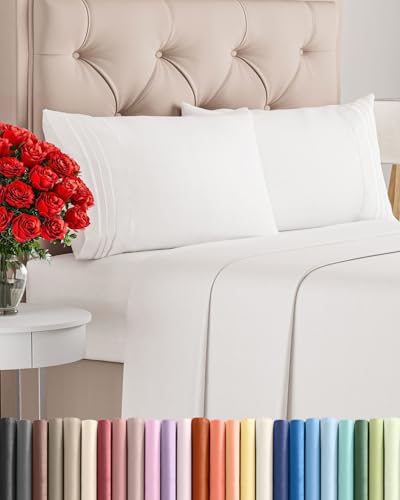
King Size 4 Piece Sheet Set – Breathable & Cooling Sheets – Antique White
- Set Includes: 2 pillowcases, flat and fitted sheets
- Size Dimensions: Flat: 108"x102", Fitted: 80"x78"
- Deep Pockets: Fits mattresses up to 16 inches deep
As an affiliate, we earn on qualifying purchases.
As an affiliate, we earn on qualifying purchases.
Comparison Table: Fabric Durability and Weaknesses
| Fabric | Wash Durability | Strengths | Common Weaknesses |
|---|---|---|---|
| Cotton percale | Very good | Strong, breathable, becomes softer with washes | Wrinkles, potential shrinkage, possible pilling in low-quality |
| Linen | Excellent | Extremely durable, softens over time, breathable | Initial lint shedding, can be stiff if poorly made |
| Hemp | Excellent | Super strong, resistant to wear, softens with use | Coarse initial feel, availability varies |
| Polyester microfiber | Good to very good | Resists shrinking, quick-drying, maintains shape | Pills, traps oils, less breathable |
| Cotton-polyester blend | Very good | Wrinkle-resistant, durable, retains shape | Less breathable, may pill if low quality |
| Lyocell/Tencel | Good with gentle care | Smooth, moisture-wicking, less pilling | Sensitive to high heat, rough cycles |
| Bamboo viscose/rayon | Fair to good | Soft, breathable, eco-friendly | Weak when wet, varies in quality |
| Silk | Fair | Luxurious, lightweight, naturally breathable | Fragile, sensitive to friction, heat, and detergents |
| Flannel | Fair to good | Warm, cozy, softens with washes | Pills, sheds, prone to wear in high-friction areas |
| Jersey knit | Fair to good | Stretchy, soft, forgiving | Stretching, twisting, pilling over time |

Soft Natural 100% Cotton Sateen Queen Sheets, 4 Pc Set, Bright White
- Good Housekeeping Seal: Trusted for quality and durability
- Complete 4-Piece Set: Includes sheets and pillowcases
- Fits up to 14-inch mattresses: Deep pocket fitted sheet
As an affiliate, we earn on qualifying purchases.
As an affiliate, we earn on qualifying purchases.
What Causes Sheets to Fail—And How to Prevent It
Sheets often fail because of pilling, thinning, shrinking, or seam tears. Pilling happens when loose or broken fibers cling together, especially in polyester, microfiber, and low-quality cotton. Thinning appears where your elbows or feet press repeatedly, leading to holes. These failures are often signs of underlying issues like fiber weakness, improper care, or inferior manufacturing that compromises the fabric’s integrity. For example, excessive friction during washing or drying can weaken fibers, causing them to break or pill prematurely. Shrinkage can occur if high heat is used, leading to tightness and stress on seams, which may tear over time. Overloading the washing machine creates excessive friction, accelerating wear. Rough fabrics like towels or jeans can snag delicate sheets, creating small tears that grow larger with each wash. Proper care routines—such as washing on gentle cycles, avoiding high heat, and not overloading—are essential to prevent these failures. Recognizing early signs of wear allows you to address issues before they become irreparable, prolonging your sheets’ lifespan and maintaining their comfort and appearance.

Scott Professional Standard Roll Toilet Paper, Bulk, 80 Rolls (13217)
- Sheet Count per Roll: 473 sheets per roll
- Total Rolls: 80 rolls per case
- Total Sheets per Case: 37,840 sheets
As an affiliate, we earn on qualifying purchases.
As an affiliate, we earn on qualifying purchases.
How To Make Your Sheets Last Longer
Follow these steps to boost your sheets’ lifespan:
- Wash in cool or warm water—hot water speeds up fading and fiber wear, which can cause the fabric to weaken and lose its shape faster.
- Use gentle detergent—excess detergent can leave residues that attract dirt and weaken fibers, leading to premature thinning.
- Avoid bleach and fabric softeners—these chemicals damage fibers and can cause fibers to become brittle, reducing durability over time.
- Dry on low or medium heat—high heat can cause elastic fibers to degrade, shrinkage, and fiber damage, shortening the life of your sheets.
- Don’t overload the machine—overloading causes excessive friction and mechanical stress, which accelerates fiber breakage and pilling.
- Rotate multiple sets—using different sheets prevents overuse of one set, reducing wear and tear and maintaining quality longer.
- Inspect seams and elastic—early repairs to small tears or loose elastic can prevent larger, more costly damage, extending the overall lifespan of your sheets.
Imagine a set of linen sheets that’s been washed 100+ times—still firm, still soft, still fitting perfectly. That’s the power of good fabric choices and gentle care, which together create a resilient bedding set that endures the test of time and washing cycles.
Latest Trends and Developments in Sheet Durability
Manufacturers now focus on traceability, eco-friendly fibers, and smarter finishes. Certified long-staple cotton and lyocell fibers are gaining popularity for their durability and eco-credentials. Mechanical softening and enzyme treatments create softness without heavy surface coatings.
Recycled fibers, lower-impact dyes, and reduced reliance on high thread counts mean sheets are more durable and environmentally friendly. But beware—labels like “bamboo” can mean different fabrics with varying longevity. Always check fiber content and care instructions.
Your Questions About Durability — Answered
Which sheet fabric lasts the longest? Linen and hemp lead the pack, with high-quality long-staple cotton coming close. Proper care extends their lifespan even further.
Does thread count really matter for durability? Not as much as fiber quality and weave. A well-made 200-thread-count sheet can outlast a 600-thread-count one riddled with multi-ply yarns.
Why do some sheets pill after washing? Short fibers, synthetic content, and friction cause pill formation. Washing with rough textiles accelerates this process.
Are microfiber sheets durable? They resist shrinking and tearing but tend to pill and trap oils, which may affect their longevity and softness over time.
Can bamboo sheets handle frequent washing? Yes, but quality matters. Bamboo lyocell holds up better than lower-grade viscose—gentle washing extends their lifespan.
Conclusion
Choosing sheets that survive the wash isn’t just about picking the highest thread count. It’s about understanding the fabric, how you treat it, and what it’s made to endure. With the right choices, your sheets can stay smooth, strong, and cozy for years—saving you money and nights of better sleep.
Next time you shop, remember: durability comes from quality, care, and a little knowledge. Your bed—and your budget—will thank you for it.
Flea & tick season Picks
flea and tick prevention
As an affiliate, we earn on qualifying purchases.