TL;DR
Listen free for 30 days with Audible
Thousands of audiobooks and originals — cancel anytime.
Start your free trialAs an affiliate, we earn on qualifying purchases.
300 lux is a moderate brightness comparable to a cloudy day or well-lit office. It can help with gentle wake-ups but isn’t as intense as higher lux lights, which are better for stronger circadian cues.
Ever wondered how bright 300 lux actually is? It’s a common figure on wake-up lights, but what does it mean in real life? If you’re trying to pick a device that gently nudges you awake without startling, understanding lux levels can help you make smarter choices. Lux measures how much light hits a surface—think of it as the brightness you see and feel.
In this article, you’ll learn how 300 lux stacks up against natural daylight, how it affects your body, and what to look for if you want a wake-up light that truly makes mornings easier. Whether you’re a shift worker, someone with limited sunlight, or just curious, this guide will give you a clear picture of what your wake-up light can do for you.
300 lux is a moderate, gentle brightness similar to an overcast sky or bright indoor lighting.
For a strong, natural wake-up, higher lux levels (2,500+ lux) are more effective, especially in darker seasons.
Light at 300 lux can influence your circadian rhythms and help reduce morning grogginess if used gradually.
Choosing a wake-up light should consider not just lux, but features like color temperature and sunrise duration.
Natural sunlight exceeds 10,000 lux, but even moderate levels like 300 lux can make mornings feel calmer and more natural.
What Does 300 Lux Feel Like in Real Life?
300 lux is considered a moderate level of brightness. Imagine sitting under a well-lit office ceiling or the soft glow of an overcast sky—this is roughly the brightness level that 300 lux provides. It’s enough to gently brighten your room and influence your body clock without being overwhelming.
For example, if you place a wake-up light on your bedside table, and it emits 300 lux at a distance of about 16 inches, it will create a calming dawn effect. This is perfect if you prefer a subtle wake-up rather than a blinding flash of light.
Natural daylight varies from 10,000 to 100,000 lux, so 300 lux is a far cry from full sunshine. But for a wake-up light, it strikes a balance—bright enough to stimulate your senses without startling you awake.
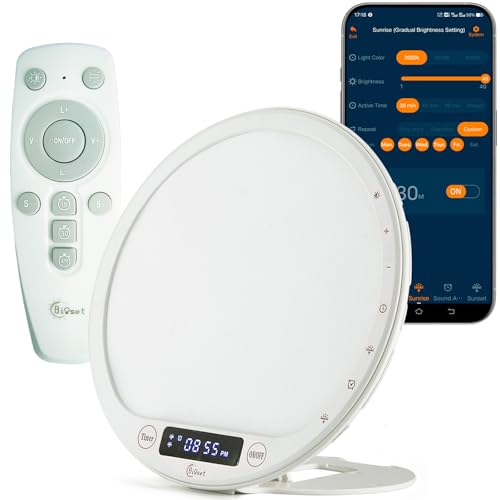
Bioset 10000 Lux Light Therapy Alarm Clock, Sunrise Wake-Up Light with APP & Remote, Built-in Lithium Battery, Portable Travel, Full Spectrum LED (CRI>95), UV-Free for Home Office
- High-Intensity Light Therapy: 10000 Lux UV-Free LED light
- Natural Sunrise Simulation: Gradual brightening wake-up light
- Adjustable Light Intensity: Customize brightness for comfort
As an affiliate, we earn on qualifying purchases.
As an affiliate, we earn on qualifying purchases.
How 300 Lux Compares to Sunlight and Other Light Levels
| Lighting Level | Typical Scenario |
|---|---|
| 10,000–100,000 lux | Full sunlight outdoors |
| 300–500 lux | Overcast sky or bright indoor lighting |
| 100 lux | Home interior with lamps off |
| 10 lux | Moonlit night |
Looking at this table, 300 lux sits comfortably in the middle of a cloudy day or a well-lit room. It’s enough to trigger your body’s wakefulness response without the intensity of direct sunlight.
So, if your wake-up light emits 300 lux, it’s like waking up in a room illuminated by a cloudy sky—gentle yet effective enough to help you gradually shake off sleep.

Odokee Sunrise Alarm Clock White Noise Machine: Natural Wake Up Light
- Gentle Sunrise Wake Up: Customizable 5-60 minute sunrise simulation
- Calming Sleep Sounds: 25 soothing sounds including nature and noise
- Sleep Timer Function: Set timer for restful sleep
As an affiliate, we earn on qualifying purchases.
As an affiliate, we earn on qualifying purchases.
Why Brightness Matters in Wake-Up Lights
Brightness isn’t just about how much light you see—it’s about how your body responds. Light levels around 250–500 lux can influence your circadian rhythms, helping you wake up more naturally and feel alert sooner.
For example, if your wake-up light hits 300 lux, it can help suppress melatonin—the sleep hormone—making it easier to get out of bed. But if the light is dimmer, say 50 lux, it might not be enough to trigger this effect.
Understanding this is crucial because the effectiveness of a wake-up light depends on achieving a brightness level that signals to your brain it’s time to wake. Too dim, and it might be ineffective; too bright, and it could disturb your sleep cycle or cause discomfort. The tradeoff involves balancing comfort with efficacy—finding a level that gently nudges your circadian rhythm without overwhelming your senses.
According to research, brighter lights, like those offering 2,500 lux or more, produce a more pronounced dawn simulation. They mimic sunrise more closely and can be more effective, especially in darker months or for those with circadian rhythm disorders.

Caromolly Light Therapy Lamp, Happy Lamp 10,000 LUX UV Free with 3 Color Temperature & 5 Brightness Level, Full Spectrum Light Wood Base Round Flaxen Fabric Shade for Home, Office, 4" × 8.4”
- Bright Light Output: 10,000 lux UV-free light therapy lamp
- Adjustable Color Temperature: Three modes: 2700K, 4000K, 6000K
- Touch Dimming Control: Smooth brightness adjustment from 10% to 100%
As an affiliate, we earn on qualifying purchases.
As an affiliate, we earn on qualifying purchases.
What Can 300 Lux Do for Your Morning Routine?
If you’re after a gentle, natural feel to waking up, 300 lux can be a good starting point. It creates a soft glow that gradually increases, mimicking a sunrise without startling you awake.
Imagine your bedroom bathed in this warm, calming light as dawn approaches. You might feel less groggy and more ready to start your day, especially if combined with a gradual increase over 20–30 minutes. This approach leverages the body’s natural response to light, promoting a smoother transition from sleep to wakefulness and reducing the jarring effect of abrupt alarms.
For example, a person who struggles to wake up during winter months finds that a 300-lux dawn simulation helps her morning feel less abrupt and more aligned with her body’s natural cues. The key is that this moderate brightness allows your body to adjust gradually, minimizing stress and fatigue associated with sudden awakening.

Philips SmartSleep Wake-up Light, Colored Sunrise and Sunset Simulation, 5 Natural Sounds, FM Radio & Reading Lamp, Tap Snooze, HF3520/60
- Clinically Recommended: Supports healthy sleep and wake routines
- Personalized Settings: Custom sunrise, sunset, and wake-up sounds
- Smart Features: FM radio, tap snooze, auto-dimming display
As an affiliate, we earn on qualifying purchases.
As an affiliate, we earn on qualifying purchases.
Is 300 Lux Enough for a Strong Wake-Up? When You Might Need More
While 300 lux can gently nudge you awake, it might not be enough for everyone, especially if you are a heavy sleeper or experience difficulty waking in dim environments. If you wake up feeling groggy or struggle to leave bed despite the light, brighter lights—say 2,500 lux or more—may be necessary to produce a more effective alerting response.
For instance, people in northern latitudes during winter often need higher lux levels to compensate for darker mornings. A light with 10,000 lux can simulate a bright summer day, providing a more intense wake-up call that can help reset their circadian rhythm and improve morning alertness. This higher intensity not only facilitates waking but can also enhance mood and cognitive function throughout the day.
So, consider your specific needs: if a soft sunrise isn’t enough to energize you, investing in a device that offers higher lux levels and adjustable brightness can make a significant difference in your morning routine. The tradeoff is that higher lux lights may be more expensive or larger, but they provide a more powerful cue to your body that it’s time to start the day.
How to Pick the Right Wake-Up Light Based on Brightness
Choosing the right wake-up light depends on your lifestyle and wake-up needs. Here’s a simple step-by-step:
- Identify whether you want a gentle or more intense sunrise experience.
- Check the lux levels—look for devices offering at least 250 lux for mild wake-ups or up to 10,000 lux for stronger cues.
- Consider other features: adjustable color temperature, sunrise duration, and smart controls can enhance your experience.
- Read reviews and test the device if possible, to see how bright it feels from your typical sleeping position.
- Remember, higher lux often means a more effective and natural wake-up, especially for heavy sleepers or darker months.
For example, someone who struggles in winter might prefer a model that offers up to 10,000 lux, while a light sleeper who wants a subtle start might settle for 300 lux. Balancing your needs with the device’s capabilities ensures you get a wake-up experience that’s both comfortable and effective.
Frequently Asked Questions
Is 300 lux bright enough to wake me up naturally?
For some, yes—especially if the light is directed toward your eyes during early morning hours. But if you need a more pronounced wake-up, lights with 2,500 lux or higher tend to be more effective.How does lux compare to other wake-up light features?
Lux measures brightness; features like color temperature, sunrise duration, and design also affect how natural and effective your wake-up experience feels.Can a wake-up light with 300 lux replace natural sunlight?
Not entirely. While it helps regulate your circadian rhythm, it’s a gentle aid—nothing beats actual sunlight for overall light exposure, especially in winter or low-light environments.What are the benefits of higher lux levels?
Higher lux levels produce a more intense, natural sunrise effect, helping especially those with Seasonal Affective Disorder or heavy sleepers wake more easily.Are there any health risks with bright wake-up lights?
Bright lights are generally safe if used as directed. Overexposure or improper timing can disrupt your circadian rhythm, so adjust brightness and timing accordingly.Conclusion
Understanding what 300 lux means helps you pick a wake-up light that suits your mornings. Whether you want a subtle dawn or a more intense sunrise, knowing the brightness levels guides your choice. Remember, a gentle start beats a jarring alarm—your body thanks you for it.
Next time you set your wake-up routine, think about how much light you need to feel ready for the day—sometimes, a soft glow is all it takes.
College move-in / dorm season Picks
dorm essentials
As an affiliate, we earn on qualifying purchases.