
TL;DR
An alarm clock without a screen gives your child a wake-up cue without placing a phone or tablet beside the bed. Choose a signal your child understands, keep the light dim enough for a comfortable room, and treat the clock as one small part of a regular bedtime and morning routine.
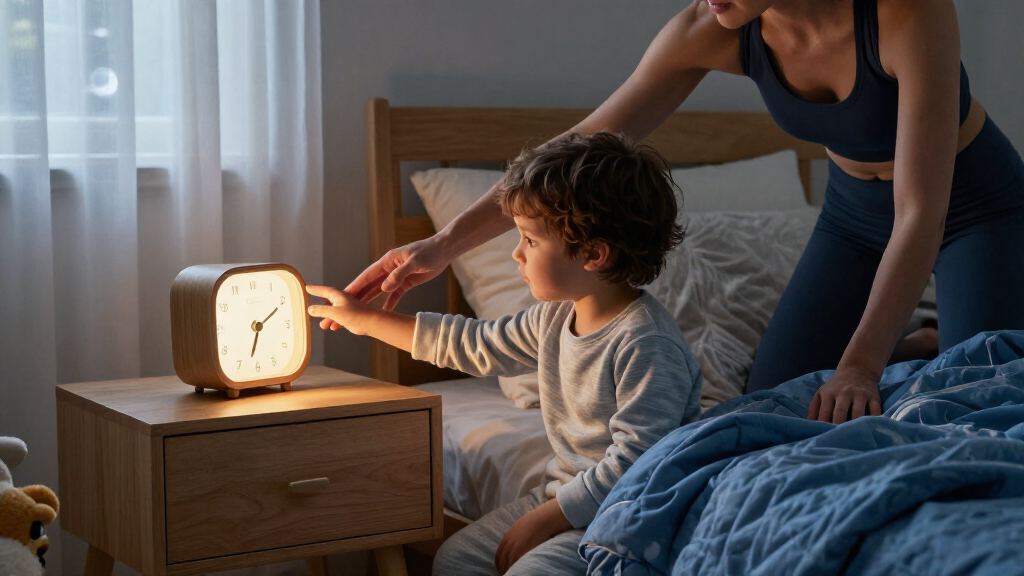
At 5:42 a.m., your child pads into the hallway, convinced the house is already awake. A little clock glows beside the bed, but its buttons, bright display, and tempting screen make the nightstand feel busier than the rest of the room.

Get wellness gear delivered free with Prime
- Fast, free delivery on millions of items
- Prime Video, Amazon Music and more included
- Member-only deals all year
An alarm clock without a screen can offer a simpler cue: a gentle sound, a dim light, or a color that tells your child when morning has arrived. It can also keep a phone or tablet out of easy reach at bedtime, giving the bedroom a quieter feel.
This guide walks you through what these clocks can and cannot do, how to match a cue to your child, and which details are worth checking before you bring one home. You’ll also find practical steps for introducing it without turning bedtime into another negotiation. The goal is not a perfect sleeper. It’s a nightstand that feels calm and a morning routine your child can learn to follow.
Choose a cue your child can understand: color or light for some younger children, readable digits or hands for older ones.
Check whether you can dim or switch off the display, and test the sound at a comfortable volume.
Explain the clock’s signal in one simple sentence and practice the routine together.
Confirm what battery backup actually supports, since power features vary by clock.
Treat the clock as one part of a routine that includes a suitable bedtime and a comfortable room.
A calmer bedside guide · For families
Alarm Clocks Without Screens: Calmer Nightstands for Kids
A simple wake-up cue can help keep phones and tablets away from the bed. Choose a signal your child understands, keep the light comfortable, and make the clock one small part of a steady routine.
A quieter nightstand, a clearer morning cue
A screen-free clock can give your child a wake-up signal without putting a phone or tablet beside the bed. It may use hands, simple digits, sound, light, or color. The goal is a cue your child can follow without opening an app or tapping through notifications.
Less to tap
Apps, videos, and notifications can make the bedside feel like an entertainment station. A dedicated clock keeps the cue simple.
A signal they can learn
A familiar color can make the family’s “stay cozy” or “time to get up” rule visible at a glance.
One small step
With practice, a child can check a cue before asking a parent. The clock supports guidance; it does not replace it.
Choose what your child can recognize
There is no single age when a child is ready. Look for whether they can recognize the signal, remember what it means, and follow it sometimes with a reminder.
No one alarm style works for every sleeper
A child who startles at a buzzer may prefer gradual light or a soft tone. A child who sleeps through a quiet room may need sound. Check the settings and the bedroom conditions before choosing.
| Cue | May suit | What to check |
|---|---|---|
| Sound | Children who respond to a familiar tone | Adjustable volume and a sound your child can tolerate |
| Color or symbol | Younger children learning when to get up | A signal easy to tell apart in the dark |
| Gradual light | Children who prefer a softer morning start | Bright enough to notice without disturbing sleep |
| Light + sound | Children who need more than one kind of cue | Whether each setting adjusts independently |
Five details worth checking
Choose for comfort and ease of use, not the longest feature list. Picture your child reaching for the clock before bed: the cue should be clear, and the controls should be simple.
Display
Pick hands, large digits, or a visual cue that fits your child’s age and preferences.
Brightness
Check whether it dims or switches off while remaining usable for its intended purpose.
Alarm
Test the volume and sound at a comfortable level. Light may not wake every child reliably.
Controls
Look for clear setup and fewer buttons. Simple operation is easier to learn.
Confirm what battery backup supports: it may preserve settings or keep the clock running. Look for a secure battery compartment, sturdy construction, and a stable spot away from the nightstand edge.
Sunrise-style lighting and color cues help some families, but they are not essential. Curtains, room layout, brightness, and your child’s habits all affect whether light is a good fit.
Practice a small, repeatable routine
Introduce the clock in a calm moment. A short explanation and a little practice can make the signal easier to follow when morning comes early.
Give the cue one meaning
“Red means quiet time. Green means you can come wake us.” Use colors your child can distinguish comfortably.
Rehearse the next step
Show what to do when the signal changes: stay cozy, read in the room, or get dressed.
Notice what happens
If the alarm startles them or is easy to miss, change the cue, volume, brightness, or placement.
What a screen-free clock can do for your child
A screen-free alarm clock gives your child a wake-up cue without putting a phone or tablet beside the bed. It may show simple digits, use hands, or rely on a light or color signal; the useful part is a cue your child can understand without opening an app or tapping through notifications.
That small change can make the nightstand feel less busy. A phone can bring videos, messages, and bright menus into a room that you’re trying to settle for sleep. A simple clock asks much less of your child: look at the cue, then follow the family’s bedtime or morning rule.
For instance, a preschooler who can’t yet read the time might learn that a soft blue glow means “stay cozy” and a warm green glow means “you can come wake us.” That gives a child a simple way to see when it’s okay to get up. It’s a little like a traffic light by the pillow: one clear signal is easier to follow than a string of spoken reminders.
A clock can support a predictable routine, but it can’t supply enough sleep or solve every early waking. A steady bedtime, a dark and comfortable room, and a schedule suited to your child still matter. On a rough night, the clock may be there like a quiet lighthouse, while you decide what else your family needs.
Products Worth Considering

EGO POWER+ LB7654 Cordless Electric Leaf Blower with 5.0Ah Battery

Greenworks 24V Cordless Car Jack Kit – 3 Ton Max Loading, 2 Ah Battery and Charger

EGO Power+ 12-Inch Cordless Electric Snow Shovel with 56V 2.5Ah Battery and Charger
As an affiliate, we earn on qualifying purchases.
Why a simpler nightstand can make bedtime feel calmer
An alarm clock without a screen can help you make the bedside feel calmer by removing some of the things that invite your child to stay engaged. Apps, games, videos, and notifications can turn a bedtime table into a little entertainment station; a clock with a few clear functions gives your child less to poke at when the lights go low.
Think about a seven-year-old who asks for a phone “just to check the time” and then notices a message or video thumbnail. A dedicated clock lets you keep the phone charging elsewhere while your child still has a familiar way to check a morning cue. The change doesn’t need a big speech. You can say, “The clock stays here, and your tablet sleeps in the kitchen.”
Some families also choose these clocks because a predictable visual signal can reduce repeated questions. If your child wakes early, a clock that changes color at the agreed time can make the rule visible. For a child who calls out at 5:30, you might explain that a red cue means it’s still quiet time and a green cue means they can leave the room.
Keep expectations gentle. A clock is a prompt, not a promise that a child will stay in bed or fall asleep faster. If your child finds any glow distracting, switch off the light or move the clock farther away. The calmer setup is the one your child can settle beside, not the one with the most features.
Match the wake-up cue to your child’s age and habits
An alarm clock without a screen works best when its cue matches what your child can understand and use. Younger children often respond more easily to a simple picture, color, or light than to a digital time, while an older child may prefer large readable digits or traditional clock hands.
For instance, if your four-year-old knows that yellow means “wait” and green means “go,” you can use those familiar ideas to explain a color-changing clock. Keep the rule short: “When it turns green, you can get dressed and read in your room.” Your eight-year-old might prefer to see 7:00 on a display and set a regular alarm for school mornings.
There’s no single age when a child is ready. Readiness shows up in small ways: your child can recognize the cue, remember what it means, and follow it sometimes with a reminder. A toddler may enjoy a light but still need you to repeat the rule each morning. That’s normal; the device doesn’t replace your guidance.
Choose the cue around your child’s temperament, too. A child who dislikes unexpected sounds may feel more comfortable with a gentle light, while a deep sleeper may need an audible alarm or a combination. Ask what feels reassuring, then try the simplest option first. Like learning a bedtime story, the cue becomes familiar through repetition.
Compare the cues before you choose a clock
An alarm clock without a screen can wake a child with sound, light, color, or a combination, and each option suits a different bedroom. Sound is easy to recognize, a visual cue can make time-to-rise clearer for young children, and gradual light may feel gentler for some families. No single style works for every sleeper.
Use this comparison to narrow the choice. Imagine a child who wakes easily to birds outside but startles at a loud buzzer: a gradual light or soft tone may feel more comfortable. For a child who sleeps through sunrise and a quiet room, sound may be the more dependable signal.
| Cue | May suit | What to check |
|---|---|---|
| Sound | Children who respond to a familiar tone | Adjustable volume and a sound your child can tolerate |
| Color or symbol | Younger children learning when to get up | A signal that is easy to tell apart in the dark |
| Gradual light | Children who prefer a softer morning start | Whether it gets bright enough to be noticed without disturbing sleep |
| Light and sound | Children who need more than one kind of cue | That each setting can be adjusted independently |
A sunrise-style feature may be appealing, but it isn’t automatically better. Brightness, room layout, curtains, and your child’s sleep habits all affect whether light works well. Try one cue for a week, notice how mornings go, and adjust if the alarm is too startling or too easy to miss.
Check these five details before you set it on the nightstand
An alarm clock without a screen should be easy for your child to understand, comfortable to sleep beside, and straightforward for you to set. Before choosing one, check the display, alarm, controls, power setup, and physical safety rather than being drawn in by a long feature list.
Picture your child reaching for the clock before bed. If there are tiny buttons, confusing menus, or a display that lights the whole room, the device can add friction instead of simplifying the routine. Use this short checklist while comparing options:
- Choose a clear cue. Pick hands, big digits, or a simple visual signal your child can recognize.
- Check brightness controls. Look for a dim setting or a way to switch the display off, then see whether the clock remains usable.
- Test the alarm sound. Choose a volume and tone your child can tolerate; some clocks let you adjust each.
- Review the power details. Check whether batteries keep settings or operation during a power interruption; models differ.
- Look at build and placement. Prefer sturdy construction, secure battery compartments, and a position away from the edge.
Keep the clock within easy reach for you to set, but out of the way of rough play. If your child has a younger sibling who likes to explore, place it where the sibling can’t pull it down or access loose batteries. A stable spot and simple controls help make the clock part of the routine instead of a new source of fuss.
Introduce the clock with a routine your child can follow
An alarm clock without a screen becomes more useful when you teach your child what its cue means and repeat the same steps each day. Set the clock together, explain the signal in plain words, and practice once when your child feels rested and unhurried.
Here’s a simple example for a school-age child: after pajamas and a story, you point to the clock and say, “The light stays blue until 6:45. When it turns green, you can get dressed and come find me.” In the morning, give a quiet reminder if needed. The aim is to make the cue familiar, not to demand that your child master it on the first try.
Try these steps over several mornings:
- Agree on the cue. Ask your child to explain what the color, time, or sound means.
- Set a realistic wake time. Match it to the family’s morning rather than choosing an arbitrary early target.
- Practice the response. Decide what your child can do while waiting, such as look at books or play quietly.
- Notice what works. If the cue is confusing or the light is annoying, change one setting and try again.
A toddler may not follow the plan every morning, and a child might still need a parent’s help after a restless night. Keep your words steady and kind. A clock can take one small reminder off your hands; it shouldn’t become a test your child can fail.
Keep the clock in perspective when mornings stay difficult
An alarm clock without a screen can support a family’s wake-up routine, but the clock alone won’t guarantee easier bedtimes or later mornings. Your child’s overall schedule, room comfort, and the household’s habits all shape how useful the cue feels.
For example, a child who goes to bed late after sports may still be tired at the school alarm, even if the clock gives a clear green light. Another child may wake early because the bedroom gets bright at dawn. In those cases, the clock can mark the morning rule, while you also look at bedtime timing or the room’s light and comfort.
Consider the room as a whole: is the clock’s glow too bright, does the alarm startle your child, or does the sound need to be louder to be noticed? If your child is hard of hearing, a visual cue or a suitable combined signal may be worth exploring. If your family includes shift workers or different wake times, agree on a cue that respects the person who is still sleeping.
Families also differ in how much light feels comforting. One child may like a dim night light, while another settles more easily in darkness. Start with the least distracting setting, check in with your child after a few nights, and make a small adjustment if needed. A calmer bedroom is often made from several little choices, like a dimmer switch and a phone charging outside the room.
Frequently Asked Questions
Can a screen-free clock help my child sleep better?
It can help you keep a phone or tablet away from the bed and make the bedtime setup simpler. The clock itself doesn’t treat sleep difficulties or guarantee better sleep; a regular routine and a comfortable room still matter.
What age is a child ready for an alarm clock?
There’s no fixed age. Your child may be ready when they can understand the cue and follow it at least some of the time. Younger children may find a color or light easier to use than a number display.
Are wake-up clocks useful for toddlers?
A toddler may respond to a simple, familiar visual cue, especially when you explain the rule and repeat it. A clock can’t guarantee they’ll stay in bed, so keep your expectations gentle and your routine steady.
Should my child’s clock have a night light?
That depends on your child and the room. A dim, adjustable light reassures some children, while others settle better in darkness. Try a low setting first and switch it off if your child seems bothered by the glow.
Is a sunrise alarm better than a sound alarm?
Not for every child. Gradual light may feel softer for some, while other children sleep through it and need an audible cue. If your child is hard to wake, a sound or a combination may be more useful.
Can a dedicated clock replace a phone alarm?
Often, yes, if your child only needs a wake-up cue and the clock’s settings fit your family. A dedicated clock can keep a phone out of easy reach, though you’ll want to check its alarm, display, and power features first.
Conclusion
Choose a clock your child can understand, keep its light and sound comfortable, and practice the wake-up cue together. A screen-free device can make the nightstand simpler, but your steady routine gives the cue its meaning.
Start with one clear signal and see how it feels over a week. Sometimes a calmer morning begins with a small glow on a quiet nightstand—and a child who knows what to do when it appears.