TL;DR

Get wellness gear delivered free with Prime
- Fast, free delivery on millions of items
- Prime Video, Amazon Music and more included
- Member-only deals all year
A sound masking curve shows the minimum loudness needed at each frequency for a sound to mask background noise. Modern sleep aids use this knowledge to craft sounds that block out disruptions, especially by covering a broad spectrum of frequencies. Understanding this helps you choose or create sleep sounds that truly work for your environment.
Ever wondered why some white noises or sleep sounds seem to block out traffic or snoring effortlessly, while others fall flat? It’s all about the sound masking curve. This unseen map guides us in understanding how different frequencies are perceived and how they can be used to hush unwanted sounds. Whether you’re a shift worker, a parent, or just someone craving uninterrupted sleep, grasping this concept can transform your nightly routine.
In this guide, you’ll learn what a masking curve is, how it relates to the frequencies in sleep sounds, and how recent tech advances are putting this knowledge to work. No jargon, just practical insights to help you sleep better, night after night.
Sound masking curves reveal which frequencies are most effective at masking noise during sleep.
Your ears are most sensitive between 2,000 and 5,000 Hz, so sounds in this range are powerful tools for masking disruptions.
Effective sleep sounds include a broad spectrum of frequencies to cover various noise sources.
Modern sleep devices use masking curve insights to personalize sounds, making them more effective.
Combining good sound choices with environmental adjustments boosts overall sleep quality.
What exactly is a sound masking curve, and why does it matter for sleep?
A sound masking curve is like a heat map for hearing. It shows the quietest sound you need to hear at each frequency to notice it over background noise. Think of it as a secret blueprint for what your ears are most sensitive to—especially when you’re trying to sleep.
Understanding this curve is crucial because it reveals the tradeoff between sound intensity and frequency. For example, frequencies where your ears are most sensitive require less volume to mask noise, which means you can design sleep sounds that are effective yet gentle. Conversely, less sensitive frequencies need higher volumes, which can risk waking you or causing discomfort. Recognizing these nuances allows for more precise sound design, improving sleep quality by reducing unnecessary noise or overexposure to loud sounds.
This knowledge helps you avoid the common pitfall of simply increasing volume across all frequencies. Instead, targeted masking based on the curve can achieve better noise reduction with less disturbance, leading to a more restful sleep environment.
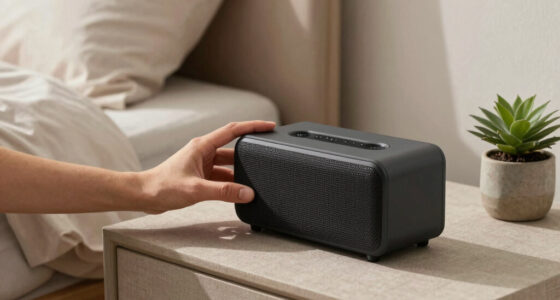
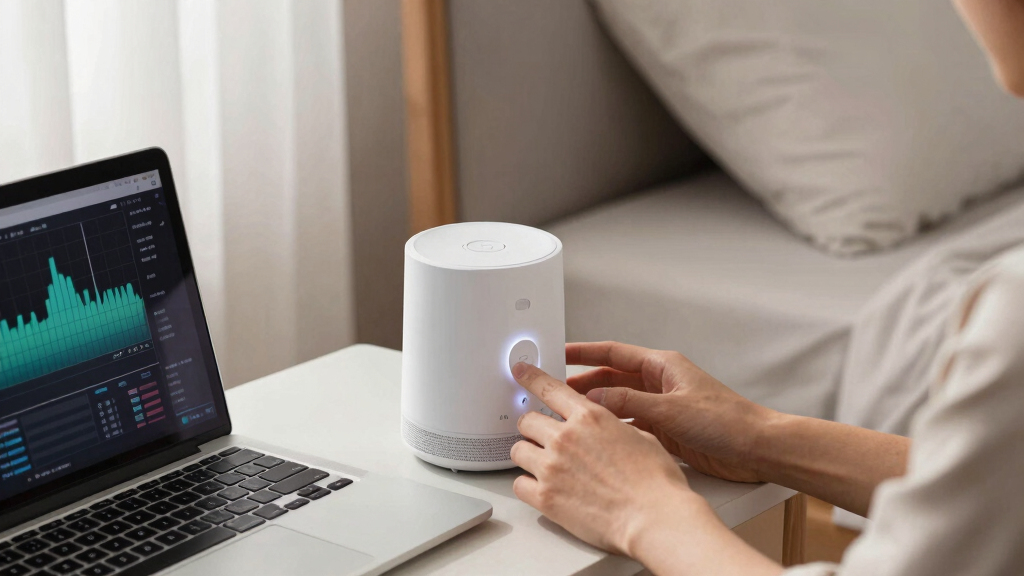
white noise machine with sound masking curve
As an affiliate, we earn on qualifying purchases.
As an affiliate, we earn on qualifying purchases.
How do different frequencies influence the masking power of sleep sounds?
Think of frequencies like colors in a painting. Some colors stand out more—like red or yellow—while others, like blue, recede into the background. Your ears are most sensitive to mid-range frequencies, especially between 2,000 and 5,000 Hz. These are the sweet spots for masking noise because they require less volume to effectively cover disruptive sounds. This means that incorporating these frequencies into sleep sounds can efficiently drown out common disturbances like traffic or snoring with minimal volume, which reduces the risk of waking up.
On the other hand, very low frequencies, such as deep bass sounds, tend to require higher volumes to be effective. While louder low-frequency sounds can mask rumbles or machinery, they also carry more energy, which can be intrusive or cause vibrations that disturb sleep. High frequencies, like sharp hisses, may be less effective unless played at high volumes, but they risk being perceived as harsh or irritating.
The tradeoff here lies in balancing these frequencies: a broad spectrum sound can target multiple noise sources but must be carefully calibrated to avoid being too loud or uncomfortable. Understanding these implications helps you select or create sleep sounds that are both effective and soothing, tailored to your specific environment and sensitivity.
sleep sound machine with customizable frequencies
As an affiliate, we earn on qualifying purchases.
As an affiliate, we earn on qualifying purchases.
How to Apply Masking Curve Knowledge to Improve Your Sleep Environment
Now that you understand the basics of masking curves and frequency sensitivities, the next step is applying this knowledge practically. Start by assessing your environment: identify the main sources of noise—be it traffic, snoring, or household sounds—and consider which frequencies they predominantly occupy. Using this information, you can select or design sleep sounds that target those specific frequencies, making your masking more efficient.
Many modern sleep devices and apps incorporate masking curve data to tailor sound profiles to your needs. If you’re creating your own sounds, aim for a broad spectrum that emphasizes the mid-range frequencies (2,000-5,000 Hz) while balancing the lower and higher ends to avoid discomfort. Testing different volumes and frequency emphases can help you find the sweet spot where noise is effectively masked without disrupting your sleep.
Additionally, environmental adjustments—like sealing gaps, reducing overall noise sources, or using earplugs—complement sound masking. Combining these strategies with well-chosen sleep sounds creates a more peaceful sleep environment tailored to your specific needs.
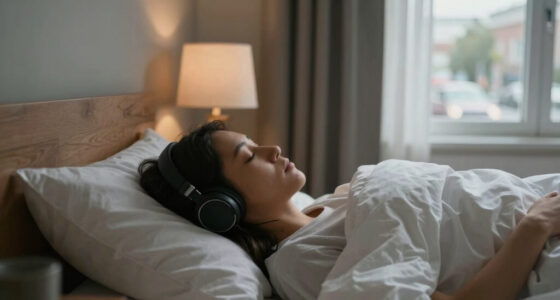
noise masking headphones for sleep
As an affiliate, we earn on qualifying purchases.
As an affiliate, we earn on qualifying purchases.
Conclusion: Harnessing the Power of Sound Masking Curves for Better Sleep
Knowing how sound masking curves work transforms the way you approach sleep sounds. Instead of random noises, you can choose or craft sounds that precisely target the frequencies disturbing your rest. It’s a simple shift that can lead to nights of deeper, more peaceful sleep.
Imagine drifting into sleep wrapped in a gentle, tailored sound blanket—completely unaware of the world outside. That’s the power of understanding the science behind sound masking. Why not give it a try tonight?
As an affiliate, we earn on qualifying purchases.
Frequently Asked Questions
What exactly is a sound masking curve?
A sound masking curve shows the quietest sound level at each frequency needed for a sound to be noticeable over background noise. It guides the design of sleep sounds that effectively drown out disruptions without being intrusive.
Why are some frequencies better at masking noise during sleep?
Because our ears are most sensitive to mid-range frequencies (around 2,000-5,000 Hz), sounds in this range can mask noises more efficiently. Including these frequencies in sleep sounds helps cover a wider range of disruptive noises. Recognizing which frequencies are most effective allows for more strategic sound design, optimizing masking while minimizing volume and potential disturbance.
Can I customize sleep sounds based on masking curves?
Yes, some modern devices analyze your environment and hearing sensitivities to tailor sounds that target the most disruptive frequencies, creating a more effective sleep experience. This customization can help balance masking effectiveness with comfort, avoiding overly loud or harsh sounds that could disrupt sleep or cause discomfort.
Do different sleep stages change how sounds are perceived?
Yes. During deep sleep, your brain is less responsive to external sounds, so the masking threshold rises. This means you need sounds that are effective at higher thresholds without waking you. Understanding this can guide you in selecting or designing sounds that are just enough to mask disturbances during lighter sleep stages, without risking awakening during deeper phases.
Are there risks in using certain sounds for masking?
While generally safe, very loud or high-pitched sounds can sometimes be disruptive or cause discomfort, especially if played at excessive volumes. Recognizing these tradeoffs is important: overly loud sounds can disturb sleep or cause hearing fatigue, while high-frequency sounds may be perceived as irritating. Striking a balance by choosing soothing, well-calibrated sounds minimizes these risks and enhances sleep quality.
Conclusion
Knowing how sound masking curves work transforms the way you approach sleep sounds. Instead of random noises, you can choose or craft sounds that precisely target the frequencies disturbing your rest. It’s a simple shift that can lead to nights of deeper, more peaceful sleep.
Imagine drifting into sleep wrapped in a gentle, tailored sound blanket—completely unaware of the world outside. That’s the power of understanding the science behind sound masking. Why not give it a try tonight?
Halloween Picks
halloween
As an affiliate, we earn on qualifying purchases.