TL;DR
Open a free Amazon Business account
Business pricing, bulk buying and tax-exempt orders.
Create a free accountAs an affiliate, we earn on qualifying purchases.
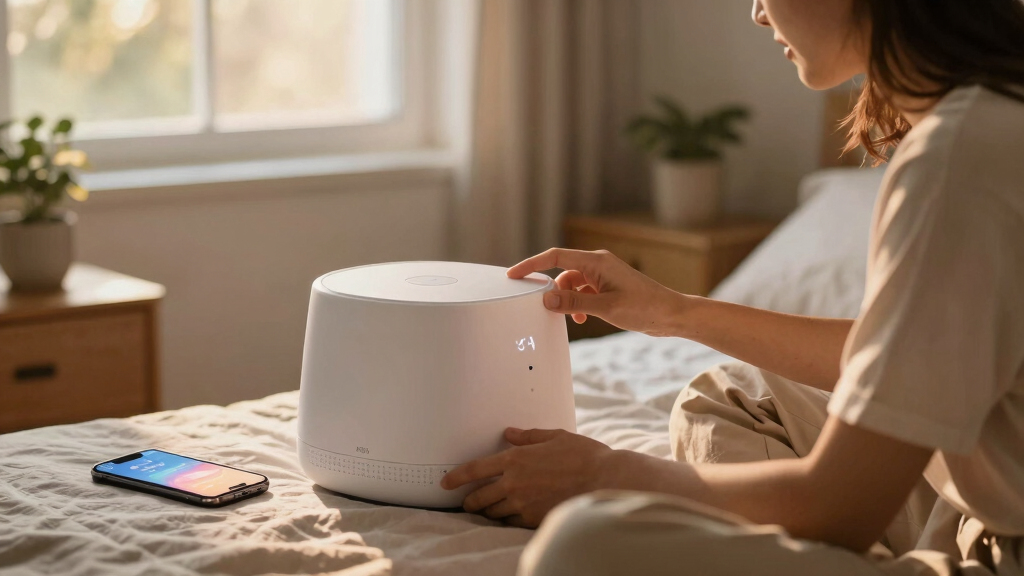
White noise machine timers automatically turn off sound after a set period, helping avoid noise fatigue. All-night play offers continuous, steady sound, ideal for those who find silence disruptive. Choosing depends on your sleep habits and preferences; recent tech makes both options more customizable and effective.
Imagine drifting off with a gentle hum in the background, only to wake up suddenly in silence. Frustrating, right? Whether you’re a light sleeper or share a room with others, your choice between a timer and all-night playback on your white noise machine can make a real difference. Understanding how each option impacts your sleep environment is the key to creating a soothing, uninterrupted night.
In this guide, I’ll walk you through what makes timers and continuous sound different, how recent tech advances have changed the game, and what to consider when setting up your sleep soundscape. Let’s find the perfect fit for your bedtime routine.
Timers help prevent sound fatigue and can be customized from 15 minutes to several hours.
All-night play offers steady, reliable sound that masks external noise and promotes uninterrupted sleep.
Recent tech advances like adaptive sounds and app controls make choosing and customizing your sleep environment easier.
Volume safety is key; keep sound at a gentle level to protect your hearing and avoid sleep disruption.
Experiment with both options and track your sleep quality to find what best supports your rest.
Why Your Sleep Comfort Depends on Your Choice: Timers or All-Night Play?
Choosing between a timer and continuous sound isn’t just about convenience. It’s about creating the right environment for your unique sleep style. Timers turn off after a set time, which can help prevent sensory adaptation — a phenomenon where your brain gradually stops responding to a constant stimulus, making the sound less effective over time. This means that if you rely solely on continuous noise, your brain might start filtering it out, reducing its soothing effect. Conversely, timers can be used strategically to match your sleep cycle, ensuring the sound isn’t abruptly cut off when you’re in deep sleep, which could cause disturbance.
All-night play, on the other hand, provides a consistent auditory backdrop that can promote a sense of security and stability, especially for those who are sensitive to sudden silence or external noises. However, it also means your device is constantly consuming power and may contribute to habituation, where your brain learns to ignore the sound, potentially diminishing its calming effect over time. The key is understanding your personal response; if you find that continuous sound helps you stay asleep, then the tradeoff might be worth it. If you’re worried about overstimulation or energy use, timers can offer a balanced solution—delivering the benefits of steady sound while minimizing drawbacks.
As an affiliate, we earn on qualifying purchases.
How Timers and All-Night Play Affect Your Sleep Environment
Each option influences your sleep environment in ways that go beyond merely turning sound on or off. Timers help prevent sensory overload—a situation where constant stimulation can lead to fatigue or reduced responsiveness, making the sound less effective over time. For example, setting a timer for 30 minutes can synchronize the end of noise with your transition into deep sleep stages, potentially enhancing sleep quality by reducing abrupt interruptions. However, if the timer ends unexpectedly or the sound stops too early, it might cause a wake-up or arousal, disrupting your sleep cycle.
All-night play creates a stable environment that can mask external disturbances like traffic or snoring, fostering a sense of consistency. This is especially beneficial in noisy settings where external sounds can cause frequent awakenings. But because the sound is continuous, your brain may habituate to it, reducing its calming effect after a while. Recent innovations, such as adaptive volume controls that respond to ambient noise, aim to strike a balance—maintaining a steady sound level without overwhelming your senses. Understanding this tradeoff helps you decide whether you need a dynamic, responsive environment or a simple, constant background.
Moreover, the implications extend to energy consumption and device longevity. Continuous operation consumes more power and may lead to earlier wear, whereas timers can conserve energy but require accurate setup to maximize their benefits. Ultimately, your choice depends on your specific needs—whether you prioritize consistency, energy efficiency, or minimizing habituation.
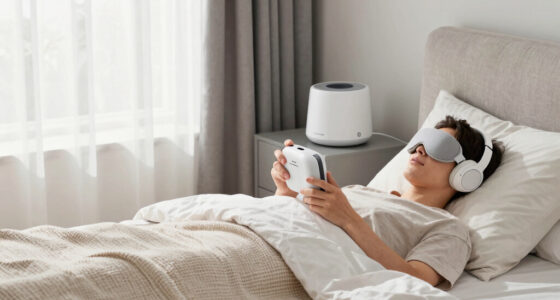
white noise machine for all-night play
As an affiliate, we earn on qualifying purchases.
As an affiliate, we earn on qualifying purchases.
Understanding the Sleep Cycle and How Sound Options Fit In
To make an informed choice, it’s helpful to understand your own sleep cycle. Sleep typically progresses through stages, from light sleep to deep sleep and REM. The timing of these stages varies among individuals, but generally, the deepest sleep occurs in the first few hours. If your sleep environment is disrupted during these critical phases, your rest can be compromised.
Using timers can be advantageous because they allow you to tailor sound duration to your sleep cycle, providing soothing noise during lighter stages and turning off before deep sleep begins, thereby reducing potential disturbances. Conversely, continuous sound can be beneficial if you tend to wake up during the night or have external noises that consistently disrupt your sleep. Knowing your sleep patterns helps you decide whether a timed approach or all-night play better supports your rest.
Experimenting with different settings based on your sleep cycle can optimize your environment. For example, setting a timer for 60–90 minutes might align with your light sleep phases, while leaving the sound on all night could be better if you’re prone to waking up due to external noise. Recognizing your sleep needs is key to customizing your white noise experience effectively.
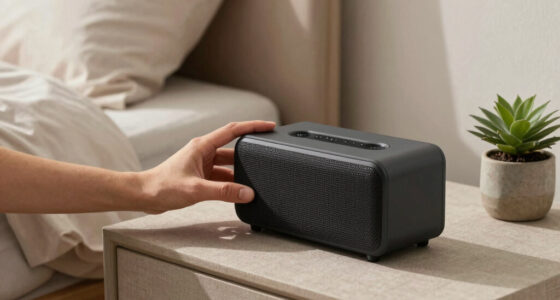
best white noise machine for sleep
As an affiliate, we earn on qualifying purchases.
As an affiliate, we earn on qualifying purchases.
Frequently Asked Questions
Is it better to use a timer or all-night play for sleep?
It depends on your sleep style. Timers are great if you fall asleep quickly and dislike noise during the night, while all-night play suits those who need consistent sound to stay asleep or find silence disruptive.Can I set different timer durations for different nights?
Yes, most modern devices allow customizable timer settings, so you can tailor the duration based on your nightly needs or mood.Is it safe to leave a white noise machine on all night?
Generally, yes, if you keep the volume at a gentle level—about the volume of a soft conversation. However, some experts recommend using timers to prevent prolonged exposure to loud sounds.What features should I look for in a white noise machine?
Look for a variety of sounds, adjustable volume, customizable timers, portability, and smart features like app control or adaptive sound options.Do white noise machines help with sleep issues?
They can support better sleep as part of good sleep hygiene, but aren’t substitutes for medical advice if you have ongoing sleep disorders.white noise machine with app control
As an affiliate, we earn on qualifying purchases.
As an affiliate, we earn on qualifying purchases.
Conclusion
Ultimately, your choice between timers and all-night play boils down to your personal comfort and sleep habits. Both options have their strengths—timers prevent overstimulation, while continuous sound offers peace of mind. The best approach? Try both, tweak settings, and trust your body’s signals.
Picture yourself drifting into a peaceful sleep, your perfect sound environment softly supporting every breath. That’s the goal—so experiment, adjust, and enjoy nights of truly restful sleep.
Grilling season Picks
grills
As an affiliate, we earn on qualifying purchases.