
TL;DR

Get wellness gear delivered free with Prime
- Fast, free delivery on millions of items
- Prime Video, Amazon Music and more included
- Member-only deals all year
A sleep-friendly bedroom layout minimizes noise, light, and clutter while optimizing bed placement and decor. Simple adjustments can make a notable difference in sleep quality.
Ever wonder why some bedrooms feel more restful than others? It’s often about the layout. Your sleeping environment can either invite peaceful slumber or invite restless nights. Small tweaks—like where you position your bed or how you manage light—can make a big difference.
In this guide, you’ll learn how to craft a bedroom that supports your natural sleep rhythms. We’ll cover practical tips for layout, lighting, noise control, and decor—so your space becomes a true sanctuary for rest.
Position your bed against a solid wall, away from windows and doors to reduce disturbances.
Control light exposure with blackout curtains and warm, dim lighting at night, and natural light during the day.
Keep clutter and electronics out of the sleeping area to lower stress and blue light interference.
Choose calming, neutral colors and natural decor to promote relaxation.
Incorporate recent tech like smart lighting and soundproofing to enhance sleep quality.
How to Position Your Bed for Deep, Restorative Sleep
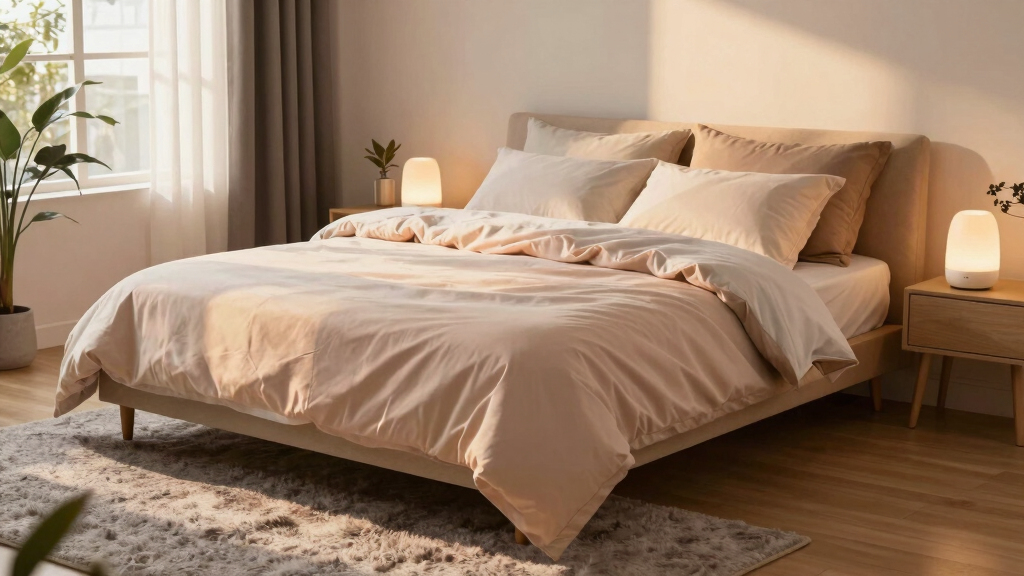
Your bed’s placement is the foundation of a sleep-friendly layout. Position it against a solid wall, away from windows and doors. This minimizes exposure to drafts, noise, and light. For example, placing your bed away from the window helps block street noise and morning sunlight that can wake you prematurely.
Imagine lying in bed and feeling shielded from outside disturbances. That’s what proper placement achieves. It’s about creating a cocoon where your body can relax fully.
Choosing a position that is stable and away from sources of distraction can also enhance sleep quality by reducing subconscious alerts to external stimuli. It’s worth considering the tradeoff between proximity to natural light and potential disturbances—sometimes, a slightly less ideal location may offer better overall rest if it minimizes noise and light intrusion.
As an affiliate, we earn on qualifying purchases.
How to Use Light to Boost Sleep and Wake Cycles
- Install blackout curtains or shades to block out external light at night. Heavy, dark fabrics can dim streetlamps or early sunrise, helping melatonin production. This is crucial because even small amounts of light can suppress melatonin, the hormone that signals your body it’s time to sleep, thus delaying sleep onset.
- Use warm, dim lights in the evening—think amber or soft yellow—to signal your brain it’s winding down. This gentle lighting helps your body transition into sleep mode by mimicking sunset hues, which naturally cue melatonin production.
- During the day, let in natural sunlight or use bright, full-spectrum bulbs. Exposure to natural light helps regulate your circadian rhythm, the internal clock that governs sleep-wake cycles. Proper light management ensures your body knows when to be alert and when to rest, reducing the risk of circadian misalignment that can cause sleep disturbances.
For example, a bedroom with blackout curtains and a warm bedside lamp creates a cozy, sleepy environment. During the day, opening blinds floods the room with sunlight, syncing your internal clock and promoting alertness.
As an affiliate, we earn on qualifying purchases.
How Clutter and Electronics Sabotage Your Sleep – And What to Do About It
Clutter and electronics are sleep enemies because they increase mental stimulation and physical chaos, both of which interfere with relaxation. A cluttered room can cause subconscious stress, making it harder to wind down even if you’re physically tired. It creates visual noise that distracts your mind from settling into sleep, often leading to longer sleep latency.
Electronics emit blue light, which directly suppresses melatonin production, delaying sleep onset and reducing sleep quality. Furthermore, notifications and digital alerts can cause micro-arousals during the night, fragmenting sleep cycles and preventing deep, restorative rest.
To combat this, keep your bedroom tidy—use baskets or storage bins to hide electronics, clothes, and clutter. Clearing visual chaos helps calm your mind, reducing stress and making it easier to relax. Consider charging devices outside the sleeping area or in a dedicated charging station to eliminate the temptation of late-night screen use. This physical separation minimizes the blue light exposure and reduces the likelihood of sleep disruptions caused by notifications or device checking.
For example, replacing a cluttered nightstand with a clean, minimal surface not only reduces visual noise but also signals to your brain that the space is dedicated to rest. Removing phones from bedside tables diminishes the temptation to check notifications, which can wake you up and interfere with sleep cycles.
As an affiliate, we earn on qualifying purchases.
How Colors and Decor Create a Calm, Sleep-Inducing Atmosphere
Colors influence mood and relaxation. Soft blues, greens, and earth tones evoke calm and stability because they are associated with nature and tranquility, which can help lower cortisol levels and promote restful sleep. Bright reds or neon hues, on the other hand, can energize your nervous system, making it harder to wind down.
Imagine slipping into a bedroom painted in gentle seafoam green, with plush bedding and natural textures. The calming palette encourages your mind to unwind, reducing the mental chatter that can delay sleep onset.
Choosing decor that promotes tranquility—such as cozy rugs, soft bedding, and natural materials—creates a sanctuary that signals your brain it’s time to rest. The right colors and textures can also help mask external stimuli, making your sleep environment more uniform and less stimulating, which is essential for deep sleep stages.
As an affiliate, we earn on qualifying purchases.
Recent Tech and Design Innovations That Make Your Bedroom Sleep-Ready
Smart lighting that mimics natural circadian rhythms can gently wake you and wind down your evening, reducing abrupt changes that can disturb your sleep cycle. Sleep trackers provide valuable insights into your sleep patterns, helping you identify habits or layout issues that may be impairing rest.
Biophilic design—adding plants and natural elements—not only improves air quality but also fosters relaxation by creating a connection to nature, which has been shown to lower stress hormones. Soundproofing materials, white noise machines, and acoustic panels help block disruptive external sounds, creating a quieter environment conducive to uninterrupted sleep.
For example, a bedroom with a smart lamp gradually brightening in the morning and calming in the evening, plus a small potted plant on the windowsill, creates a peaceful, health-conscious space. These innovations support a more natural and restful sleep cycle, emphasizing the importance of integrating technology and natural elements thoughtfully into your design.
Quick Check: Is Your Bedroom Layout Supporting or Sabotaging Your Sleep?
| Feature | Sleep-Friendly? |
|---|---|
| Bed against a solid wall, away from windows | Yes |
| Blackout curtains or shades | Yes |
| Clutter-free space | Yes |
| Electronic devices near bed | No |
| Bright, stimulating colors | No |
Use this checklist to see if your bedroom is set up for restful sleep—or if it needs a little rearranging. Remember, small adjustments can have a big impact on your sleep quality by reducing disruptions and creating a more tranquil environment.
Frequently Asked Questions
How should I position my bed for better sleep?
Place your bed against a solid wall, away from windows and doors. This setup minimizes noise, drafts, and light disturbances, creating a stable, calming spot for rest.What lighting setup is best for a sleep-friendly bedroom?
Use blackout curtains or shades to block out external light at night. In the evening, opt for warm, dimmable lights to signal winding down. During the day, maximize natural sunlight to keep your circadian rhythm aligned.Can I have electronics in my bedroom?
It’s better to keep electronics, especially screens, outside the sleep zone. Blue light from devices suppresses melatonin, making it harder to fall asleep. Charge devices outside or in a separate area.Which colors should I choose to help me sleep?
Calming shades like soft blue, green, or earth tones promote relaxation. Bright or overly stimulating colors can increase alertness and interfere with your sleep readiness.How do I reduce noise in a noisy neighborhood?
Use heavy curtains, add rugs or wall hangings, and consider white noise machines or soundproofing materials. These steps can mask external sounds and create a peaceful sleep environment.Conclusion
Creating a bedroom that invites restful sleep isn’t about radical changes—small, intentional adjustments make a difference. Think of your space as a sanctuary where every detail supports your natural rhythms. Your best sleep is just a layout tweak away.
Imagine closing your eyes in a room that feels like a peaceful cocoon—calm, dark, cool, and clutter-free. That’s the power of a thoughtfully designed sleep environment. Start with one change tonight and feel the difference tomorrow morning.
Cold & flu season Picks
humidifiers
As an affiliate, we earn on qualifying purchases.