
TL;DR
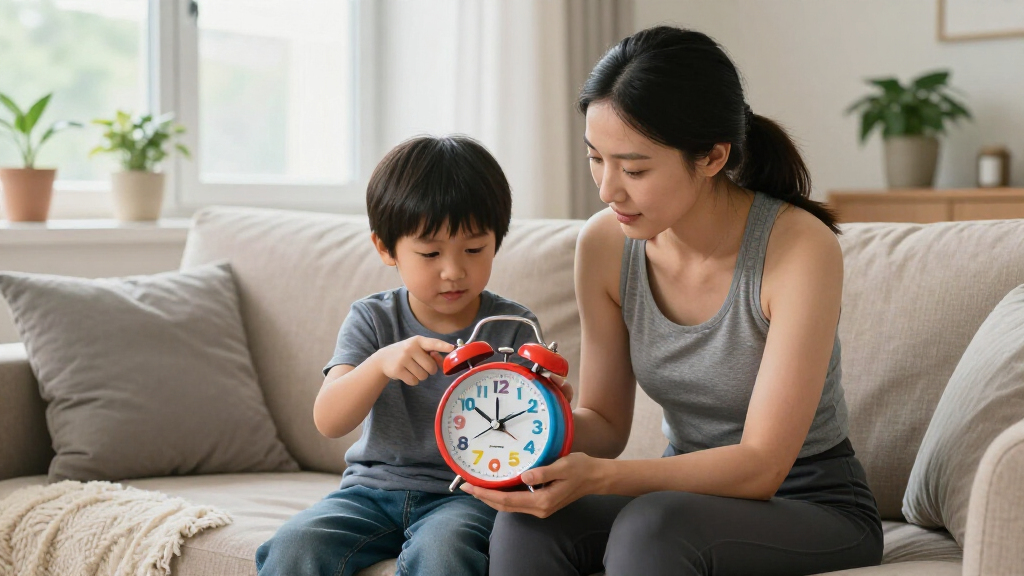
Teaching children to tell time becomes easier with alarm clocks that use colors and large numbers. These tools help kids connect visuals to routines, boosting understanding and independence in daily schedules.
Imagine a clock that doesn’t just tell time but *speaks* the story of your child’s day. Bright colors, big numbers, and gentle alarms make learning to tell time feel less like a math lesson, and more like an adventure. Teaching time isn’t just about reading numbers; it’s about helping kids connect those numbers to their everyday routines.

Get wellness gear delivered free with Prime
- Fast, free delivery on millions of items
- Prime Video, Amazon Music and more included
- Member-only deals all year
In this guide, you’ll discover how alarm clocks with vibrant colors and clear numbers turn a confusing concept into a fun, understandable skill. Whether you’re helping a preschooler grasp hours or a young child manage routines, these tools make the process engaging and practical.
Color-coded clock faces with large numbers help children connect visuals to time concepts, making learning easier.
Using routines and alarms marked with different colors reinforces daily schedules and builds independence.
Starting with analog clocks and gradually introducing digital displays develops flexible time-reading skills.
Incorporating interactive and playful activities keeps children engaged and eager to learn.
Modern clocks with tactile, visual, and alarm features support diverse learning styles and routines.
Why Colors and Numbers Make Teaching Time Easier
Colors and numbers are powerful visual cues that boost a child’s ability to learn to tell time. Bright, distinct colors for the hour, minute, and second hands help children differentiate between them instantly. This visual differentiation is crucial because young learners often struggle with abstract concepts like time passing. By associating specific colors with specific hands, children develop a mental map that simplifies reading the clock, reducing confusion and frustration. Furthermore, these visual cues lay the groundwork for understanding more complex time concepts, such as elapsed time or time intervals, by making the initial learning more intuitive. The use of large, clear numbers complements this by providing concrete reference points, reinforcing recognition of digits and their significance in daily routines. Combining colors with numbers creates a multi-layered learning experience that caters to various learning styles, particularly visual and spatial learners. This dual coding enhances memory retention and helps children form stronger associations between the clock and their daily activities, ultimately fostering confidence and independence in time-telling skills.
Understanding why these visual tools matter is key: they not only make initial learning easier but also support the development of more advanced time concepts. When children see the color-coded hands and recognize numbers, they start to grasp the idea of time as a continuous flow rather than isolated moments. This understanding influences how they plan and anticipate routines, leading to greater independence and less reliance on adult prompts. The tradeoff, however, is that overly simplified clocks without accurate color differentiation might lead to misconceptions if the child doesn’t also learn to interpret standard clocks later. Therefore, combining engaging visual cues with gradual introduction to traditional clocks ensures a balanced, comprehensive learning experience.
Products Worth Considering

Milwaukee M18 18V Brushless Cordless 7-1/4-Inch Circular Saw, Tool-Only

DEWALT 20V MAX XR Brushless 7-1/4-Inch Cordless Circular Saw Kit

Greenworks 40V 16-Inch Cordless Push Lawn Mower Kit
As an affiliate, we earn on qualifying purchases.
How to Use Color-Coded Clocks to Teach Hours and Minutes
- Start with the basics. Demonstrate how the clock’s hands move and explain what each color represents—such as red for hours, blue for minutes, and perhaps a different color for seconds if applicable. Emphasize how understanding these visual cues helps decode the more complex concept of elapsed time and scheduling. For example, when the hour hand is on 3 and the minute hand is on 12, it indicates o’clock, but understanding why the minute hand’s position matters deepens comprehension. Recognize that the reason for focusing on these cues is that children often struggle with abstract concepts like the passage of time, and visual aids provide concrete anchors for understanding. When children see the color associations, they begin to interpret the clock more intuitively, which is crucial for developing a mental model of time that can be applied across different clock formats.
- Set specific times, like 3:00 or 5:30, and highlight the corresponding colors and numbers. Use familiar routines—like lunchtime at 12:00 or bedtime at 8:00—to contextualize these times. Explaining why these routines happen at certain times helps children see the practical importance of the skill and how it relates to their daily life. This contextualization reinforces that learning isn’t just about reading a clock but understanding its role in organizing their day, which promotes meaningful engagement and retention.
- Practice daily. Use the clock during morning routines to show when it’s time to wake up or get ready, reinforcing the connection between visual cues and real-world actions. Repetition helps solidify the understanding that the clock isn’t just a static object but a dynamic tool that guides daily behavior. The more children see these cues in action, the more naturally they will incorporate time-telling into their routines, leading to increased independence.
- Incorporate playful activities. For instance, ask, “What time is it when the big hand is on the 12 and the small hand is on the 4?” or “Can you find the number 7 and tell me what time that might be?” Making it a mini game encourages active participation and helps children internalize the concepts while having fun. These activities also help children understand the relationship between the position of the hands and the actual time, deepening their conceptual understanding.
- Gradually introduce digital reading. Show how the digital display mirrors the analog clock’s colors and numbers, reinforcing the relationship between the two formats. Explaining the differences and similarities helps children become flexible and adaptable in their understanding of time, preparing them for various clock types they might encounter. This transition helps bridge the gap between visual, tactile learning and abstract numerical understanding, fostering adaptability and confidence in using different time-telling methods.
Following these steps allows the clock to evolve from a simple time-telling device into a comprehensive teaching tool. It connects visual cues with routine activities, deepening understanding and helping children see the relevance of what they learn, which ultimately leads to greater independence and confidence in managing their daily schedules.
Comparing Analog and Digital Clocks: Which Helps Kids Learn Faster?
| Feature | Analog Clocks | Digital Clocks |
|---|---|---|
| Visual Learning | Excellent for understanding the passage of time, with colors and hands showing hours and minutes. Analog clocks provide a spatial and visual representation of time passing, which helps children grasp the concept of durations and intervals more naturally. The movement of the hands illustrates how time flows, offering a dynamic learning experience that can be more intuitive for young learners. This visual and physical aspect encourages children to see time as a continuous flow rather than discrete numbers. The spatial layout of an analog clock supports the development of mental mapping skills, enabling children to estimate times and understand fractions of hours more intuitively, which is crucial for real-world time management and planning. | |
| Reading Ease | Requires understanding of clock face and number positions, which can initially be challenging. However, this difficulty fosters deeper comprehension as children learn to interpret spatial relationships and develop mental models of time. Mastering analog clocks promotes a more holistic grasp of time concepts, including the idea that the clock face is divided into segments representing hours and minutes. This understanding supports more advanced skills like calculating elapsed time or understanding time intervals, which are essential for real-life scheduling and planning. | |
| Routine Reinforcement | Great for teaching routines with visual cues like color-coded hands and labeled hours. The physical movement of the clock’s hands reinforces the cyclical nature of routines, helping children anticipate and prepare for upcoming activities. This visual cycle emphasizes the importance of sequencing and timing in daily life, fostering a sense of rhythm and predictability that is fundamental for developing independence and time management skills. | |
| Ease of Use for Kids | Can be confusing initially but offers a tangible sense of time passing, which can be beneficial for understanding the concept of duration and the relationship between hours and minutes. As children become more familiar, they develop a robust mental model that supports flexible time reading and planning. The physicality of moving the hands can also serve as a kinesthetic learning aid, helping children internalize the concept of time passing in a concrete way. | |
| Digital Clarity | Less intuitive for young children initially but offers quick, precise reading of specific times, which is useful for timed activities and schedules. Digital clocks excel in clarity and speed, making them practical for quick reference, but they lack the spatial and visual cues that aid in deeper understanding. Recognizing the numerical format also helps children become comfortable with abstract representations of time, which are prevalent in modern life and technology. |
While digital clocks provide convenience and quick access to time, analog clocks with their color-coding and spatial layout foster a more comprehensive understanding of how time works. Recognizing the movement of the hands and their relation to the numbers helps children develop a mental model of time as a continuous flow, which is essential for mastering more advanced time concepts and routines. This deeper understanding supports skills like estimating durations, planning activities, and understanding the concept of fractions of an hour, which are all vital for real-world time management and independence.
Frequently Asked Questions
At what age should children start learning to tell time?
Most kids begin around age 5 or 6, but it depends on individual readiness. Using colorful clocks and simple routines can help ease the process.
What are the best tools for teaching time to young children?
Colorful, adjustable analog clocks with large numbers, combined with interactive digital apps, make learning engaging and accessible.
How can I make learning to tell time fun?
Incorporate games, storytelling, and routine-alarm strategies. Turning lessons into playful activities keeps children interested and eager to learn.
Are digital clocks easier for kids than analog ones?
Digital clocks are often simpler initially, but understanding analog clocks with colors and labels offers a deeper grasp of time concepts.
How do I help my child transition from digital to analog clocks?
Use visual comparisons, practice exercises, and real-world scenarios to connect digital times with their analog counterparts, building confidence step by step.
Conclusion
Bright colors, clear numbers, and routine alarms turn learning to tell time into a joyful part of daily life. These tools do more than teach—they build independence and confidence in children, helping them navigate their day with certainty.
Remember, the goal isn’t perfection, but creating a positive, engaging experience. As your child starts to read the clock confidently, you’ll see routines become smoother and mornings a little brighter.