
TL;DR

Get wellness gear delivered free with Prime
- Fast, free delivery on millions of items
- Prime Video, Amazon Music and more included
- Member-only deals all year
Knee pillows and leg wedges are simple tools that can greatly enhance sleep comfort by supporting proper alignment and reducing pressure points. They are low-risk, customizable, and can help with various issues like back pain, hip discomfort, or swelling. Choosing the right cushion depends on your sleep position, body size, and specific goals.
Small cushions like knee pillows and leg wedges can significantly improve sleep comfort by supporting proper alignment and reducing pressure points.
Choosing the right cushion depends on your sleep position, body size, and specific comfort needs; adjust firmness and height accordingly.
Recent innovations include adjustable, contoured, and cooling designs, making it easier to find a supportive, comfortable fit.
Proper placement and use are simple: between the knees for side sleepers, under the knees or calves for back sleepers, with attention to comfort and safety.
While cushions support better sleep posture, persistent pain or swelling should always be evaluated by a healthcare professional.
Knee Pillows & Leg Wedges: Small Cushions, Big Comfort
A few inches of thoughtfully placed support can change joint angles, reduce pressure points, and make rest feel easier. The best cushion is not the most elaborate one—it is the one that matches your position, proportions, and comfort goal.
Similar idea. Different jobs.
Both products support the lower body, but their size, placement, and intended effect differ. Start with the job you need done, then choose the shape.
Knee pillow
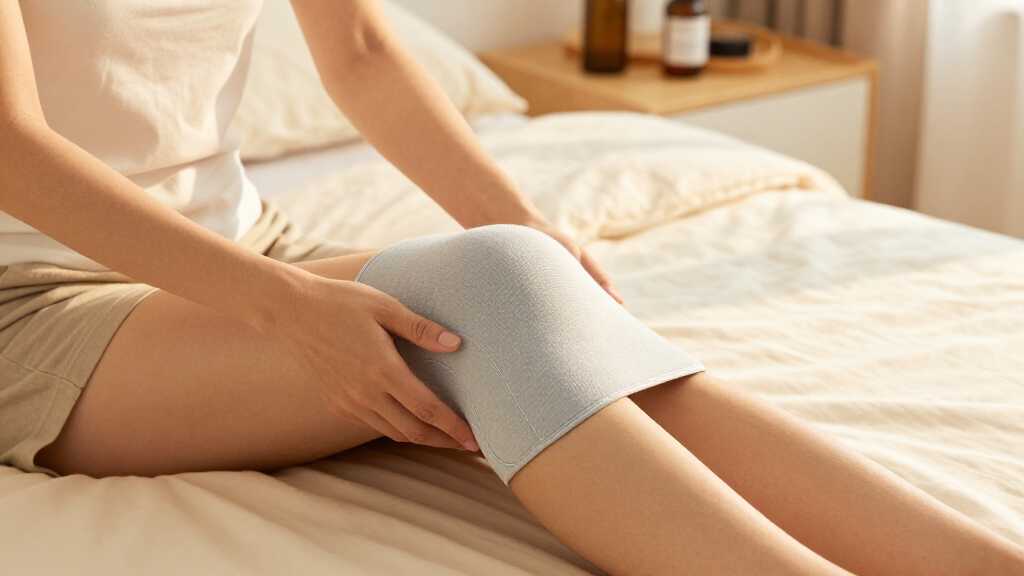
Sits between the knees or thighs to stop the upper leg drifting forward and rotating the pelvis. Some models can also rest beneath the knees during back sleeping.
Best for: knee contact, hip alignment, side-sleep stabilityLeg wedge
A broader, angled cushion that supports the knees, calves, ankles, or entire lower leg. It can relax the lower back or provide clinician-directed elevation.
Best for: back sleep, mild swelling, supported recoveryAbduction pillow
Keeps the legs separated after certain hip procedures. It is a prescribed positioning device, not simply a larger version of an ordinary knee pillow.
Important: substitute only with clinician approvalSmall shifts can calm a long chain.
A cushion changes how the legs meet the hips and pelvis. That can reduce direct contact, limit unwanted rotation, and help nearby muscles settle into a more comfortable resting position.
More neutral side-sleeping alignment
Supporting the upper leg can limit pelvic rotation and reduce pulling through the hips and lower spine.
Less knee-on-knee pressure
Padding distributes contact pressure for sensitive joints, arthritis, prominent bones, or recent bruising.
A more relaxed back-sleeping position
A wedge beneath bent knees can reduce the lumbar arch and help hip-flexor and spinal muscles relax.
Supported leg elevation
Broad calf support may temporarily ease heaviness and help manage mild swelling alongside appropriate care.
Choose by position, size, and goal.
Height matters as much as shape. Too little support may do nothing; too much can push the hips, knees, or back into a new source of strain.
| Sleep style or need | Best starting support | Placement | Fit signal | Watch for |
|---|---|---|---|---|
| Side sleeper | ✓Knee pillow | Between knees or thighs; consider ankle support too | Hips feel stacked and the upper leg does not fall forward | Excess thickness spreading the legs too far apart |
| Back sleeper | ✓Knee or calf wedge | Under bent knees, or broadly beneath calves | Lower back feels relaxed without knee strain | Abrupt wedge edges pressing behind the knees |
| Mild leg heaviness | ~Broad leg wedge | Support calves and ankles rather than one small point | Elevation feels gentle and evenly distributed | New pain, numbness, redness, or one-sided swelling |
| Post-procedure recovery | !Clinician-approved support | Exactly as postoperative instructions specify | Prescribed position stays stable and comfortable | Replacing specialized equipment without approval |
| Stomach sleeper | ✗Usually minimal support | Use cautiously; excessive leg elevation may add strain | No increased arching or twisting | Neck, low-back, or pelvic discomfort |
Adjustable layers
Removable foam lets you tune height as comfort needs change.
Contoured foam
Shaped sides can hug the legs and reduce overnight slipping.
Cooling materials
Ventilated foam and moisture-wicking covers address heat buildup.
Longer support
Extended pillows can align both knees and ankles for side sleepers.
From sleep problem to useful support.
Think of setup as a short feedback loop. The body—not the product label—has the final say on whether a position is truly supportive.
Name the comfort goal
Separate the knees, reduce twisting, relax the back, or elevate the legs.
Match your sleep position
Between the legs for side sleep; beneath knees or calves for back sleep.
Tune height and firmness
Start modestly. The support should fill space without forcing a new angle.
Review the morning signal
Keep, adjust, or stop based on comfort, stiffness, pressure, and stability.
Ignore the buzzwords. Inspect the fit.
Terms such as “orthopedic,” “ergonomic,” and “doctor recommended” may be marketing language. Useful details are measurable: dimensions, slope, firmness, adjustability, stability, and cleanability.
Measure the gap
Choose thickness that supports your natural leg spacing without forcing it wider.
Check the slope
Gentler, broader wedges usually distribute pressure more evenly along the calves.
Plan for movement
Contouring, straps, or longer designs may help restless sleepers keep support in place.
Manage heat
Look for ventilated foam and removable, washable, moisture-wicking covers.
Allow adjustment
Modular layers or multiple angles make it easier to refine comfort over time.
Knee pillows and leg wedges are simple, customizable positioning aids. Use a knee pillow to support side-sleeping alignment and separate sensitive joints; use a wedge for back-sleep comfort or broad leg elevation. Start with modest height, adjust by feel, and treat ongoing pain or swelling as a health question—not a pillow problem.
What Exactly Are Knee Pillows and Leg Wedges? Think of Them as Small but Mighty Support Tools
Knee pillows are compact cushions that slide between your knees when you sleep on your side. They prevent your upper leg from drifting forward and twisting your pelvis, which can cause discomfort. Leg wedges are larger, sloped cushions that elevate your lower legs, supporting your knees, calves, or entire legs. They’re often used during rest or recovery to ease pressure or improve circulation.
Imagine lying on your side. You place a knee pillow between your thighs, keeping your hips aligned. Or, if you prefer back sleeping, a wedge beneath your knees can help relax your lower back. These tools are versatile and simple, but each serves a distinct purpose. Understanding the differences helps you select the right support to address specific discomforts or sleep needs, making your sleep environment more tailored and effective.
As an affiliate, we earn on qualifying purchases.
How Small Cushions Make a Big Difference for Your Sleep
It’s amazing how something the size of a soft loaf of bread can impact your nights. A knee pillow prevents the upper knee from dropping forward, which helps maintain proper pelvic alignment. This alignment is crucial because mispositioned hips or pelvis can lead to muscle strain, joint pain, and disrupted sleep cycles. When your pelvis is misaligned, other parts of your body compensate, often resulting in discomfort or pain that can persist throughout the day.
Leg wedges provide elevation that promotes better circulation and reduces swelling, especially beneficial after long periods of standing or during recovery from injury. Proper elevation can also relieve pressure on your lower back by supporting the natural curve, which is vital for maintaining spinal health. These small adjustments can reduce the likelihood of developing chronic discomfort and improve overall sleep quality, but they require correct placement to avoid unintended strain or misalignment. The tradeoff is that improper use or incorrect height can sometimes cause discomfort, so understanding your body’s signals is key to maximizing benefits.
Picture a person recovering from knee surgery. They use a wedge to keep their leg elevated, easing swelling and discomfort—this prevents blood pooling and promotes healing. Or think of a side sleeper who finds relief by placing a pillow between their knees, reducing rotational stress on the hips. These small cushions, when used thoughtfully, shape your sleep experience in profound ways, supporting recovery, comfort, and long-term joint health.
As an affiliate, we earn on qualifying purchases.
The Benefits You Can Expect from Using These Supports
Better side-sleeping alignment helps keep your hips, pelvis, and lower spine in a neutral position. This alignment reduces strain on muscles and joints, which can prevent pain and improve sleep continuity. When your hips are properly aligned, you’re less likely to wake up with aches or stiffness, which means more restorative sleep and less morning discomfort.
Less pressure between your knees means fewer aches, especially if you have arthritis or sensitive joints. This reduction in pressure can also prevent joint wear over time, potentially delaying degenerative issues. Using a cushion that maintains proper spacing reduces twisting and pulling around your hips and pelvis, which are common during side sleeping and can lead to misalignment or nerve compression if not addressed.
For back sleepers, a wedge under the knees flattens the lumbar spine, encouraging a natural curve that relaxes muscles and ligaments. Elevating the legs can also help manage mild swelling, preventing fluid buildup that causes discomfort or heaviness in the legs upon waking. This can be particularly beneficial for individuals with circulation issues or after surgeries.
Some people even find that these cushions support a smoother recovery from injuries or surgeries, helping maintain prescribed positions and reduce strain during sleep. It’s important to recognize that while research supports the biomechanical advantages of these supports, they are adjuncts—not cures. Their effectiveness depends on correct application and individual anatomy. In essence, these tools can promote healthier sleep postures, but they should complement broader health strategies.
As an affiliate, we earn on qualifying purchases.
What’s New in Knee Pillow and Leg Wedge Design? Smart Features for Better Sleep
Recent designs focus on comfort, adjustability, and staying in place. Contoured memory foam shapes hug your body, preventing slipping and ensuring consistent support throughout the night—this stability is key for effective alignment. Adjustable-height models allow you to customize elevation precisely, accommodating different sleep positions or specific health needs, such as post-surgical recovery or pregnancy comfort.
Innovations include ventilated foam, which enhances breathability and reduces heat buildup, and cooling covers with moisture-wicking fabrics that keep you comfortable. Straps and modular designs help secure the cushions, especially if you tend to toss and turn. Many new products also incorporate hypoallergenic, eco-friendly materials that are easy to clean, making maintenance simple and supporting allergy-sensitive users.
Imagine a wedge with removable foam layers, allowing you to set the exact height for optimal comfort. Or a knee pillow with a strap that gently keeps it in place, preventing slipping during restless sleep. These features are designed to adapt to your evolving needs, making it easier to find a supportive, stable position night after night and reduce the frustration of readjusting support during sleep cycles.
As an affiliate, we earn on qualifying purchases.
How to Pick the Perfect Pillow or Wedge for Your Sleep Style
Choosing the right support depends on your sleep position, body size, and comfort goals. Consider these factors carefully, as selecting the wrong type or size can negate benefits or cause discomfort:
- Sleeping position: Side sleepers need support between the knees to prevent hip misalignment. Back sleepers benefit from a wedge under the knees or calves to maintain lumbar curvature. Stomach sleepers might find less support helpful, as excessive elevation can strain the neck and back.
- Body size: Thicker cushions are often better for taller or broader bodies, providing enough lift without causing misalignment. Smaller frames may prefer thinner, softer supports to avoid elevating legs excessively, which could tilt the pelvis unnaturally.
- Firmness & height: Too firm or thick can push your hips upward, creating misalignment and discomfort. Conversely, supports that are too soft or thin may not maintain proper positioning. Testing different sizes and firmness levels helps find a balanced support that keeps your legs parallel and your pelvis aligned.
- Material: Memory foam contours to your body but can retain heat, leading to discomfort. Latex or ventilated foam options stay cooler and are more breathable, which is important for hot sleepers or those in warm climates.
- Adjustability & care: Removable covers, height-adjustable supports, and easy-to-clean materials enhance convenience and longevity. Consider how easy it is to maintain and customize your cushion to ensure long-term satisfaction.
For example, a side sleeper with broad hips might opt for a longer, firmer pillow that fills the space between the thighs to prevent twisting. Someone recovering from knee surgery might prefer a wedge with multiple height options, allowing for gradual elevation adjustments as swelling decreases. Carefully matching support type to your specific needs maximizes comfort and supports healthier sleep posture.
Using Your Cushions Properly: Tips for a Good Night’s Sleep
Getting the most out of your knee pillow or leg wedge is simple but requires mindful placement and adjustment. For side sleeping:
- Place the pillow between your knees so your upper leg stays parallel to your lower leg, maintaining spinal and hip alignment. Proper placement prevents twisting that can cause pain or nerve compression.
- Keep knees slightly bent, avoiding clenched or hyperextended positions, which can strain muscles or joints.
- Adjust the pillow so it supports the entire upper leg if needed, ensuring your hips remain level and comfortable.
- Use a head pillow that keeps your neck aligned with your spine, preventing neck strain.
If you’re back sleeping, slide a wedge beneath your knees or calves, aiming for a comfortable elevation that supports the natural curve of your lower back. Avoid excessive elevation that might tilt your pelvis unnaturally or cause discomfort behind your knees or heels. Experiment with different heights and firmness levels to find a position that feels supported yet relaxed. Remember, individual comfort varies, so listen to your body’s signals and adjust accordingly for optimal rest and recovery.
Safety First: When to Be Careful with Cushions
Most healthy adults can experiment with knee pillows and wedges without trouble, but certain symptoms or conditions warrant caution. If you experience:
- Sudden, severe swelling, warmth, or pain in your legs, which could indicate blood clots or circulatory issues
- Chest pain or difficulty breathing, signaling potential cardiovascular problems
- Reduced sensation, numbness, or skin issues like rashes or irritation
- Recent surgery, injury, or ongoing treatments that affect your mobility or healing process
- Limited ability to reposition or adjust support during sleep, risking prolonged pressure or misalignment
If you notice redness, swelling, or pain, or if you feel faint, dizzy, or short of breath, seek immediate medical attention. Cushions are supportive tools designed to improve comfort and alignment, but they are not substitutes for medical diagnosis or treatment. Always follow your healthcare provider’s advice, especially after surgery or injury, and consult them if you experience persistent or worsening symptoms. Proper use and awareness of your body’s signals are essential to avoid unintended adverse effects and to ensure your sleep environment remains safe and beneficial.
Frequently Asked Questions
Do knee pillows really help back pain?
Knee pillows can improve your sleep posture by aligning your hips and spine, especially if you sleep on your side. While they may ease positional discomfort, they don’t treat underlying back issues. If pain persists, consult a healthcare professional.
Can a knee pillow help sciatica?
A knee pillow might make side sleeping more comfortable by reducing strain, but it won’t cure nerve compression. If you experience weakness, numbness, or bowel issues, seek urgent medical care.
Is a knee pillow good for hip pain?
Supporting your upper leg with a pillow can reduce pressure and limit hip twisting, easing discomfort. Persistent or worsening pain warrants medical evaluation.
Should I support my knees or thighs?
Supporting enough of the upper leg to keep your pelvis aligned is ideal. Some need support extending from thighs to ankles for full alignment.
How thick should a knee pillow be?
The ideal thickness keeps your legs roughly parallel without forcing your hips upward. Adjust based on your body shape, mattress firmness, and sleep position.
Conclusion
Sometimes, the smallest change makes the biggest difference. A simple cushion tucked between your knees or supporting your legs can turn a restless night into restful sleep. These tiny helpers are affordable, adaptable, and easy to incorporate—your nightly support system for better mornings.
Next time you hit snooze, think about how a small cushion could be the game-changer for your comfort. After all, big comfort often comes wrapped in tiny packages.
Cold & flu season Picks
humidifiers
As an affiliate, we earn on qualifying purchases.