TL;DR

Get wellness gear delivered free with Prime
- Fast, free delivery on millions of items
- Prime Video, Amazon Music and more included
- Member-only deals all year
A mattress protector can’t magically cool a hot mattress, but choosing thin, breathable fabrics with modern waterproof membranes helps. Moisture management and proper fit are key to staying comfortable through the night.
Ever wake up feeling sticky, even with a cool room? Or find your mattress protector turning into a mini heater? It’s more common than you think. Many protectors, especially thick or vinyl-backed ones, trap body heat and moisture. But there are smarter options that keep you dry and comfortable without turning your bed into a sauna.
In this guide, you’ll learn how to pick mattress protectors that respect your need for cooler sleep. We’ll explore the materials, construction tricks, and recent tech that help protect your mattress without making you sweat. Because a good night’s sleep shouldn’t come with a side of heat.
Mattress Protectors That Don’t Sleep Hot
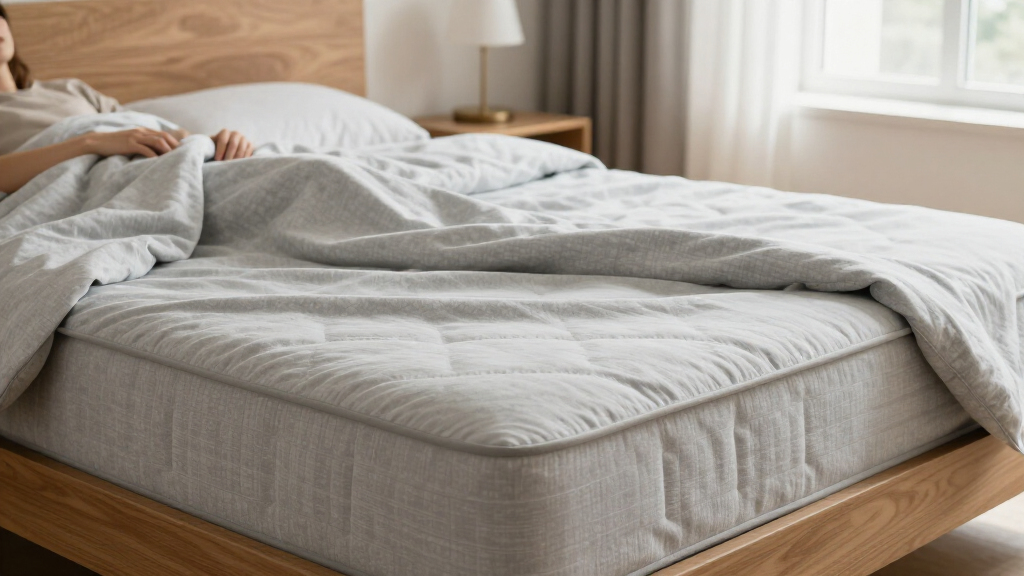
A protector cannot magically cool a heat-retaining mattress. But a thin breathable surface, flexible waterproof membrane, moisture control and correct fit can prevent it from becoming an extra layer of trapped heat.
Why a protector can feel like a heater
Warmth builds when heat and perspiration cannot escape. The problem is usually not one material alone—it is the combined effect of padding, waterproofing, mattress type and fit.
Excess insulation
Thick quilting, polyester fill, fleece and plush surfaces add loft above the mattress. That extra mass holds warm air close to the body.
Blocked vapor
Vinyl, PVC and heavy laminates stop spills effectively but can also restrict air and moisture-vapor movement, leaving the sleep surface clammy.
Restricted fit
An undersized protector can pull tightly across foam, compress the surface and reduce contouring or ventilation—especially over a thick topper.
Start with the fabric touching your sheet
Look for lightweight constructions that spread moisture and allow it to evaporate. Fiber names are useful clues, but weave, thickness and backing determine how the finished protector actually performs.
Directional comparison based on typical lightweight constructions—not laboratory performance scores. Backing, density and finish can change the result.
Dry without the plastic-bag effect
Modern polyurethane and thermoplastic polyurethane membranes can be much thinner, quieter and more flexible than traditional vinyl. They block liquid while permitting some moisture-vapor movement—but no waterproof barrier is completely airflow-neutral.
Wicking surface
Cotton, lyocell or a purpose-built knit spreads perspiration away from concentrated contact points.
Thin membrane
A flexible PU or TPU film blocks liquid penetration with less stiffness and bulk than older plastic barriers.
Ventilated fit
A correctly sized stretch skirt or mesh side construction helps avoid compression and supports air exchange.
Water-resistant fabric may delay absorption. A waterproof protector should prevent liquid from reaching the mattress. Verify the product claim before assuming the two terms mean the same thing.
Which construction fits a hot sleeper?
The coolest practical choice is usually a low-profile fitted protector with a breathable surface and flexible membrane. Full encasements offer broader protection but may create more warmth.
| Protector type | Cooling potential | Liquid protection | Mattress feel | Best use |
|---|---|---|---|---|
| Cotton percale + PU | ✓ Strong | ✓ Waterproof | Minimal change | Hot sleepers wanting a crisp surface |
| Lyocell + TPU | ✓ Strong | ✓ Waterproof | Soft, low profile | Perspiration and moisture management |
| Thin cotton terry + PU | ~ Good | ✓ Waterproof | Slight texture | Balanced comfort and everyday spill defense |
| Quilted padded protector | ✗ Lower | ~ Varies | Adds cushioning | Extra softness where warmth is not a concern |
| Vinyl full encasement | ✗ Lowest | ✓ High | Can feel stiff or noisy | Broad allergen or bed-bug containment |
✓ generally favorable ~ construction-dependent ✗ more likely to retain heat
Small details decide the overnight result
A breathable material can still disappoint if the protector is too tight, incorrectly layered or damaged by excessive dryer heat. Treat sizing and care instructions as performance features.
Less bulk usually means less added warmth
This spectrum is directional. Mattress composition, room conditions, bedding and individual physiology also affect perceived warmth.
Fit it. Wash it. Protect the membrane.
Follow the label’s wash temperature, bleach restrictions and drying guidance. Membrane longevity depends on care.
Comfort is a connected system
A protector does not work in isolation. Each choice affects the next stage, from perspiration control to how often heat interrupts sleep.
Light surface
Low bulk limits added insulation above the mattress.
Moisture spreads
Wicking construction moves perspiration away from the skin.
Vapor escapes
A thin flexible membrane reduces the clammy barrier effect.
Sleep stays steadier
Less heat and dampness means fewer comfort-related disruptions.
Why Your Mattress Protector Might Be Making You Hot
Not all protectors are created equal when it comes to temperature. Thick padding, heavy quilting, and traditional plastic barriers trap heat and moisture. For example, a vinyl encasement might block spills but also block airflow, turning your sleep surface into a heat trap. This is especially true if you sleep on memory foam or thick toppers that already retain heat.
Choosing a protector that’s too tight or overly padded reduces airflow and increases warmth. It’s like wrapping yourself in a plastic bag—no wonder you wake up sweaty. The implication is that your sleep environment can become uncomfortably warm if the protector isn’t designed with breathability in mind. This can lead to disrupted sleep cycles, increased sweating, and even skin irritation over time. The tradeoff here is between protection and comfort; overly protective protectors may do their job but at the cost of sleep quality. The key is to find options that breathe and wick moisture away, rather than block it in, thereby maintaining a cooler, more comfortable sleep surface.
breathable mattress protector for hot sleepers
As an affiliate, we earn on qualifying purchases.
As an affiliate, we earn on qualifying purchases.
What Materials Help Keep You Cool at Night
When it comes to staying cool, the fabric surface makes a big difference. Lightweight cotton, lyocell (like Tencel), and bamboo-derived viscose stand out for their breathability. These fabrics have natural fibers and structures that facilitate airflow and moisture evaporation, which are crucial for cooling. For hot sleepers, the importance lies in how these materials manage heat and moisture—by allowing sweat to evaporate quickly, they prevent heat from building up on your skin.
For example, a thin cotton-percale protector feels crisp and cool because its weave allows air to pass through easily, reducing trapped heat. Lyocell surfaces are engineered to absorb moisture rapidly and wick it away from your skin, which helps keep you dry and cool. Synthetic fabrics, while sometimes capable of drying fast, often lack the breathability of natural fibers and may trap heat if they are not designed with moisture management in mind. The tradeoff is that choosing the right fabric involves balancing durability, ease of care, and breathability. For hot sleepers, prioritizing moisture-wicking, lightweight, and breathable fabrics can significantly reduce heat retention and improve sleep quality.
thin waterproof mattress protector moisture-wicking
As an affiliate, we earn on qualifying purchases.
As an affiliate, we earn on qualifying purchases.
How Modern Waterproof Membranes Keep You Dry Without Overheating
Modern waterproof membranes are engineered to strike a balance between protection and breathability. Unlike traditional vinyl, which is thick and completely impermeable to air, new materials like polyurethane or thermoplastic polyurethane (TPU) are ultra-thin and flexible. These layers act as a barrier to liquids but allow air and moisture vapor to pass through, preventing heat from being trapped against your body.
For example, a protector with a lightweight TPU membrane can block spills effectively while still permitting some airflow, reducing the heat buildup common with older waterproof designs. Some brands go a step further by incorporating micro-ventilation systems or mesh side panels, which facilitate air exchange and help dissipate heat. The implication is that these innovations mean you don’t have to compromise protection for comfort. The tradeoff is that thinner membranes require careful manufacturing to maintain durability and waterproof integrity. The key takeaway is that these advancements allow you to enjoy both dryness and a cooler sleeping environment, making them ideal for hot sleepers.
cooling mattress protector with TPU membrane
As an affiliate, we earn on qualifying purchases.
As an affiliate, we earn on qualifying purchases.
lightweight mattress protector for temperature regulation
As an affiliate, we earn on qualifying purchases.
As an affiliate, we earn on qualifying purchases.
Columbus Day / Indigenous Peoples' Day Picks
long weekend sales
As an affiliate, we earn on qualifying purchases.