TL;DR

Get wellness gear delivered free with Prime
- Fast, free delivery on millions of items
- Prime Video, Amazon Music and more included
- Member-only deals all year
Sunrise alarms can improve your wake-up experience, but in shared rooms, careful placement and adjustable brightness are key. With the right setup, everyone wakes up happy and refreshed.
Imagine waking up gently, bathed in a warm, golden glow, instead of being jolted awake by a loud buzzer. That’s the promise of a sunrise alarm. But what if you share a room? How do you enjoy the benefits without disturbing someone you care about? This guide reveals practical ways to make sunrise alarms work for both of you, turning mornings into a peaceful start rather than a source of tension.
Whether you’re sharing a small dorm room or a cozy bedroom with a partner, understanding how to position, adjust, and choose the right sunrise alarm can make all the difference. You’ll learn how to wake up naturally while keeping your roommate or partner undisturbed, even when your schedules differ or your sleeping preferences vary.
Position your sunrise alarm so the light hits you directly but avoids shining into your roommate’s or partner’s eyes.
Choose alarms with adjustable brightness, directional lighting, and customizable timing to prevent disturbance.
Coordinate wake-up times and set the alarm to gradually increase light for a gentle start.
Use layered cues—like a soft sound backup—to wake heavy sleepers comfortably.
Experiment with placement and settings during the first few mornings to find what works best for everyone.
Why a Sunrise Alarm Is a Game-Changer for Room Sharing
A sunrise alarm gently mimics the natural dawn, gradually increasing light to wake you up without startling your body. This gradual transition is crucial because abrupt awakenings can cause stress, disorientation, or even a groggy start that sets the tone for the entire day. In shared spaces, this effect becomes even more significant; a sudden alarm can disturb not only your sleep but also your roommate’s or partner’s, disrupting their rest and potentially causing tension. By simulating a natural sunrise, these alarms promote a calmer, more harmonious wake-up process that benefits everyone involved.
Furthermore, the ability to set personalized sunrise times and adjust brightness levels allows each occupant to tailor their wake-up experience. This flexibility means that two people sharing a room can wake at different times or preferences without forcing the other to endure a bright, startling light. Therefore, choosing the right sunrise alarm and understanding its impact on sleep quality can transform shared mornings from chaotic to peaceful, fostering better sleep hygiene and mutual respect.
sunrise alarm with adjustable brightness
As an affiliate, we earn on qualifying purchases.
As an affiliate, we earn on qualifying purchases.
How to Place Your Sunrise Alarm for Minimal Light Spill
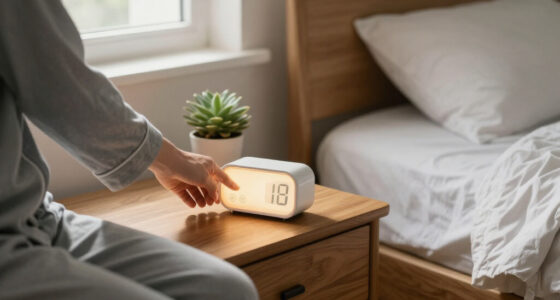
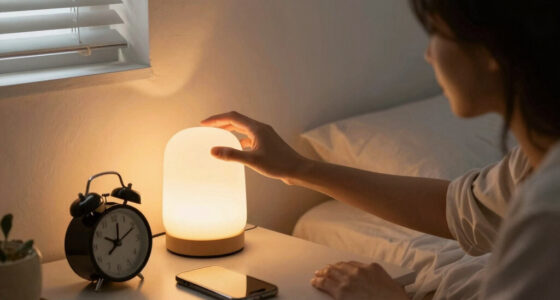
The placement of your sunrise alarm is critical because light spill can easily disturb your roommate or partner, especially if they’re sensitive to light or sleep in different positions. Proper positioning ensures that the light directly stimulates your eyes without creating unnecessary illumination in the shared space. For example, placing the alarm on your side of the bed, angled towards your face, allows you to benefit from the wake-up light while minimizing spill into your partner’s sleeping area. Using adjustable or directional lights helps focus the illumination, reducing the risk of waking others prematurely.
Experimentation is key; during the first few mornings, try different angles and distances to find the optimal placement that awakens you gently without causing disturbance. Consider the room’s layout—if your partner sleeps on the far side, avoid placing the alarm directly across the room or in a position that directs light into their eyes. Additionally, accessories like light shields or hoods can help focus the light solely on you, further reducing spill. This careful placement not only enhances your waking experience but also preserves your roommate’s sleep quality, which is essential for maintaining harmony and ensuring both of you start the day refreshed.
As an affiliate, we earn on qualifying purchases.
Choosing the Right Sunrise Alarm for Shared Rooms
Not all sunrise alarms are equally suitable for shared rooms, and selecting the right device involves understanding the implications of features like brightness, directionality, and customization. An alarm with adjustable brightness allows you to set a gentle glow that is enough to wake you without being overly bright, which is crucial if your roommate is sensitive to light or if you wake at different times. Directional lighting ensures the light focuses on your face, reducing spill into your partner’s side, thus preventing unnecessary disturbance.
When comparing devices, consider how each feature interacts with your room’s layout and your sleep preferences. For instance, alarms with customizable timers and brightness levels can be fine-tuned to match individual needs, creating a personalized wake-up experience that respects each person’s sleep cycle. While some alarms offer multiple wake-up zones, others might integrate with smart home systems for more precise control. Choosing a device with these features minimizes the tradeoff between waking up naturally and disturbing others, allowing both occupants to start their day peacefully and on time.
sunrise alarm with soft sound backup
As an affiliate, we earn on qualifying purchases.
As an affiliate, we earn on qualifying purchases.
Tips to Keep Your Roommate or Partner Happy with Your Sunrise Wake-Up
- Set the alarm to start gradually, ideally over several minutes, to give your roommate or partner time to adjust without being jarred awake. This slow increase in light helps your body transition naturally from sleep to wakefulness, reducing abrupt awakenings that can cause irritation or disorientation.
- Use lower brightness levels if your partner is sensitive to light or if you wake early while they sleep longer. Dimming the light decreases the chances of disturbing their sleep cycle, especially during deep sleep stages, which are more vulnerable to interruption.
- Place the alarm on your side, angled away from your roommate’s or partner’s sleeping area, to prevent direct light exposure. This strategic placement ensures you benefit from the natural wake-up process without compromising their rest.
- Opt for alarms with adjustable timing and directional features, so you can fine-tune the wake-up experience for both of you. For example, setting different wake times or brightness levels can accommodate varying schedules and sensitivities, fostering a respectful sleep environment.
- Coordinate wake-up times when possible, especially if you share a schedule, to avoid surprises. Clear communication about wake-up routines helps set expectations and reduces morning friction, making the start of the day more harmonious.
For example, if your partner is a deep sleeper or tends to wake up groggy, supplement the sunrise alarm with a gentle sound or vibration alert as a backup. This layered approach ensures reliable waking without relying solely on light, which can sometimes be insufficient for very heavy sleepers.
bedroom light alarm for shared rooms
As an affiliate, we earn on qualifying purchases.
As an affiliate, we earn on qualifying purchases.
What to Do When Your Roommate or Partner Is Sensitive to Light
If light triggers sleep disturbances or discomfort, understanding the importance of gradual and focused illumination becomes vital. Using alarms with dimmable settings allows you to tailor the light intensity, ensuring it’s gentle enough not to wake or disturb your roommate. Scheduling the light to start earlier at a lower brightness creates a more natural transition, mimicking the gradual dawn that your body is accustomed to, which can help prevent abrupt awakenings that cause annoyance or sleep disruption.
Combining the sunrise with a gentle sound alarm can also provide an additional cue, easing the waking process without relying solely on light. Positioning the alarm so the light is directed specifically at your face, rather than across the room, helps contain the spill and preserves your roommate’s sleep environment. These strategies acknowledge individual sensitivities and promote a more considerate shared sleeping space, where both parties can wake up peacefully and refreshed.
Can a Sunrise Alarm Work for Heavy Sleepers Sharing a Room?
Heavy sleepers often require more nuanced wake-up methods because their sleep cycles are deeper and less responsive to standard alarms. While a sunrise alarm can still be effective, it may need to be paired with additional cues to ensure reliable waking. Higher brightness settings can help, but they also risk disturbing your roommate if not carefully managed. Therefore, combining gradual light with gentle sound alerts or vibrations offers a layered approach—using multiple stimuli to stimulate awakening without startling or causing sleep fragmentation.
Understanding the tradeoffs is essential; brighter lights may wake you more reliably but could also cause discomfort or disturb your roommate if not properly directed. The key is to find a balance—using the maximum brightness that still respects your roommate’s sleep environment, supplemented with sound or vibration cues if needed. This multi-sensory strategy can make waking up more consistent and less stressful for heavy sleepers sharing a room, ultimately leading to better sleep quality and morning readiness for both parties.
Summary: Make Morning Peaceful in a Shared Room
The secret to peaceful mornings with a sunrise alarm? Thoughtful placement, adjustable settings, and clear communication. When you respect each other’s sleep preferences, everyone wakes up happier.
Remember, a well-placed, customizable sunrise alarm can be a gentle, energizing start—without the morning grumbles or light disputes. Investing time in proper placement and understanding each other’s sensitivities ensures that the benefits of natural wake-up lighting are fully realized without compromising sleep quality for anyone involved. This approach fosters a harmonious environment where mornings become a shared moment of calm rather than a source of stress or conflict.
Frequently Asked Questions
Will a sunrise alarm disturb my partner or roommate?
It depends on the alarm’s placement, brightness, and timing. Using directional lights and adjustable brightness helps minimize disturbance, making it possible to wake peacefully without waking others.
How should I position my sunrise alarm in a shared room?
Place the alarm on your side of the bed, pointing the light toward your face. Adjust the angle so the light doesn’t spill into your partner’s sleeping space. Experiment during mornings to find the best spot.
Can a sunrise alarm replace a traditional alarm?
Many find sunrise alarms effective as the primary wake-up method, especially when combined with gentle sounds. Still, having a backup alarm can be useful, especially for heavy sleepers.
Are sunrise alarms suitable for people sensitive to light?
Yes, but choose models with lower brightness settings or schedule the light to start earlier at a dimmer level. Combining light with sound can also make waking easier.
What if my partner has sleep issues and is easily disturbed?
Use alarms with dimmable, directional light, and coordinate wake-up times. Respect their needs by adjusting brightness and placement, making mornings more peaceful for both of you.
Conclusion
With a little planning, a sunrise alarm can become your best morning ally—even in a shared space. Think of it as creating a personal dawn—calm, warm, and perfectly timed—so you both start the day on a peaceful note.
Next time you set your alarm, remember: placement, customization, and a touch of patience turn waking up into a gentle ritual rather than a wake-up war. Your mornings—and your roommate—will thank you.
Columbus Day / Indigenous Peoples' Day Picks
long weekend sales
As an affiliate, we earn on qualifying purchases.