TL;DR

Get wellness gear delivered free with Prime
- Fast, free delivery on millions of items
- Prime Video, Amazon Music and more included
- Member-only deals all year
Baby sound machines work best when set at safe volume levels, placed at the right distance, and used with timers. These simple steps help create a calm sleep environment without risking hearing damage or sleep disruption.
Imagine a peaceful night where your baby drifts off with a gentle, consistent hum, free from household noise disruptions. That’s the power of a well-set baby sound machine. But many parents overlook the importance of volume, placement, and timers—mistakes that can undermine the sleep benefit or even pose safety risks.
In this guide, you’ll learn how to get these basics right, turning a simple gadget into a safe, soothing sleep partner for your little one. Whether you’re new to sound machines or looking to fine-tune your setup, these practical tips will make your nights calmer and your mornings brighter.
Keep sound machine volume below 50 decibels to protect your baby’s hearing.
Place the device 3-6 feet away from the crib for even, effective sound coverage.
Use timers to avoid unnecessary noise exposure and save battery life.
Modern sound machines often include remote control, diverse sounds, and safety features.
Always test sound levels at the baby’s ear level to ensure safety and comfort.
How to Set the Perfect Volume for Your Baby’s Sound Machine
Volume control is the most critical factor. Set it too loud, and you risk damaging your baby’s delicate hearing; too soft, and the sound may be ineffective. The sweet spot? Keep the volume below 50 decibels, roughly as loud as a quiet conversation in a coffee shop. This level is significant because it ensures the sound provides a soothing environment without crossing the threshold that could harm hearing over time.
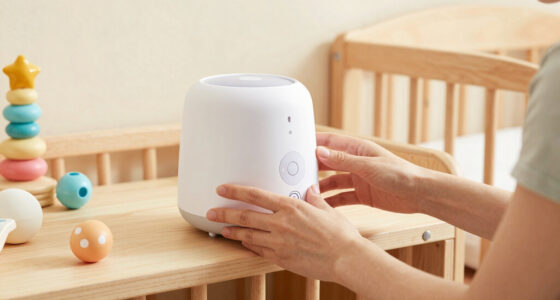
For example, if you hold the sound machine next to your ear, you should still barely notice the sound if it’s set correctly. Many modern sound machines feature digital volume controls with precise increments, making it easier to find that gentle level. This precise control is crucial because even small increases in volume can lead to unintended hearing risks, especially with prolonged exposure.
Pro tip: Always test the sound at the baby’s ear level to ensure it isn’t too loud. And avoid placing the device right next to the crib—about 3 to 6 feet away is ideal for even, soothing coverage without overwhelming. Remember, the goal is to create a calming soundscape that masks disruptive noises without becoming a potential hazard.
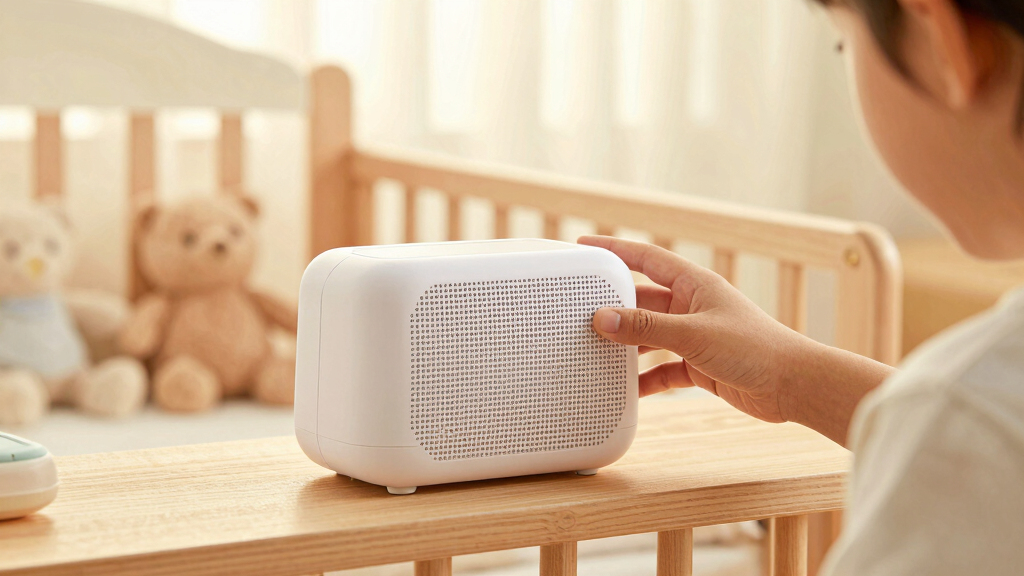
baby sound machine with volume control
As an affiliate, we earn on qualifying purchases.
As an affiliate, we earn on qualifying purchases.
Where to Place Your Baby Sound Machine for Best Sleep Results
Placement makes a huge difference in both effectiveness and safety. Positioning the sound machine about 3 to 6 feet from your baby’s crib ensures the sound is evenly distributed, creating a cocoon of soothing noise. Placing it too close can lead to overly loud sound levels directly in the baby’s ears, increasing the risk of hearing damage or overstimulation. Conversely, placing it too far away might render the sound ineffective, leading to disturbed sleep or the need to increase volume, which can be unsafe.
For instance, if your crib is against a wall, placing the machine on a dresser on the opposite side of the room provides a balanced sound environment. This distance allows the sound to fill the room evenly and helps mask external noises like traffic or household chatter. Proper placement also minimizes the risk of your baby becoming overly accustomed to a specific loud spot, which could lead to reliance on higher volumes or positioning that isn’t safe.
Remember, the aim is to create a cocoon of calming sound—close enough to be effective, far enough to prevent overstimulation or potential hearing issues. Thoughtful placement supports both safety and the quality of your baby’s sleep.
As an affiliate, we earn on qualifying purchases.
Using Timers to Maximize Sleep Safety and Comfort
Timer settings are essential for balancing sleep comfort with safety. Continuous noise can lead to unnecessary prolonged exposure, which over time may impact your baby’s hearing health or cause sleep dependency. Using timers—such as 30, 60, or 90 minutes—helps create a natural sleep rhythm, allowing the sound to fade out gradually as your baby falls into deeper sleep stages. This fading effect can make the transition to quiet sleep more seamless and reduce the risk of overstimulation.
For example, setting the machine to turn off after 30 minutes provides enough time for your baby to settle and drift into sleep without prolonged exposure to sound. If your baby sleeps through the night with the sound on, ensure the volume remains within safe limits, and the device is positioned correctly to prevent any safety issues. Many modern sound machines include automatic shut-off or fade-out features, which decrease the volume gradually, helping your baby stay asleep while minimizing noise exposure.
Using timers thoughtfully not only enhances safety but also encourages independent sleep habits. It prevents the baby from becoming overly accustomed to constant noise, fostering a more natural sleep cycle over time.
baby sleep sound machine 3-6 feet placement
As an affiliate, we earn on qualifying purchases.
As an affiliate, we earn on qualifying purchases.
Conclusion
Getting the volume, placement, and timing right turns a simple sound machine into a powerful sleep aid that’s both safe and soothing. Think of it as setting the stage for peaceful nights—where gentle sounds lull your baby into restful sleep, night after night.
Remember: small adjustments make a big difference. With just a little attention, your baby can enjoy the calm, cozy environment that helps them sleep soundly—and yours too.
digital baby sound machine with remote
As an affiliate, we earn on qualifying purchases.
As an affiliate, we earn on qualifying purchases.
Columbus Day / Indigenous Peoples' Day Picks
long weekend sales
As an affiliate, we earn on qualifying purchases.