TL;DR
Kids’ alarm clocks typically promote healthier sleep habits with simple, screen-free design, while smart speakers offer multifunctionality but pose privacy and overstimulation risks. Choosing the right device depends on your priorities for safety, privacy, and engagement.
When it comes to waking your child up or creating a calming bedtime routine, the device you choose can make a big difference. Kids’ alarm clocks are simple, straightforward, and designed to foster healthy sleep habits. Smart speakers, on the other hand, bring a world of entertainment and convenience into the bedroom, but not without potential pitfalls.
In this guide, you’ll learn what sets these devices apart, how they impact sleep and privacy, and which features are most important for your child’s well-being. Whether you prioritize safety, ease of use, or educational content, understanding these differences can help you make a confident choice.
Choose simple, screen-free alarm clocks for better sleep hygiene and fewer distractions.
Smart speakers offer entertainment and educational value but require strict controls to prevent overstimulation and privacy issues.
Set clear boundaries around device use—especially at bedtime—to help your child develop healthy sleep habits.
Prioritize privacy by selecting devices that limit data collection or don’t connect to the internet.
Use technology as a tool, not a substitute for a calming bedtime routine and offline activities.
Kids’ Alarm Clocks vs. Smart Speakers
One protects simplicity. The other unlocks possibility. The right bedroom device depends on how your family balances healthy sleep, privacy, safety and engagement.
for a basic clock
before buying
to configure
routine first

Sharp Digital Alarm Clock – Tactile Case with Soft Rubberized Finish – Battery Operated – Blue Backlight on Demand – Ascending Alarm – Easy to Use – Light Blue
The Sharp (SPC483LFAMZ) has a tactile rubberized light blue finish case with a unique feel and Easy-to-Use Top…
As an affiliate, we earn on qualifying purchases.
As an affiliate, we earn on qualifying purchases.
Simple helper or connected companion?
Both can wake a child gently. The real difference is everything else they invite into the bedroom—from sleep-training lights to voice assistants, games and connected services.
Kids’ alarm clock
A friendly, predictable tool designed around waking, resting and learning when it is time to get out of bed.
- Manual controls are easy for children to understand
- Minimal or no screen reduces bedtime temptation
- Gentle sounds, night lights and sleep-training cues
- Usually works without accounts, apps or internet access
Smart speaker
A voice-controlled hub that combines alarms with entertainment, information, learning and smart-home functions.
- Plays music, calming sounds and bedtime stories
- Offers reminders, weather and educational activities
- Requires Wi-Fi, app setup and account management
- Needs content limits, quiet hours and privacy oversight
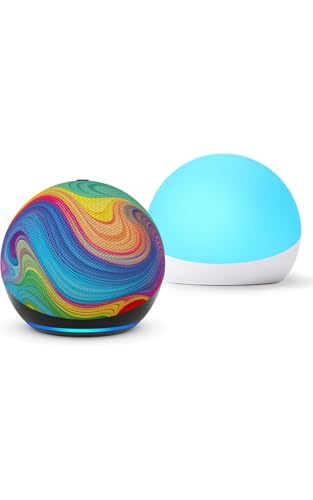
Amazon Echo Dot Kids (newest model) – Rainbow Swirl, with Echo Glow, Smart speaker and night light for kids, Designed for Alexa+
SCREEN-FREE FUN BY DAY, CALMING ROUTINES BY NIGHT: Echo Dot Kids + Echo Glow — a color-changing smart…
As an affiliate, we earn on qualifying purchases.
As an affiliate, we earn on qualifying purchases.
How the bedroom trade-offs compare
A clock is strongest where simplicity matters. A smart speaker leads on variety, but every extra function adds another setting, stimulus or data decision for parents.
| Feature | Kids’ alarm clock | Smart speaker |
|---|---|---|
| Core design | ✓Bright, simple, child-focused | ~Sleek and voice-activated |
| Sleep hygiene | ✓Few distractions | ~Depends on boundaries |
| Functionality | ~Alarm, sounds, sleep cues | ✓Stories, music, learning, control |
| Privacy | ✓Minimal concern offline | ✗Voice and usage data risks |
| Setup | ✓Fast manual controls | ~Wi-Fi, app and account needed |
| Parental oversight | ✓Low ongoing workload | ✗Controls need active management |
Sleep-friendly profile
Directional comparison based on device characteristics and likely bedtime stimulation.
Capability & oversight
More capability can be valuable, but it increases the need for deliberate household controls.
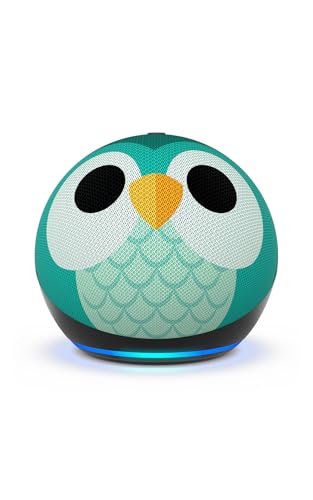
Amazon Echo Dot Kids (newest model), Smart speaker to enjoy age-appropriate audiobooks, interactive games and Alexa+ experiences to create and learn, Owl design
Echo Dot Kids: Our most popular and cutest smart speaker with Alexa, made for kids (not a toy)….
As an affiliate, we earn on qualifying purchases.
As an affiliate, we earn on qualifying purchases.
How the device shapes the night
The hardware itself is only the starting point. Features influence behavior; behavior shapes the bedtime environment; repeated nights become a sleep habit.
Device
Choose focused or connected technology.
Stimulus
Consider lights, sounds, prompts and interaction.
Boundary
Set quiet hours, access limits and expectations.
Routine
Repeat a calm and predictable wind-down.
Sleep
Protect consistency, rest and easier mornings.

Dreamegg Sound Machine Baby – White Noise Sound Machine Baby With Night Light, Ok to Wake Alarm Clock, 34 Soothing Sounds, Sleep Trainer, Routine Builder, App Control for Kids Nursery Sleeping Bedroom
𝗛𝗲𝗹𝗽 𝗞𝗶𝗱𝘀 𝗦𝗹𝗲𝗲𝗽 𝗕𝗲𝘁𝘁𝗲𝗿: Dreamegg sound machine baby offers 34 soothing sounds, including 11 nature sounds, 7 ambient…
As an affiliate, we earn on qualifying purchases.
As an affiliate, we earn on qualifying purchases.
Five rules for a calmer bedroom
Technology can support a routine, but it should never become the routine. The strongest sleep cue is still a consistent sequence of calm, offline activities.
Choose screen-free simplicity when sleep hygiene and fewer distractions are the main goals.
Lock down smart features with child profiles, content filters, purchase controls and quiet hours.
Create a firm cutoff for questions, games, music requests and other interactive content.
Minimize collected data by reviewing voice history, microphone settings and account permissions.
Keep bedtime human with reading, conversation and quiet activities that work without a device.
Match the device to your priority
Choose an alarm clock if…
Your priorities are sleep, privacy and independence. It is the clearer fit for young children, easily distracted sleepers and families seeking the lowest-maintenance option.
Choose a smart speaker if…
Your priorities are stories, music and flexible routines. It can work well when parents are willing to configure controls, supervise content and enforce a nightly cutoff.
The bedroom rule: If a feature makes it harder to stop interacting and start resting, it does not belong in the final part of the bedtime routine.
What Exactly Do Kids’ Alarm Clocks Do for Your Child? (And Why They Still Matter)
Kids’ alarm clocks are built to wake children reliably without over-stimulating them. Think of them as a simple, friendly helper—no screens, no distractions. They often feature colorful designs, easy-to-press buttons, and fun sounds that make mornings less stressful.
For example, a typical kids’ alarm clock might have a big display showing the time, a gentle snooze button, and maybe a star chart that encourages kids to stay in bed. These clocks help establish a predictable routine, making mornings smoother and sleep routines more consistent.
Research shows that children with screen-free wake-up devices tend to fall asleep faster and wake up feeling more rested, because they’re not overstimulated by flashing lights or notifications. This isn’t just about convenience; it’s about creating an environment that promotes natural sleep cycles, free from the interference of screens and notifications that can delay sleep onset or cause fragmented sleep. The simplicity of these clocks often means less temptation for children to engage with devices late at night, reinforcing healthy boundaries and routines.
Smart Speakers in the Bedroom: What They Really Do
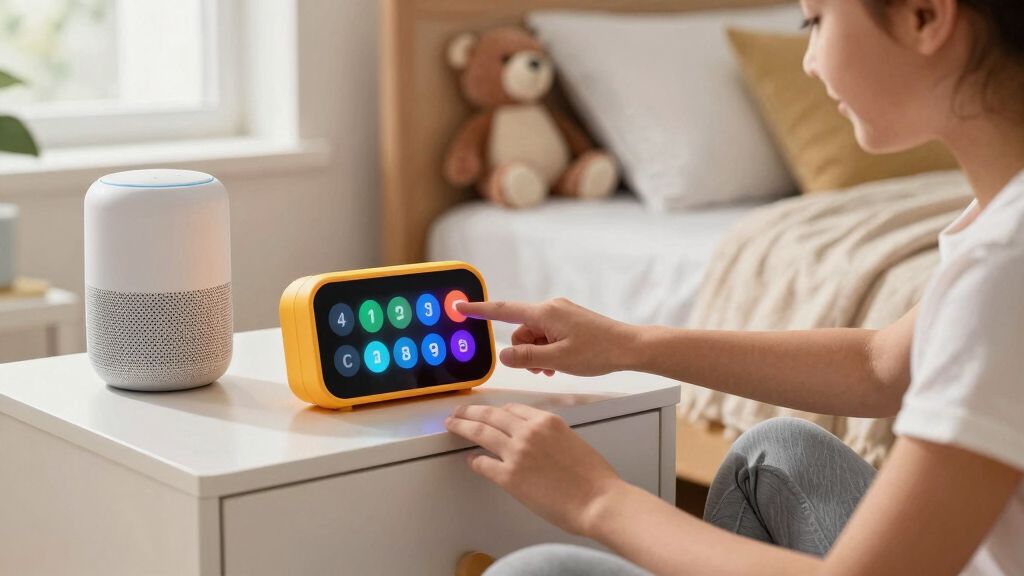
Smart speakers are like a magic box that responds to voice commands, plays music, tells stories, and even controls your smart home gadgets. In a child’s bedroom, they can serve as an alarm, a storyteller, or a tutor.
Imagine your child waking up gently to a familiar voice reading a story or playing their favorite song. Smart speakers often include features like weather updates, reminders, or even language learning games—making mornings more engaging.
However, their multifunctionality introduces complex tradeoffs. While they can provide educational content and entertainment, they also increase exposure to digital stimuli that can interfere with winding down at night. Overstimulation from bright screens, loud notifications, and interactive content can delay sleep onset or cause fragmented sleep, especially if used irresponsibly. Moreover, their constant internet connectivity raises privacy concerns, as voice recordings and usage data may be stored or shared without clear oversight. This means that while smart speakers can be beneficial, they require careful management to avoid disrupting sleep routines and compromising privacy.
Kids’ Alarm Clocks vs. Smart Speakers: How Do They Compare?
| Feature | Kids’ Alarm Clocks | Smart Speakers |
|---|---|---|
| Design | Bright, colorful, simple display | Modern, sleek, voice-activated |
| Screen | No or minimal screens | None, but often connected to apps |
| Functionality | Alarm, basic sounds, sleep training | Alarm, stories, music, smart home control |
| Privacy | Minimal concerns | Data privacy and security risks |
| Ease of Use | Very simple, manual controls | Requires setup, parental controls needed |
Why Privacy and Safety Matter More Than Ever
Smart speakers connect to the internet, which means data privacy is a real concern. Children’s voices, routines, and personal info can be stored or shared if parental controls aren’t properly set. For instance, a smart speaker might accidentally record a child’s bedtime request and store it without clear oversight.
Kids’ alarm clocks usually don’t have internet access, making them a safer choice for privacy. If privacy is your top priority, sticking with a device that does just one thing—waking your child—can be more reassuring.
However, understanding the implications of data collection is crucial. Even with strict controls, the possibility of data breaches or unintended sharing exists, especially as technology evolves. Choosing a device that limits connectivity minimizes these risks and allows parents to better control what information is accessible or stored, fostering a safer environment for sensitive information like sleep routines and habits.
How Technology Can Help Your Child Sleep Better (And When It Can Hurt)
Kids’ alarm clocks support healthy sleep by avoiding screens and overstimulation. Their simple sounds and gentle lights create a calm environment that encourages your child to wind down. This simplicity reduces cognitive load before bed, helping children transition more easily into sleep and establish consistent routines.
Smart speakers, despite their versatility, can introduce late-night stimulation—bright displays, loud notifications, or interactive games—that interfere with sleep. If used irresponsibly, they might keep kids awake longer or make it harder to fall asleep. For example, children asking questions or playing games with the device late at night can lead to increased alertness, making it difficult to establish a regular sleep schedule. Therefore, while these devices can be useful tools, their impact depends heavily on how and when they are used. Properly managed, they can support a calming bedtime routine; misused, they risk disrupting natural sleep patterns and reducing overall sleep quality.
Frequently Asked Questions
Are smart speakers safe for children’s bedrooms?
Smart speakers are generally safe if you use parental controls and limit their internet access. However, privacy concerns and the potential for overstimulation mean you should set clear boundaries and monitor usage.
Which is better for sleep hygiene: kids’ alarm clocks or smart speakers?
Kids’ alarm clocks without screens are usually better for sleep hygiene because they avoid late-night stimulation and blue light exposure. Smart speakers can be useful but require careful management to prevent disrupting sleep routines.
Can smart speakers help children develop good sleep routines?
Yes, if used wisely. They can play calming sounds, tell bedtime stories, or set gentle alarms. But overuse or overly stimulating content can backfire and make it harder for kids to wind down.
What features should I look for in a kids’ alarm clock or smart speaker?
Prioritize safety features, parental controls, ease of use, and privacy protections. For kids’ alarm clocks, simple displays and fun sounds matter. For smart speakers, look for child-friendly content and restricted internet access.
How do I balance technology use in my child’s bedroom?
Set clear rules around device use, especially at night. Encourage offline activities and establish calming bedtime routines that don’t rely solely on technology.
Conclusion
Ultimately, the best choice depends on your child’s age, habits, and your priorities for safety and sleep health. An alarm clock is a straightforward, reliable partner in establishing routines. Smart speakers can add fun and learning, but only if used responsibly.
Imagine a bedroom where your child wakes refreshed, with a device that supports healthy habits rather than disrupts them. Your thoughtful choice can make that peaceful morning a reality—and set the stage for better sleep all year round.