TL;DR

Get wellness gear delivered free with Prime
- Fast, free delivery on millions of items
- Prime Video, Amazon Music and more included
- Member-only deals all year
Light therapy glasses are portable and convenient, perfect for on-the-go use, but may deliver slightly lower intensity than larger, stationary light boxes. Both can be effective, depending on your needs and lifestyle.
Imagine being able to get your daily dose of light therapy while commuting, at your desk, or even during a walk. That’s the promise of light therapy glasses: convenience that fits into a busy life. But does sacrificing size mean sacrificing effectiveness? Knowing the trade-offs can help you pick the device that best matches your schedule and needs.
In this guide, you’ll learn how portability affects the power, practicality, and overall impact of light therapy devices. Whether you’re a shift worker, jet lag sufferer, or someone seeking a flexible treatment, understanding these differences can make all the difference in how you incorporate light therapy into your routine.
Light therapy glasses are highly portable, making them perfect for busy schedules and on-the-go use, but they may deliver slightly lower light intensity compar…
Light boxes offer higher intensity and broader coverage, ideal for consistent use at home, especially for severe symptoms or when maximum power is needed.
Recent technological advances have improved both options—glasses now include smart features, and light boxes are more compact and adjustable.
Effective light therapy hinges more on proper timing and regular use than on device size or power alone.
Matching your lifestyle, symptom severity, and budget will help you pick the device that works best for you.
Light Therapy Glasses vs. Light Boxes
The central trade-off is mobility versus broad, forgiving exposure. Wearable glasses can bring a daily session into a commute, desk routine or walk. A light box anchors treatment to one place, but typically offers wider coverage and a more stable setup.
What portability changes
A smaller device does not simply mean “less therapy.” It changes how light reaches the eyes, how carefully the device must be positioned and how easily the routine fits into real life.
Wearable freedom
Compact eyewear directs light from close range while leaving the user mobile. This can reduce scheduling friction and make daily adherence easier during desk work, walking or travel.
Stationary stability
A larger illuminated surface creates broader coverage from a fixed position. It takes dedicated space, but the exposure may be more forgiving when the user shifts position.
Adherence vs. coverage
The strongest device is not automatically the best choice. A portable device used regularly may outperform a powerful box that rarely fits the user’s schedule.
Which fits your lifestyle?
Compare the practical experience, not just the headline lux number. Lux ratings only make sense at the manufacturer’s specified distance and position.
| Feature | Light therapy glasses | Light boxes |
|---|---|---|
| Portability | ✓High — wearable and easy to pack | ✕Low — usually remains on a desk or table |
| Coverage | ~Focused and sensitive to fit or alignment | ✓Broad field allows more positional tolerance |
| Routine fit | ✓Works alongside many daily activities | ~Requires a repeatable stationary session |
| Intensity | ~Close-range output varies by design | ✓Commonly rated around 10,000 lux at a set distance |
| Cost | ~Often higher for miniaturized, smart hardware | ✓Basic models are often more affordable |
| Best match | ✓Travel, shifts, variable mornings and busy schedules | ✓Predictable home routines and maximum coverage |
✓ strong advantage ~ conditional or device-dependent ✕ practical limitation
Intensity is only part of the dose
A therapeutic result depends on the combination of output, distance, direction, duration, timing and regular use. Wearable delivery scores highly on mobility; a box scores highly on coverage and positional tolerance.
Practical advantage profile
Relative comparison of the defining portability trade-offs.
Exposure tolerance spectrum
Focused eyewear depends more on correct fit. A broad box field can tolerate more movement, provided distance remains appropriate.
From device choice to daily impact
Effectiveness is created by a chain of decisions. A weak link—poor timing, incorrect distance or inconsistent use—can matter more than the form factor.
Match the routine
Portable for changing schedules; stationary for dependable home use.
Follow the setup
Use the specified fit, angle and distance for the rated output.
Anchor the session
Morning use is common, often within the first hour after waking.
Build consistency
A repeatable 20–30 minute routine is a common starting pattern.
Track response
Adjust only with device guidance or professional advice.
The best device is the one your morning will accept.
Glasses prioritize opportunity: more places and moments in which a session can happen. Boxes prioritize exposure stability: a broader light field within a controlled setup. For mild to moderate symptoms, high-quality glasses may approach the usefulness of boxes when worn correctly and consistently; individual response still varies.
Five takeaways to carry forward
Glasses offer the clearest advantage for travel, shift work and unpredictable schedules.
Light boxes provide a broader illuminated area and a stable treatment station.
LEDs, timers, adjustable output and app features are improving both formats.
Correct timing and regular use can matter more than device size alone.
Lifestyle, symptom severity, comfort, specifications and budget should guide the choice.
Frequently asked questions
Product output and recommended use vary. Always follow the instructions for the specific device rather than assuming every “10,000 lux” product is used the same way.
Are glasses as effective as boxes?
They can be a practical alternative for some people with mild to moderate symptoms when used correctly and consistently. Boxes may offer more reliable coverage where stronger, controlled exposure is preferred.
Can glasses be worn while working?
Many are designed for use during desk work or walking. Only use them during driving or other safety-critical activities if the manufacturer explicitly states that this is safe.
What should buyers check?
Review clinical validation, UV filtering, brightness settings, fit, recommended distance, timer controls, warranty terms and clear safety instructions.
How Do Light Therapy Glasses and Light Boxes Differ in Design and Portability?
Light therapy glasses are tiny, wearable gadgets that look like a pair of sleek goggles or high-tech eyewear. They’re designed to be carried around easily, fitting into your daily life—whether you’re walking, driving, or working. This design prioritizes portability, allowing you to integrate therapy seamlessly without disrupting your routine. For example, an office worker can wear them during a coffee break or while working at their desk, making it easy to maintain consistent exposure without scheduling extra time.
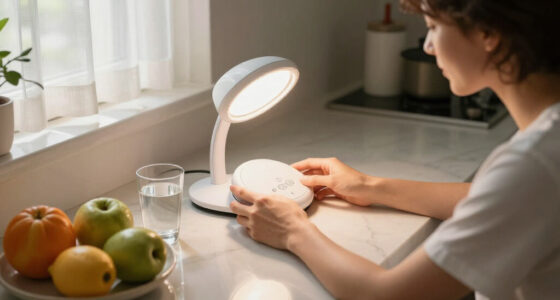
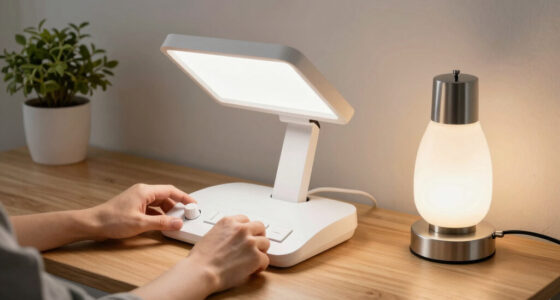
Light boxes, on the other hand, are larger, box-shaped devices meant to sit on a desk or table. Their size often means they’re less portable—they require a dedicated space and are generally used in a fixed location. While bulkier, they tend to deliver higher light intensity over a broader area, which can be beneficial for comprehensive treatment. Think of them as a stationary station that provides a reliable, consistent dose of light, but at the expense of flexibility.
Understanding these differences is crucial because your choice impacts how easily you can incorporate therapy into your daily life. If your schedule demands mobility, glasses offer unmatched convenience. Conversely, if your priority is maximum light exposure with less concern for portability, a light box might be more effective. The trade-off is between ease of use and the potential for more intense, consistent therapy sessions.
As an affiliate, we earn on qualifying purchases.
How Light Intensity and Coverage Shape Effectiveness in Daily Use
Light therapy glasses usually emit around 10,000 lux, focused directly on your eyes at close range. This focused exposure is generally sufficient for mild to moderate symptoms, but it’s important to understand why. The intensity and directionality mean that the therapeutic effect hinges on proper positioning and regular use—if the glasses shift or aren’t worn consistently, the benefits diminish. This focused delivery is advantageous because it allows you to use therapy during various activities without much disruption, but it also means the effectiveness is sensitive to user behavior.
Light boxes are often more powerful, reaching 10,000 lux or more over a broad area, which ensures more uniform exposure. Sitting 16 inches from a light box for 20 minutes can provide a full therapeutic dose, even if you’re multitasking or distracted. The broader coverage reduces the risk of inconsistent exposure due to movement or misalignment, making them more forgiving for users who may not be able to focus their attention solely on the device.
The key implication here is that higher intensity and coverage can translate to quicker or more reliable symptom relief, especially for severe cases. However, this comes at the cost of less flexibility. The tradeoff is whether you prioritize maximum power (light box) or convenience with acceptable efficacy (light glasses). Both options can be effective if used correctly, but understanding these nuances helps you tailor your choice to your specific needs and lifestyle.
As an affiliate, we earn on qualifying purchases.
A Side-by-Side Comparison: Which Fits Your Lifestyle?
| Feature | Light Therapy Glasses | Light Boxes |
|---|---|---|
| Portability | High — wearable, fits in a bag or pocket, enabling use during daily activities like commuting or working. | Low — bulky, stays in one place, requiring dedicated space and setup, limiting spontaneous use. |
| Light Intensity | Up to 10,000 lux at close range, suitable for mild to moderate symptoms but may require more frequent sessions for severe cases. | Up to 20,000 lux over a larger area, offering a stronger, more comprehensive dose that can be more effective for severe symptoms. |
| Ease of Use | Very portable; can be worn during activities like walking, commuting, or working, making it easier to stick with daily routines. | Requires stationary setup, typically on a desk or table, which can be less flexible but ensures consistent exposure. |
| Cost | Generally higher, reflecting advanced technology and portability features. | Often more affordable, especially for basic models, but may lack some smart features. |
| Best For | On-the-go routines, busy schedules, travel, or situations where flexibility is needed. | Steady, consistent use at home or in a controlled environment, especially when maximum light exposure is desired. |
Choosing between these options involves weighing the importance of mobility versus power. If your daily routine demands flexibility, glasses can keep you on track without extra planning. If you need a more robust, reliable dose of light, a light box provides a stable environment for effective therapy. Recognizing these trade-offs ensures you select a device that aligns with your lifestyle and treatment goals.
As an affiliate, we earn on qualifying purchases.
Frequently Asked Questions
Are light therapy glasses as effective as light boxes?
For mild to moderate symptoms, high-quality light therapy glasses can be nearly as effective as light boxes if used correctly and consistently. They deliver sufficient light intensity for many users, especially when portability and flexibility are priorities. However, for severe cases, the higher power and coverage of light boxes might provide more reliable relief. Ultimately, the effectiveness depends not just on the device but also on proper usage, timing, and individual response.
Can I wear light therapy glasses while working or commuting?
Yes, their compact size allows you to wear them during activities like commuting, walking, or even at your desk, making it easier to stick with your routine without disruption. This convenience can significantly improve adherence to light therapy schedules, especially for those with busy or unpredictable routines. Keep in mind, proper positioning and consistent use are essential to maximize benefits.
What safety precautions should I take?
Use devices as directed, avoid staring directly into bright lights for extended periods, and consult a healthcare provider if you have eye conditions or sensitivities. Proper usage minimizes potential side effects such as eye strain or headaches. Regularly inspecting your device for damage and following manufacturer instructions also ensure safety. Remember, consistent, correct use is key to both safety and efficacy.
Which device is better for travel?
Light therapy glasses are more portable and convenient for travel, fitting into bags or even pockets, allowing for on-the-go use in various settings. Light boxes are bulkier and less suited for travel, often requiring a dedicated space and setup. If travel flexibility is a priority, glasses provide a practical solution without sacrificing much in terms of effectiveness.
How long should I use these devices each day?
Most people benefit from 20-30 minute sessions in the morning, but always follow your device’s instructions and consult your healthcare provider for personalized advice. Consistency is more important than session length—regular use at the same time each day can optimize benefits. Adjustments based on your response and lifestyle can help you achieve the best results.
As an affiliate, we earn on qualifying purchases.
Conclusion
Choosing between light therapy glasses and light boxes boils down to your daily routine and how much flexibility you need. Both can be effective tools—just in different ways. The key is consistency and making the device fit seamlessly into your life.
Imagine starting each day with a simple, portable device that energizes your mornings or eases your jet lag—something you can carry, wear, or set up easily. That’s the real power of understanding these trade-offs. Your best light therapy is the one you actually use every day.
Fall Picks
fall essentials
As an affiliate, we earn on qualifying purchases.