
TL;DR
Listen free for 30 days with Audible
Thousands of audiobooks and originals — cancel anytime.
Start your free trialAs an affiliate, we earn on qualifying purchases.
Light therapy isn’t just for winter. If you experience year-round mood or sleep issues, continuing summer use can help. Always check with a professional before making changes.
Think light therapy is a winter-only tool? Think again. While most associate it with short, gray days, many find that their mood or sleep troubles persist into summer. If you’ve ever wondered whether that bright lamp still has a role during the hottest months, you’re not alone.
Understanding when and why to keep using your light therapy lamp can help you stay balanced, energized, and in sync with your body’s natural rhythms—no matter the season. This guide will walk you through the latest insights, practical tips, and how to decide if summer light therapy makes sense for you.
Some people experience persistent SAD or sleep issues year-round, making summer light therapy relevant.
Advances in lamp technology make safe, personalized use during summer easy and effective.
Use light therapy in the morning, keep sessions brief, and adjust brightness for comfort.
Always consult a healthcare professional before continuing or starting summer use.
Light therapy can support your mental and sleep health, even when the days are long and bright.
Light Therapy in Summer: Do You Still Need the Lamp?
Light therapy isn’t just for winter. If you experience year-round mood or sleep issues, continuing summer use can help you stay balanced, energized, and in sync with your body’s natural rhythms — no matter the season. Always check with a professional before making changes.
Why Some People Still Need Light Therapy in Summer
Light therapy isn’t only for winter gloom. For about 20% of people with SAD, symptoms persist year-round — low mood, fatigue, or sleep issues can continue even during long, sunny summer days. Picture someone in a northern city like Seattle, or a shift worker whose irregular hours clash with daylight no matter the season. For them, a bright lamp provides the extra boost that resets the internal clock and lifts spirits.
Persistent Low Mood
If energy doesn’t pick up despite long days, a lamp can simulate the natural light exposure your body craves — preventing a downward spiral into more serious mood or sleep issues.
Irregular Sleep Patterns
Trouble falling asleep or waking early can signal circadian misalignment. Light therapy helps recalibrate the internal clock when natural exposure is limited or inconsistent.
Shift Work & Irregular Hours
When work hours don’t align with daylight, the circadian rhythm falls out of sync. Light therapy acts as an artificial cue reinforcing a regular sleep-wake cycle and alertness.
How Today’s Lamps Make Summer Use Easier & Safer
Adjustable brightness, tunable color temperature, and portable designs let you tailor exposure to your summer schedule — a gentler, warmer light in the evening, or a quick morning session before heading out. Customization reduces side effects like eye discomfort and headaches, making consistent use feasible at home, at work, or on the go.
Wake & Position
Place the lamp 16–24 inches away, slightly off to the side. Never stare directly into the light.
Morning Session
Use for 20–30 minutes shortly after waking to anchor your circadian rhythm.
Adjust Brightness
Tune intensity to comfort — higher isn’t always better, especially with bright ambient summer light.
Stay Consistent
Portable designs let you maintain the routine anywhere, preventing relapse and sustaining stability.
Seasonal or Year-Round? What Studies Show
Recent studies reveal that for some — especially those with non-seasonal depression or ongoing circadian disruptions — continuing light therapy into summer maintains mood stability. Symptom persistence varies by group:
Summer Lamp Safety at a Glance
| Practice | Morning Use | Evening Use | Why It Matters |
|---|---|---|---|
| 20–30 min sessions | ✓ Recommended | ~ Shorter only | Prevents overstimulation and eye strain in bright summer environments |
| Morning timing | ✓ Supports rhythm | ✗ Interferes with sleep | Evening use can disrupt sleep when natural light is already abundant |
| 16–24 inch distance | ✓ Comfortable | ✓ Comfortable | Minimizes discomfort and glare without staring into the light |
| Moderate brightness | ✓ Adjust to comfort | ✗ Avoid bright settings | Overly bright light causes headaches and eye fatigue in summer |
| Professional consultation | ✓ Before starting | ✓ Before starting | Essential with eye sensitivities, skin issues, or other health concerns |
Should You Keep Using Your Lamp? Questions to Ask
If you answered yes to any of these, a summer session might still help — it serves as a compensatory tool when natural light isn’t enough or isn’t aligned with your biological needs.
☀ Still tired or low?
Do you still feel tired, low, or out of sync during summer despite long, bright days?
◐ Sleep still off?
Have your sleep patterns or mood improved with natural sunlight — but still feel slightly off?
⏱ Irregular hours?
Are you a shift worker or someone whose schedule doesn’t match natural daylight?
⚕ Health factors?
Do you have eye sensitivities, skin issues, or other conditions? Consult a provider before continuing use.
“Light therapy isn’t merely a seasonal treatment — it can be a continuous support tool that prevents relapses and maintains the stability achieved during darker months.”
Key takeaway from current researchWhy Some People Still Need Light Therapy in Summer
Light therapy isn’t only for winter gloom. For about 20% of people with SAD, symptoms persist year-round. These individuals often experience low mood, fatigue, or sleep issues even during the long, sunny days of summer.
Imagine someone living in a northern city like Seattle, where summer days stretch long but still don’t fully lift their mood. Or a shift worker who struggles with irregular hours no matter the season. For these folks, a bright lamp can provide that extra boost, helping reset their internal clock and lift their spirits.
Why does this matter? Because persistent symptoms can significantly impair quality of life, affecting work, relationships, and overall well-being. Recognizing that summer isn’t always a cure underscores the importance of tailored approaches—what works for one person might be essential for another, regardless of the season.
light therapy lamp for year-round use
As an affiliate, we earn on qualifying purchases.
As an affiliate, we earn on qualifying purchases.
How Modern Light Devices Make Summer Use Easier and Safer
Today’s light therapy lamps are more adaptable than ever. They come with adjustable brightness, color temperature, and portable designs. These features make summer use more convenient and safer.
For example, you might set your lamp to a gentler, warmer light in the evening or use a quick 20-minute session in the morning before heading out. Adjustable settings mean you can tailor your light exposure to your summer schedule and avoid overstimulation or eye strain.
Why is this important? Because safety and comfort directly influence adherence and effectiveness. A device that can be customized reduces the risk of side effects like eye discomfort or headaches, which can deter consistent use. Additionally, portable options mean you can incorporate light therapy into various routines—whether at home, work, or on the go—making consistent use more feasible during busy summer days.
As an affiliate, we earn on qualifying purchases.
When to Keep Using Light Therapy in Summer — Practical Signs
- Persistent low mood or fatigue: If your energy doesn’t pick up despite long days, a lamp might help because it can simulate the natural light exposure your body craves, especially if your lifestyle limits outdoor time or if you’re sensitive to light changes. This can prevent a downward spiral into more serious mood or sleep issues.
- Irregular sleep patterns: Trouble falling asleep or waking early can indicate circadian misalignment. Light therapy can help recalibrate your internal clock, especially if natural light exposure is limited or inconsistent due to work schedules or lifestyle choices.
- Shift work or irregular schedules: If your work hours don’t align with natural daylight, your circadian rhythm may be out of sync, leading to fatigue or mood disturbances. Light therapy acts as an artificial cue to reinforce your internal clock, helping you maintain a more regular sleep-wake cycle and overall alertness.
Recognizing these signs is crucial because they highlight underlying biological rhythms that, when disrupted, can lead to broader health issues. Using light therapy proactively in these situations can mitigate risks, improve mood, and enhance sleep quality, emphasizing that summer use isn’t just about mood—it’s about maintaining biological harmony.
As an affiliate, we earn on qualifying purchases.
Seasonal or Year-Round? The Latest Research on Light Therapy
Recent studies reveal that for some, especially those with non-seasonal depression or ongoing circadian disruptions, continuing light therapy into summer can maintain mood stability. According to an anonymous researcher, about 15-20% of SAD sufferers report symptoms that do not fully resolve outside winter.
This means that for these individuals, a summer routine with a light lamp isn’t just a comfort—it’s a part of their ongoing mental health support plan. It helps prevent relapses and maintains the stability they’ve achieved during the darker months, especially when natural light exposure is insufficient or inconsistent.
Understanding this research emphasizes that light therapy isn’t merely a seasonal treatment but can be a continuous support tool. The tradeoff involves balancing consistent symptom management with the effort and cost of ongoing use, but for some, the benefits far outweigh these considerations, making year-round use a strategic choice.
As an affiliate, we earn on qualifying purchases.
Safety Tips for Using Your Light Lamp During Summer
- Stick to the recommended duration — usually 20-30 minutes daily — to prevent overstimulation or eye strain, which can be more noticeable in bright summer environments.
- Use the lamp in the morning to support your circadian rhythm, as evening use can interfere with sleep, especially when natural light is abundant.
- Keep the light at the right distance (about 16-24 inches) and avoid staring directly into it, to minimize discomfort and prevent glare.
- Adjust brightness to a comfortable level—higher isn’t always better. Overly bright lights can cause headaches or eye fatigue, particularly in summer when ambient light is already intense.
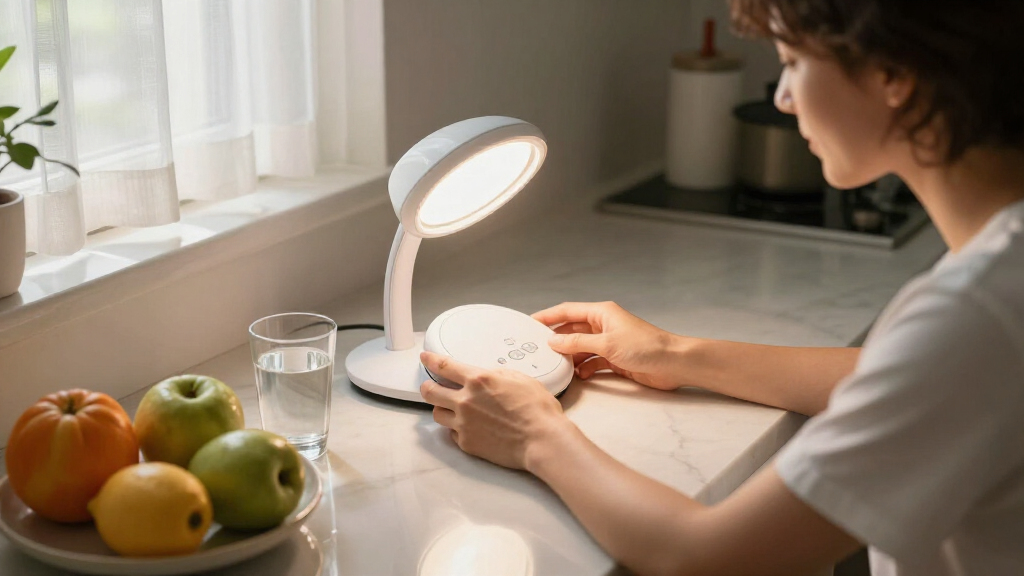
Imagine sitting at your kitchen table, a gentle glow illuminating your morning routine, helping you start the day right without uncomfortable glare or eye strain. Proper setup and moderation are key to safe, effective summer use, ensuring that the benefits outweigh any potential risks and that your eyes and mood remain comfortable.
Should You Keep Using Your Lamp? Questions to Ask
- Do I still feel tired, low, or out of sync during summer?
- Have my sleep patterns or mood improved with natural sunlight but still feel off?
- Am I a shift worker or someone with irregular hours?
If you answered yes to any of these, a summer session might still help because it can serve as a compensatory tool when natural light isn’t enough or isn’t aligned with your biological needs. Reflecting on these questions helps you understand whether your symptoms are related to seasonal changes or ongoing biological rhythms. Always consult a healthcare provider, especially if you have eye sensitivities, skin issues, or other health concerns, to ensure safe and effective use tailored to your personal circumstances.
Frequently Asked Questions
Can I use my light therapy lamp during summer even if I don’t feel depressed?
Yes. If you still experience low energy, irregular sleep, or mood dips during summer, using your lamp can help support your circadian rhythm and mood stability. However, if you feel fine, you probably don’t need it.Is it safe to use a light therapy lamp during hotter months?
Absolutely, as long as you follow safety guidelines: keep sessions short, at a comfortable brightness, and avoid staring directly into the light. Always consult instructions and talk to a healthcare provider if unsure.How do I know if I should keep using light therapy in summer?
If you notice ongoing fatigue, mood issues, or sleep irregularities despite longer days, it’s worth considering. A quick chat with your doctor can clarify whether summer use benefits you.Are there risks or side effects I should watch for?
Most people tolerate light therapy well, but some may experience eyestrain, headaches, or irritability. If any discomfort persists, reduce exposure or consult a professional.What’s the best way to incorporate summer light therapy into my routine?
Use the lamp in the morning for about 20 minutes, at a comfortable distance, and adjust brightness to suit your comfort. Consistency is key, even in summer.Conclusion
Summer doesn’t automatically mean you can pack away your lamp. If your mood or sleep still feels off despite the sunshine, a well-timed light session might be just what you need. It’s a simple tool that, used wisely, can keep your internal clock humming along, no matter the season.
Remember: the key is personal awareness and a bit of guidance. A bright lamp isn’t just a winter crutch — it’s a year-round companion for your well-being. So, check your symptoms, talk to a pro, and keep that light handy all year long.
Labor Day sales Picks
labor day deals
As an affiliate, we earn on qualifying purchases.