TL;DR

Get wellness gear delivered free with Prime
- Fast, free delivery on millions of items
- Prime Video, Amazon Music and more included
- Member-only deals all year
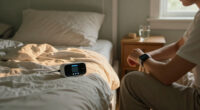
Place a light therapy lamp at the distance and angle its manufacturer specifies, with light reaching your eyes indirectly while you read, eat, or work. A desk or breakfast table often makes a morning routine easy to repeat; a bedside spot can work too if you sit upright, keep the lamp clear of bedding, and follow the same instructions. Morning use is common for winter-pattern SAD, but timing and session length depend on the device and your situation.
A lamp that looks bright across the room may deliver much less light to your eyes than it does up close. That small detail can turn a tidy bedside setup into a session that does not match the device instructions.
If you are choosing between your desk, breakfast table, and bedside, focus on three things: distance, angle, and routine. This guide explains how each spot can fit into your day, why morning use is common for some people, and which safety details deserve your attention.
You do not need a perfect-looking setup. You need a stable place you can use as directed without staring into the lamp or turning your morning into a chore. A few practical checks can help you find it.
Use the lamp’s stated distance and angle; lux ratings apply at a specified position and can drop as the lamp moves farther away.
A desk can pair with work or reading, while a breakfast table can attach the session to coffee or a meal.
A bedside setup may work if you sit upright, keep the lamp clear of bedding, and follow the device’s safety directions.
Morning use is common for winter-pattern SAD, but timing and session length vary by device, reason for use, and individual.
Seek medical advice before use if you have bipolar disorder, eye disease, or take medicine that increases light sensitivity.
Placement guide · Light therapy
Desk, Breakfast Table, or Bedside?
Choose a spot you can use consistently while following your lamp’s specified distance and angle. Let light reach your eyes indirectly as you read, eat, or work—without staring into the lamp.
Make correct placement part of your routine
No table is automatically best. Pick a stable place where your usual posture keeps your eyes in the intended light field, and where the session fits naturally into your morning.
Desk
A practical choice when you already read or work in the morning and can keep the lamp in a consistent position.
- Place it to the side and slightly above eye level if directed.
- Reduce screen glare; avoid facing away for the full session.
- Recheck distance if you move your chair or lamp.
Breakfast table
Eating or having coffee can provide a familiar cue that makes regular use easier to remember.
- Keep the lamp stable and at its specified distance.
- Check that ordinary movement keeps your eyes in the light field.
- Choose a spot where the lamp is unlikely to be bumped.
Bedside
This can fit a quiet bedroom routine, provided you sit upright and can maintain the instructed setup.
- Keep the device clear of bedding; follow electrical and heat guidance.
- Do not assume lying down or late-night use is suitable.
- Choose another spot if posture or timing is hard to maintain.
Bright to you does not mean close enough
Lux ratings apply at a stated position. As distance increases, light reaching your eyes can fall substantially. Use the manufacturer’s distance and angle; the bars below illustrate the direction of change, not measured lux values.
Illustrative light reaching eyes
Illustration only; actual output depends on the device, distance, angle, and light field. Recheck the setup after moving furniture or changing where you sit.
Four checks before you begin
The device instructions are the guide for distance, angle, session length, and safety. Common figures are not a universal prescription.
Choose a repeatable time
Morning use is common for winter-pattern SAD; timing varies by condition and individual.
Set distance and angle
Follow the manufacturer’s diagram. Aim for indirect light; do not stare at the lamp.
Keep your posture steady
Sit comfortably and keep your eyes within the intended light field while doing a quiet task.
Review how it feels
Notice sleep changes or discomfort and seek clinical advice if symptoms worsen.
Use a therapy device as directed
Light therapy is an established option for winter-pattern SAD. Evidence and protocols vary for other conditions, so persistent or severe symptoms deserve professional evaluation.
Before starting
Ask a healthcare professional first if you have bipolar disorder, eye disease, or take medicine that increases light sensitivity.
Choose the right device
Look for a lamp intended for light therapy and designed to filter UV light. A tanning lamp or ordinary bright bulb is not equivalent.
Watch for changes
Headache, eyestrain, nausea, agitation, and sleep changes can occur. Late-day exposure may disrupt sleep for some people.
Get help when needed
Stop and contact a healthcare professional if symptoms worsen, sleep is disrupted, or unusually elevated or irritable mood develops.
Use the spot you can return to consistently, with the lamp at its specified distance and angle. Convenience helps the habit; it does not replace correct positioning.
Start with distance and angle, not the furniture
Light therapy lamp placement starts with the distance and angle in the device instructions, because those details determine how much light reaches your eyes. Set the lamp where you can keep that position while sitting comfortably, and let the light enter your eyes indirectly. You usually do not need to stare at the lamp.
Many commonly used devices are designed to provide about 10,000 lux at a specified distance, often for a session around 20 to 30 minutes. Those figures are not a universal prescription. A different lamp may require a different distance or session length, and a clinician may recommend a different plan for your circumstances.
Imagine setting a compact panel on your desk and then sliding your chair back to make room for a notebook. The lamp still looks bright, but the increased distance may mean your eyes receive less light than the device’s stated setup assumes. Check the stated treatment distance again after moving furniture or changing where you sit.
Position the lamp to the side and slightly above eye level if its instructions allow. Adjust it until the light reaches your eyes without shining straight into them or reflecting sharply off your screen. Placement matters because light reaches the eyes, not because one type of table is inherently special.
Keep the lamp’s stated distance and angle in view when you choose the spot. Brightness you see across a room does not tell you the light level at your eyes.
Products Worth Considering

DEWALT 10-Inch Jobsite Table Saw with Rolling Stand (DWE7491RS)

DEWALT 15-Amp 8-1/4-Inch Compact Portable Jobsite Table Saw (DWE7485)

Makita SP6000J 6-1/2-Inch Plunge Circular Saw
As an affiliate, we earn on qualifying purchases.
Use your desk when work or reading makes consistency easy
Light therapy lamp placement at a desk works well when you can keep a repeatable distance and carry on with reading, breakfast, or quiet work. Put the lamp to one side, at the height and angle the instructions recommend, so light reaches your eyes while your gaze stays on your task. A desk can turn the session into part of an activity you already do.
For example, you might sit down at 7:30, open your calendar, and read through the morning’s notes while the lamp stays beside your monitor. If you spend the whole session facing away from it, though, the setup may not match the intended light field. Try moving the lamp to the other side or shifting your chair so you can face your screen and still receive the light as directed.
Watch for glare. A bright reflection on your monitor can make reading unpleasant, and a lamp that crowds your keyboard may leave you nudging it throughout the session. A little space between lamp and screen, plus a stable stand, can make a surprising difference.
The desk is less convenient if you work in a dim corner, share a workspace, or start the day somewhere else. Consistency beats a theoretically perfect spot when the practical alternative is forgetting the session. Keep the instructions nearby and make sure moving the lamp for work does not change its prescribed distance.
Choose the breakfast table when mornings already have a rhythm
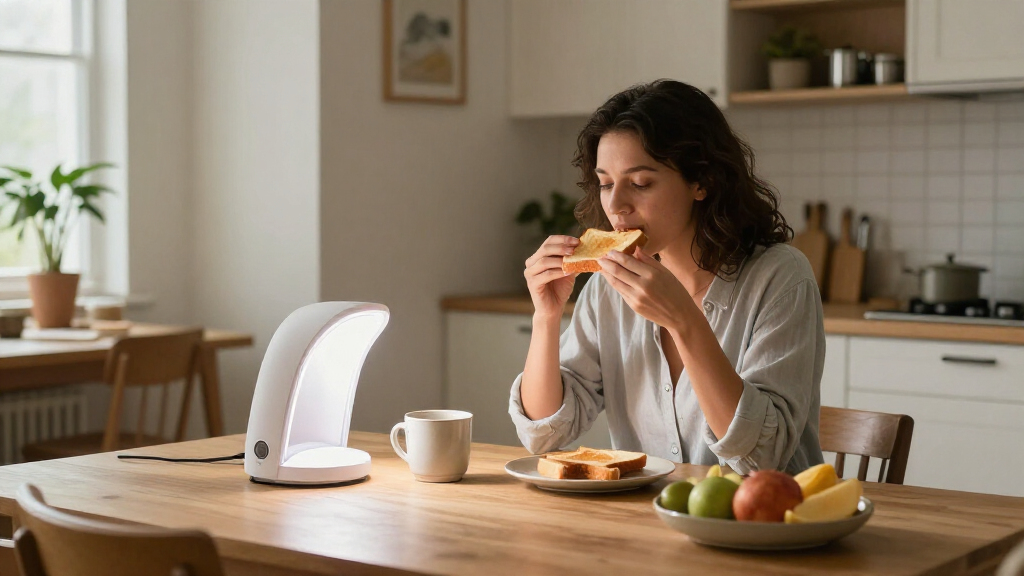
Light therapy lamp placement at a breakfast table can fit naturally into a morning routine, provided the lamp stays stable and at its instructed distance. This spot can be especially practical when you already sit for coffee, toast, or the day’s first quiet few minutes. The routine itself may make regular use easier to remember.
Consider someone who makes oatmeal, fills a mug, and checks the weather at the kitchen table before leaving for work. Placing the lamp at the recommended distance beside that chair could let them eat and read without setting aside a separate block of time. But if the table is narrow, a swinging arm or a restless child could bump the lamp, so choose a position where its base stays steady.
Normal head movements matter too. You might lean toward your bowl, turn to answer a family member, or stand to refill your cup. Those movements do not need to be frozen out of your morning, but check that your usual posture keeps your eyes within the lamp’s intended light field for the session.
A breakfast-table setup may not suit people who eat on the go, share a small kitchen, or prefer silence before company. You can use another stable surface nearby, such as a side table, as long as the distance and angle still follow the instructions. A familiar morning cue can help the habit stick; convenience alone does not replace correct positioning.
Use a bedside table only if you can sit safely and comfortably
A bedside light therapy lamp can suit someone who starts the morning in the bedroom, but its location does not mean you should use it lying down or just before sleep. Sit upright, check that the lamp remains at its recommended distance and angle, and keep it clear of bedding. A bedside table is a starting point, not a substitute for the device instructions.
Picture a person who wakes before the rest of the household and likes to read in a chair beside the bed. The lamp may fit that quiet routine if it rests on a stable surface and the light reaches the eyes as intended. By contrast, using it while propped against pillows can change the distance as you shift, while blankets may cover or crowd the device.
Use this quick setup check before your first session:
- Sit upright where you can keep a comfortable, repeatable posture.
- Place the lamp at the specified distance and angle, following the manufacturer’s diagram or instructions.
- Keep it clear of bedding and follow any electrical and heat-safety directions.
- Check the time of use against your plan; late-day light can disrupt sleep for some people.
Morning use is common for winter-pattern SAD, while timing can differ by condition and individual. If a bedside setup nudges you toward late-night use or makes it hard to keep the right position, another spot may fit better. Convenient does not always mean well placed.
Match the spot to your real routine, not an ideal morning
Choose the location that lets you follow the device directions and repeat your routine; a desk, breakfast table, or bedside can each work under the right conditions. Compare where you actually sit, how steady the surface is, and whether normal movement keeps the lamp at the intended distance. Your schedule and room layout matter as much as the furniture name.
| Spot | What can make it practical | What to check |
|---|---|---|
| Desk | Pairs with reading or work; distance can stay consistent. | Side placement, glare on screens, and whether your face stays oriented to the light field. |
| Breakfast table | Fits an existing morning meal or coffee routine. | A stable surface and a distance that holds while you eat, turn, or reach. |
| Bedside | Can suit an early bedroom routine. | Sitting upright, keeping bedding clear, and using it at a suitable time of day. |
For instance, a shift worker may have no breakfast-table routine because they leave for work before dawn, while a desk session during a later wake period is easier to repeat. Another person may start the day slowly in a bedroom chair. These are different lives, not failures to follow a single ideal routine.
Make your choice by testing the setup with the device instructions in hand. If the lamp’s light reaches your eyes at the right distance while you do something comfortable, and you can repeat that arrangement safely, the spot may suit you. Reliable use matters more than a photogenic setup.
Use the lamp at a time that fits your reason for using it
Light therapy timing depends on why you are using it, so do not assume that one schedule suits every person. Morning sessions are often recommended for winter-pattern seasonal affective disorder, while timing for circadian-rhythm concerns or other uses may differ. Follow a clinician’s advice when you have one, along with the instructions for your particular device.
Say you wake at 6:30 for a regular workday and use a lamp while reviewing a paper planner at the desk. A morning routine might fit your schedule. If you work nights and sleep during the day, the word “morning” may not describe your wake schedule, so a clinician can help you think through timing in relation to your routine.
Late-day exposure may disrupt sleep for some people. If you notice that you feel unusually alert at bedtime or your sleep timing shifts after starting sessions, keep a simple note of when you used the lamp and how your sleep felt. Do not respond by doubling the session or moving the lamp closer on your own.
Light therapy is an established treatment option for winter-pattern SAD, and research also continues into circadian-rhythm problems and other mood conditions. The evidence and protocols differ across uses. A device’s format does not establish its effect; compare its stated light output at the treatment distance, UV filtering, illuminated area, and clear instructions.
Check the device and your comfort before you settle into a habit
Use a device intended for light therapy, with instructions that state its output at a treatment distance and explain UV filtering. A tanning lamp or ordinary bright bulb is not equivalent. Before you build the lamp into your routine, check that you can position it safely and that the light feels comfortable during a brief, directed session.
For example, a compact panel might fit neatly on a crowded breakfast table, but the key questions are whether it supplies its stated output at the distance you can maintain and whether its illuminated area fits your posture. A sleek shape or a headline lux number alone cannot answer those questions. A light therapy lamp should generally be positioned as its manufacturer describes, rather than adjusted by guesswork.
Some users report headache, eyestrain, nausea, agitation, or changes in sleep. People with bipolar disorder, eye disease, or medicines that increase light sensitivity should seek medical advice before starting. If symptoms worsen, your sleep becomes disrupted, or you develop an unusually elevated or irritable mood, stop using the lamp and contact a healthcare professional.
Persistent or severe symptoms deserve an evaluation; a lamp is not a replacement for one. If you have a pre-existing condition or are unsure whether a medicine affects light sensitivity, ask a qualified professional about a suitable plan. Comfort is useful feedback, but it is not a diagnosis. Keep notes on timing and how you feel so you can describe the routine clearly if you seek guidance.
Make the routine easy to repeat, then review how it feels
The best placement is the one you can use consistently while following the device’s instructions. Pick one location, set it up at the stated distance, and pair the session with a routine you already have. A lamp beside your reading chair may work better than one on a desk you rarely use in the morning.
Try this practical sequence: choose a safe surface, position the lamp as directed, and decide what you will do during the session. You might eat breakfast, read a few pages, or sort your day’s tasks. Keep the session length tied to your device instructions or clinician’s recommendation instead of borrowing a duration from someone else’s lamp.
For a week, you could jot down when you used it, where you sat, and whether the distance stayed steady. Include simple observations such as “screen glare at desk” or “easy to remember with breakfast.” This can help you adjust the room setup without changing the exposure plan by guesswork.
If the arrangement feels awkward, move the lamp and recheck the specified distance and angle. The light should reach your eyes, while your attention stays on breakfast or a book. Small routine changes can make the setup easier to repeat, but results vary and should not be promised on a schedule. Bring persistent symptoms, worsening mood, or disrupted sleep to a healthcare professional.
Frequently Asked Questions
How far should a light therapy lamp be from my face?
Use the distance the manufacturer specifies for the intended light level. Moving a lamp farther away can substantially reduce the light reaching your eyes, even when it still looks bright.
Do I need to look directly at the lamp?
Usually, no. Position it so light reaches your eyes indirectly while you read, eat, or work, and follow the instructions for your device.
Is a desk, breakfast table, or bedside the best location?
Choose the safe, stable spot where you can keep the instructed distance and angle and use the lamp regularly. A desk or breakfast table may fit a morning routine; bedside use can work if you sit upright and keep the device clear of bedding.
How long should I use a light therapy lamp?
Session length depends on the lamp’s output, distance, and your plan. Many devices designed for about 10,000 lux at a specified distance are used for around 20 to 30 minutes, but follow your device instructions or a clinician’s recommendation.
Is morning better than evening?
Morning use is common for winter-pattern SAD, but timing depends on the reason for use and the individual. Evening light may disrupt sleep for some people, so ask a healthcare professional if you need a schedule tailored to your situation.
Can I use the lamp while eating, reading, or working?
Often, yes, if the lamp stays at the instructed distance and angle and light reaches your eyes as intended. Check for screen glare and notice whether your usual head movements take you outside the lamp’s intended light field.
Who should ask a healthcare professional before starting?
Ask for medical advice first if you have bipolar disorder, eye disease, or take medicine that increases light sensitivity. Seek help if symptoms worsen, sleep becomes disrupted, or you develop an unusually elevated or irritable mood.
Conclusion
Choose the spot where you can keep the lamp at its recommended distance and angle while doing something you already do. For many people, that means a desk or breakfast table; a bedside chair can work too when the setup stays safe and the timing suits their plan.
Let the light reach your eyes while your hands turn a page, lift a mug, or mark the day’s first note. That small, repeatable routine is a better guide than the prettiest corner of the room.