TL;DR
Open a free Amazon Business account
Business pricing, bulk buying and tax-exempt orders.
Create a free accountAs an affiliate, we earn on qualifying purchases.
Desk light boxes are designed for targeted bright-light therapy, delivering high lux at a close distance to support circadian rhythm. Floor lamps improve overall room brightness but rarely provide the therapeutic intensity needed for seasonal affective disorder. Choosing the right depends on your goal: targeted exposure or ambient illumination.
Winter mornings can feel like trying to wake up inside a dim cave. The gray sky outside and the dull glow of indoor lights make getting out of bed tougher than ever. Bright, effective lighting might seem like an obvious fix, but what kind of light really makes a difference?
Knowing whether a compact desk light box or a larger floor lamp suits your needs can change your mornings from sluggish to energized. This guide unpacks their differences—so you can choose the right tool to brighten your day and support your natural sleep rhythms during the dark months.
Always check the lux at the specified distance—brightness drops off quickly as you move away from a light box.
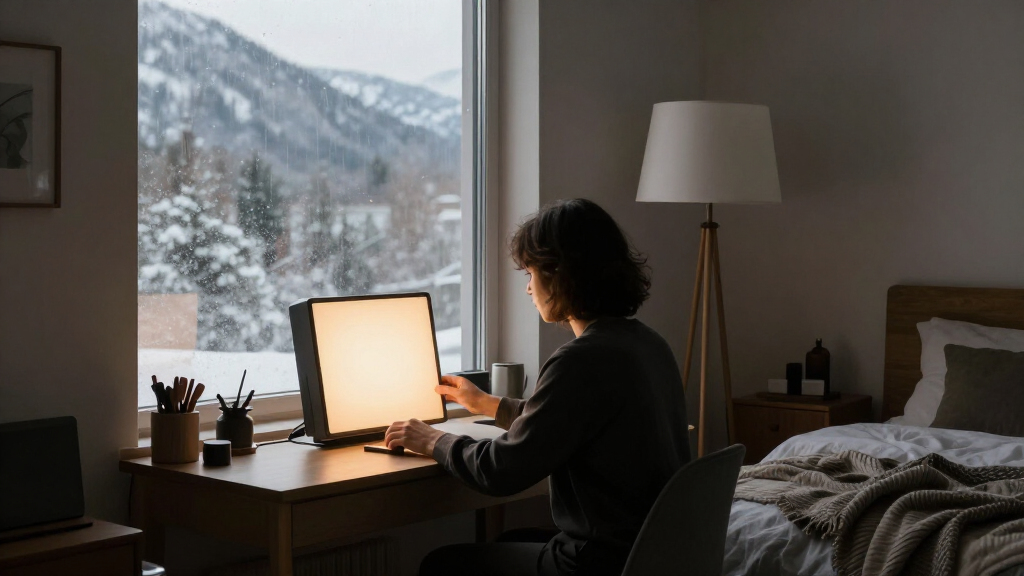
Use a light box first thing in the morning for 20–30 minutes to support your circadian rhythm during winter.
A standard floor lamp can brighten a room and improve mood but isn’t a substitute for targeted light therapy.
Position your device correctly: close enough, at eye level, but avoid staring directly into the light source.
Combine light therapy with outdoor time, exercise, and regular sleep patterns for best results.
Desk Light Boxes vs. Floor Lamps
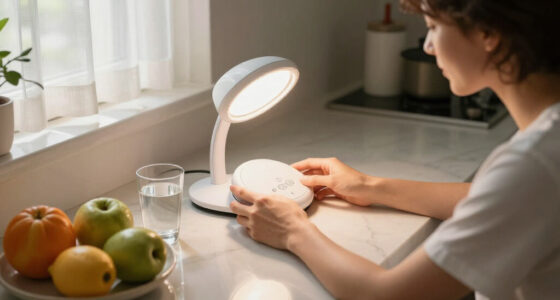
A desk light box delivers targeted, measured brightness to the eyes. A floor lamp spreads softer illumination through the room. Both can improve a dark morning—but they solve different problems.
Commonly specified for bright-light therapy at a stated close distance.
Often used soon after waking when the device provides 10,000 lux.
Choose measured eye-level exposure or comfortable room-wide light.
Same room. Different job.
The fixture’s size or apparent brightness does not determine whether it supports light therapy. What matters is verified illuminance at the user’s position.
Desk light box
Designed to place a high, measured dose of light near the eyes while you eat, read or work.
- Best for circadian support and structured morning sessions
- Compact, portable and easy to integrate at a desk
- Distance and angle strongly affect the delivered lux
- May feel glaring when the illuminated surface is small
Floor lamp
Designed to illuminate a larger area, improve visibility and make a dim winter room feel more inviting.
- Best for room brightness, ambience and prolonged comfort
- Broad diffusion can reduce perceived glare
- Ordinary models usually deliver far less light at the eyes
- Large therapeutic floor-standing models are a separate category
Brightness at your eyes matters most.
A “10,000 lux” claim is incomplete without its measurement distance. Move a light source farther away and exposure can fall sharply—even while the device still looks bright.
This is a simplified physical model, not a product measurement. Diffusers, optics and fixture shape alter real-world results. Follow the manufacturer’s stated distance.
How much visible light the lamp emits overall.
How much light reaches a surface or the user’s position.
Warm or cool appearance—not proof of therapeutic intensity.
Which light earns a place in your routine?
A standard floor lamp can help alertness and comfort, but a bright-looking room is not automatically a therapeutic setup.
| Factor | Desk light box | Floor lamp |
|---|---|---|
| Primary purpose | ✓ Targeted Bright-light therapy and circadian support |
~ Ambient General room or task illumination |
| Eye-level lux | ✓ Verified Often rated for 10,000 lux at a specified distance |
✗ Usually low Often insufficient unless specifically designed for therapy |
| Placement | Close, in front or slightly to one side | Farther away, often above or behind the user |
| Time requirement | Commonly 20–30 minutes at 10,000 lux | Ordinary models may never provide an equivalent dose |
| Comfort | ~ Position carefully Effective, but glare is possible |
✓ Softer Broad, diffused light suits prolonged use |
| Convenience | Compact, but requires staying within the rated range | Illuminates a larger space with less positioning effort |
| Best use | Structured exposure soon after waking | Ambience, visibility and general morning comfort |
| Main limitation | Benefits depend on correct distance, timing and consistency | Apparent brightness does not guarantee high lux at the eyes |
Exception: some therapeutic devices use a floor-standing format. Judge them by verified illuminance at your position, not by where they stand.
From fixture to morning effect
A useful setup is a connected system. Break any link—especially distance or timing—and the biological signal may be weaker than expected.
Choose the purpose
Targeted therapy or comfortable room illumination?
Set the distance
Use the range linked to the manufacturer’s lux rating.
Reach open eyes
Keep the light in your field of view without staring into it.
Use it early
Morning exposure can help shift the body clock earlier.
Repeat consistently
Regular sessions usually matter more than occasional long use.
A brighter morning without the glare.
Build exposure into an activity you already do—breakfast, reading or desk work—so consistency becomes easier.
Keep it slightly off-center
Place the light in front or slightly to the side, around eye level. Direct staring is unnecessary.
Start soon after waking
Late-day bright light may delay sleep by suppressing evening melatonin.
Prefer a broad diffuser
A larger illuminated surface can provide a wide field of light with less perceived glare.
Use both when useful
Try a light box during breakfast, then a floor lamp for comfortable room lighting afterward.
Consult a healthcare professional before light therapy if you have an eye condition, bipolar disorder, unusual light sensitivity or take photosensitizing medication. Stop and seek advice if you experience significant headaches, agitation or eye discomfort.
The bottom line
Choose a desk light box when you need measured, targeted morning exposure. Choose a floor lamp when you want a brighter, softer and more inviting room. For many winter routines, the strongest solution is layered: therapy first, ambience second.
Why Brightness at Your Eyes Matters More Than You Think
Bright-light therapy hinges on how much light actually reaches your eyes, not just how much the room seems lit. A light box designed for circadian support provides around 10,000 lux at a close distance, which is necessary to influence your body clock effectively. This high lux level is critical because it directly signals your brain to regulate melatonin production, helping you wake up more naturally and combat seasonal depression.
In contrast, a regular floor lamp, even if it appears bright, rarely hits those levels at eye level unless it’s carefully positioned very close or designed specifically for therapeutic use. The difference in lux levels at eye contact determines whether the light exposure will be effective or just ambient.
This distinction matters because many people underestimate how quickly light intensity diminishes with distance, leading to ineffective therapy sessions. If your goal is to reset your circadian rhythm or alleviate SAD symptoms, understanding and controlling lux exposure at eye level is essential for achieving meaningful results.
As an affiliate, we earn on qualifying purchases.
How to Pick the Right Light for Your Morning Routine
- Determine your main goal — Is it to beat winter blues or just brighten the room? Recognizing your primary motivation helps tailor your choice; targeted therapy requires high lux, while general mood enhancement can be achieved with softer lighting.
- Check the lux rating and measurement distance on products. A box claiming 10,000 lux at 20 centimeters is effective only if you sit within that range. If placed farther away, the lux level drops exponentially, reducing therapeutic benefits. Understanding this tradeoff helps prevent ineffective setups.
- Consider placement: For a light box, sit about 16-24 inches away, with your eyes level to the light, to maximize lux exposure. For a floor lamp, position it where it can illuminate your space without causing glare, but be aware that it’s unlikely to deliver therapeutic lux unless specifically designed for that purpose.
- Balance comfort and effectiveness: A small, intense light source might glare if poorly positioned, leading to discomfort or eye strain. Conversely, a larger diffuser offers softer, more comfortable light but may lack the intensity needed for therapy. Knowing this tradeoff helps you choose a solution that fits your routine without sacrificing comfort.
- Combine both: Use a light box during breakfast for targeted therapy, and a floor lamp for ambient lighting during other parts of the day. This layered approach maximizes benefits while maintaining a cozy home environment.
desk light box for seasonal affective disorder
As an affiliate, we earn on qualifying purchases.
As an affiliate, we earn on qualifying purchases.
Table: Comparing Desk Light Boxes and Floor Lamps for Winter Mornings
| Factor | Desk Light Box | Floor Lamp |
|---|---|---|
| Primary purpose | Bright-light therapy, circadian support | Room illumination, mood, general visibility |
| Lux at user’s position | 10,000 lux at ~20 cm — critical for effective therapy | Usually much lower unless specially designed; often insufficient for SAD treatment |
| Placement | Close, in front or slightly to side, ensuring maximum lux exposure | Farther, overhead or behind, mainly for ambient light |
| Time needed | 20–30 minutes at 10,000 lux for effective therapy | Less effective for therapy, primarily for creating mood or ambiance |
| Comfort | Can be glaring if poorly positioned, but effective when used correctly | Softer, more diffused light, more comfortable for prolonged use |
| Portability | Compact, easy to move, ideal for focused use | Larger, heavier, less portable but suitable for room-wide lighting |
adjustable floor lamp for living room
As an affiliate, we earn on qualifying purchases.
As an affiliate, we earn on qualifying purchases.
Why a Floor Lamp Can’t Replace a Light Box (But Still Helps)
A typical floor lamp isn’t designed for circadian therapy, which requires very high lux levels at eye level. While a bright floor lamp can improve room brightness and create a cozy atmosphere, it generally doesn’t deliver the intense, focused light needed to influence your biological clock effectively. This is because most standard lamps produce diffuse, lower-intensity light spread across a broad area, diluting the lux levels at any one point.
However, a well-chosen, high-quality, bright diffuser floor lamp can still contribute to your overall mood and comfort—especially if it’s used to create a warm, inviting space that encourages a positive start to your day. The key tradeoff is that while it enhances ambiance, it won’t replace the targeted, therapeutic effects of a dedicated light box, which is essential for those with SAD or significant circadian rhythm disruptions.
bright light therapy lamp for winter mornings
As an affiliate, we earn on qualifying purchases.
As an affiliate, we earn on qualifying purchases.
How to Use Light Therapy Safely and Effectively
- Always position your light box at the recommended distance—typically 16-24 inches—to ensure you receive the intended lux exposure. Sitting closer increases lux, but too close may cause glare or discomfort, so find a comfortable middle ground.
- Use it first thing in the morning, ideally within an hour of waking, for about 20–30 minutes. This timing aligns with your body’s natural circadian rhythm and helps reset it for the day ahead.
- Avoid looking directly into the LEDs; keep your gaze slightly downward or to the side to minimize glare and eye strain, which could otherwise lead to headaches or discomfort over time.
- Limit late-afternoon or evening use, as exposure to bright light at this time can suppress melatonin production and disrupt sleep patterns. Proper timing ensures you get the benefits without adverse effects.
- Consult a healthcare provider if you have eye conditions, bipolar disorder, or are taking photosensitive medications, as they can provide personalized advice and monitor your response.
Remember, consistency is key. Regular daily sessions embedded into your morning routine will yield the best results, much like establishing other healthy habits such as exercise or meal times.
Latest Innovations Making Light Therapy Easier and More Comfortable
Modern light boxes now leverage LED technology, which allows for thinner, lighter, and more energy-efficient devices. These innovations mean you can find compact models that fit easily on your desk or bedside table without sacrificing intensity. Many offer adjustable brightness and color temperature settings, enabling you to customize your light exposure for comfort and effectiveness—an important factor for long-term adherence.
Therapeutic floor lamps now integrate high-quality LEDs with verified lux levels, giving you room illumination that supports your mood while providing therapeutic doses of light when designed for that purpose. Smart controls, timers, and automatic scheduling further enhance user convenience, helping you maintain a consistent routine. Additionally, advances in reducing flicker and glare make these devices more comfortable for extended use, reducing eyestrain and headaches. These technological improvements aim to make light therapy more accessible, effective, and pleasant, encouraging sustained use during the dark months.
What to Expect from Bright Light Therapy in Winter
Morning bright-light therapy can significantly improve mood and help regulate your sleep-wake cycle during the dark winter months. While it’s not a cure-all, consistent use can make mornings feel less sluggish and reduce feelings of seasonal depression. The key is setting realistic expectations: some individuals notice immediate improvements, while others may need several weeks of regular exposure to see substantial benefits.
Understanding this helps prevent frustration and encourages patience. Combining light therapy with outdoor walks, physical activity, and good sleep hygiene creates a synergistic effect—each reinforcing the other to optimize your overall well-being. Think of light therapy as a vital component of a holistic approach rather than a standalone fix, emphasizing the importance of routines that support your circadian health and mood stability.
Safety First: Avoiding Common Pitfalls
Bright-light therapy is generally safe when used correctly, but improper use can lead to eyestrain, headaches, or sleep disturbances. Position your light box at the recommended distance—usually 16-24 inches—to ensure you receive the correct lux exposure without glare. Overexposure or inconsistent timing can diminish benefits or cause discomfort. If you have pre-existing eye conditions, bipolar disorder, or are on photosensitive medications, consult your healthcare provider before starting therapy to tailor the approach to your needs.
Never stare directly into the LEDs or use a tanning lamp as a substitute; these can cause harm and are not designed for circadian therapy. Overexposure late in the day can suppress melatonin and interfere with sleep quality. Always follow manufacturer instructions and listen to your body—if you experience persistent discomfort, seek professional advice. Prioritizing safety ensures you maximize benefits while minimizing risks.
The Checklist: What to Look for When Buying a Light Device
- Lux rating and measurement distance clearly stated — ensures you understand how close you need to be for effective therapy
- UV-free or UV-filtered light — protects your eyes and skin from harmful rays
- Large, even diffuser with minimal glare — improves comfort and reduces eyestrain
- Adjustable brightness and angle — allows customization for comfort and effectiveness
- Built-in timer and multiple brightness settings — helps enforce consistent routines
- Instructions for proper placement — ensures you use the device optimally
- Electrical safety certification — guarantees product safety and compliance
For floor lamps, prioritize high lumen output, indirect diffused light, adjustable height, and user-friendly controls. Both types should fit your space and comfort needs to support a seamless morning routine. Carefully selecting features that align with your goals ensures safe and effective use of your lighting devices.
Avoid These Common Mistakes When Using Light for Winter Mornings
Don’t compare lux claims without considering measurement distance—many manufacturers list lux at different distances, which can be misleading. A tiny, intense light source placed far away won’t deliver the same therapeutic effect as a properly positioned device. Think of it like trying to fill a room with a flashlight from across the hall; the intensity diminishes rapidly with distance.
Never stare directly into the LEDs, as this can cause discomfort and damage over time. Expecting a standard decorative lamp to provide therapeutic doses is a mistake; such lamps are not designed for that purpose. Inconsistent use, improper placement, or late-day exposure can undermine your routine, making it ineffective or even counterproductive. Be precise with your setup, patient with your routine, and consistent in your use to achieve the best results and avoid setbacks.
Frequently Asked Questions
Can a regular floor lamp help with seasonal affective disorder?
While a bright floor lamp can improve the room’s ambiance and alertness, it generally doesn’t deliver the high lux levels needed for effective light therapy. For SAD, a dedicated light box providing 10,000 lux is usually more effective.
How long should I use a light box each morning?
Most people start with 20–30 minutes of exposure within the first hour of waking. Consistency matters more than duration—regular daily use supports your body’s natural rhythms during winter.
Is blue light necessary for effective therapy?
No, broad-spectrum white light at the right intensity is sufficient. Strong blue light isn’t essential, and some research suggests that excessively blue-tinted devices aren’t necessarily more effective.
Can I use a light box if I wear glasses or contact lenses?
Yes, most users with glasses or contacts can still benefit. Just avoid staring directly into the LEDs and follow the recommended distance and duration to prevent discomfort.
When should I start using light therapy in the year?
Begin when mornings become dark and you notice mood or sleep issues. Many start in late autumn and continue through winter, adjusting as needed based on your response and seasonal pattern.
Conclusion
The right lighting in winter mornings isn’t just about brightness—it’s about precision and routine. A targeted light box can reset your internal clock, making mornings easier and lifting your mood. Meanwhile, a good floor lamp creates a welcoming space, easing the gloom without overpromising.
Pick your tool wisely, position it carefully, and stick with it. When combined with healthy habits, the right light can turn those dark mornings into a brighter start—literally and figuratively.
Flea & tick season Picks
flea and tick prevention
As an affiliate, we earn on qualifying purchases.