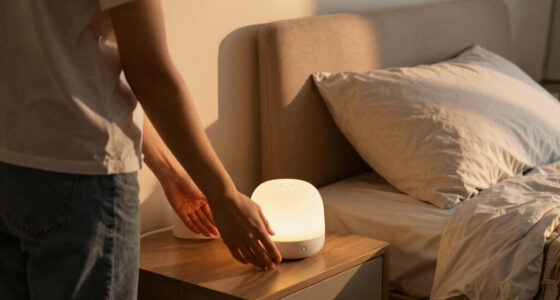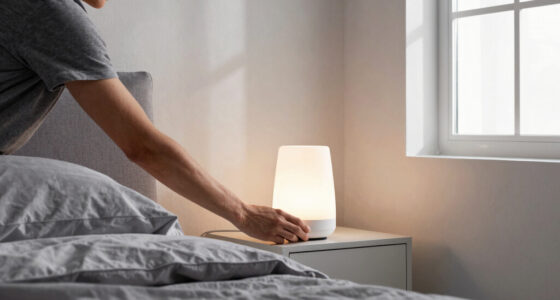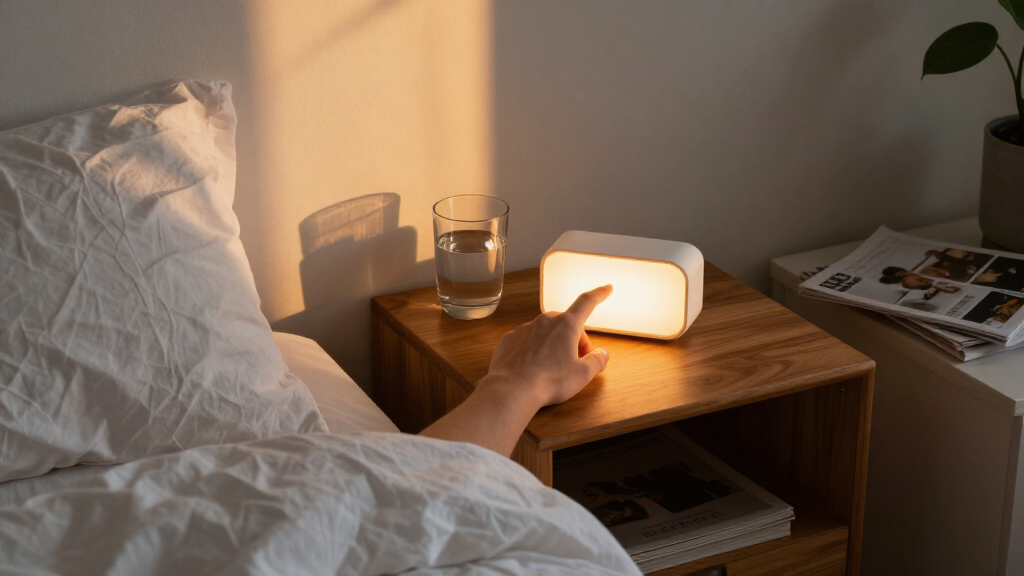

The choice between a wake-up light alarm clock and a traditional alarm clock is really about how you want mornings to begin: with a gradual change in light or with a sound that starts at a set time. Wake-up lights cost more and need a place where their light can reach you, but their sunrise-style routine may feel gentler than a sudden tone. Traditional clocks are usually cheaper, simpler, and dependable when all you need is an audible signal.

Get wellness gear delivered free with Prime
- Fast, free delivery on millions of items
- Prime Video, Amazon Music and more included
- Member-only deals all year
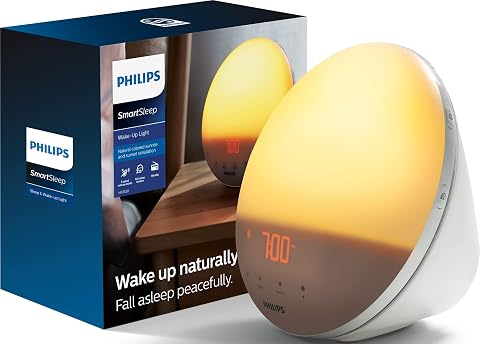
Philips SmartSleep Wake-Up Light with Sunrise and Sunset Simulation, 5 Natural Sounds, FM Radio, Reading Lamp, HF3520/60
- ✔ Model: HF3520/60
- ✔ Light routine: Sunrise and sunset simulation
- ✔ Wake-up sounds: 5 natural sounds

JALL Full-Screen Sunrise Alarm Clock with White Noise, FM Radio, and Bluetooth Speaker
- ✔ Sunrise duration: 10–60 minutes
- ✔ Alarms: Dual alarms
- ✔ Routines: Daily, weekday, or weekend options
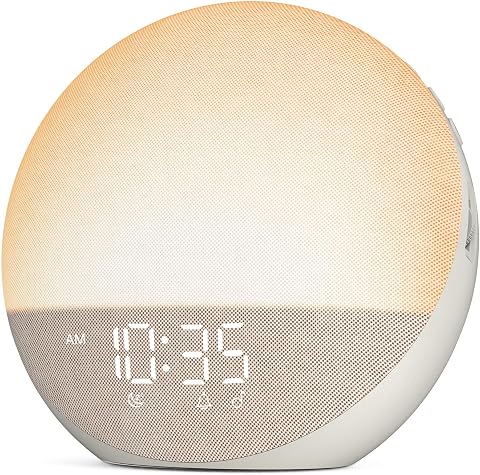
Odokee Sunrise Alarm Clock and White Noise Machine
- ✔ Sunrise simulation: Customizable 5–60 minutes
- ✔ Wake-up modes: 3
- ✔ Sleep sounds: 25
The light’s main advantage is the experience before the alarm, not a guarantee that you will wake more easily or feel better. Results depend on your room, sleep habits, and sensitivity to light. Choose a wake-up light if a gradual brightening appeals to you and you can position it near your bed. Choose a traditional clock if you need a clear sound, want fewer features, or share a room with someone who would be disturbed by light. The key tradeoff is a potentially softer wake-up routine versus simplicity, cost, and predictable sound.
At a Glance
| Criteria | Wake-up light alarm clock | Traditional alarm clock | Winner |
|---|---|---|---|
| Wake-up experience | Gradually brightens before the alarm; usually also includes sound. | Usually stays dark until its alarm sounds. | A |
| Reliability as an alert | Light may be insufficient on its own; sound can provide a backup. | A direct audible alert; audibility still depends on volume and the sleeper. | Depends |
| Light and sound controls | Often offers adjustable brightness, sunrise duration, and alarm sounds. | Typically offers basic time and sound controls, with variation by model. | A |
| Room placement and shared use | Needs a visible position near the bed; light may affect a partner. | Compact and flexible to position; sound may disturb a partner. | Depends |
| Ease of setup | More settings and features to configure. | Usually straightforward to set and use. | B |
| Price and value | Usually costs more; added value depends on using the light routine. | Often the lower-cost choice for a basic alarm. | B |
| Power and backup | Features and backup behavior vary by model; check power-loss and battery details. | Varies by model; some use batteries or backup power, others rely on mains electricity. | Depends |
Philips SmartSleep Wake-Up Light with Sunrise and Sunset Simulation, 5 Natural Sounds, FM Radio, Reading Lamp, HF3520/60
The Philips SmartSleep is the most focused choice for people who want a wake-up light to shape both ends of the day. Its sunrise and sunset simulation gives it an advantage over JALL and Odokee, whose supplied features emphasize waking rather than a matching simulated wind-down. For someone who wants the bedside light to be part of a repeatable evening routine as well as an alarm, that distinction matters more than a long list of entertainment extras.It also doubles as a reading lamp with 20 brightness settings, so the light has a useful role after the alarm is off. Tap snooze and an automatically dimming display keep the interface-oriented features practical rather than elaborate. Compared with the JALL, though, Philips offers substantially fewer listed sounds and does not specify dual alarms or Bluetooth audio. Odokee lists 25 sleep sounds and customizable wake-up modes, making it a stronger fit for sound variety.The main limitation is that Philips is a corded tabletop device, so placement depends on access to power and a suitable bedside surface. Its product information also does not state dimensions, which makes it harder to judge how much room it needs. We rank it first for the quality of the light routine, not for the largest feature count: buyers wanting dual schedules, lots of ambient sounds, or colorful lighting should look to JALL instead.
Pros:
- Simulates both sunrise and sunset
- Works as a reading lamp with 20 brightness settings
- Includes five natural wake-up sounds and FM radio
- Tap snooze and automatically dimming display
Cons:
- Requires corded electric power
- Only five wake-up sounds are specified, fewer than the 25 sleep sounds listed for JALL and Odokee
- Dimensions are not provided in the product information
Best for: People who want sunrise and sunset simulation in one bedside light, with adjustable brightness for reading.
Not ideal for: Buyers who need dual alarms, extensive sound choices, Bluetooth playback, or stated compact dimensions.
Bottom line: Choose Philips for the most complete sunrise-and-sunset light routine, but choose JALL or Odokee if sound variety and extra bedside features matter more.
“Choose Philips for the most complete sunrise-and-sunset light routine, but choose JALL or Odokee if sound variety and extra bedside features matter more.”
JALL Full-Screen Sunrise Alarm Clock with White Noise, FM Radio, and Bluetooth Speaker
JALL is the most versatile pick in this group if a wake-up light needs to do more than trigger a morning alarm. It combines a 10–60-minute sunrise window with dual alarms, snooze, and separate daily, weekday, or weekend routines. That schedule flexibility gives it an edge over both Philips and Odokee for couples or households that need more than one alarm pattern. The adjustable sunrise period also lets us tailor how gradually the light comes on.Its bedside range is unusually broad: 25 natural sounds and white noise, FM radio, Bluetooth audio through a 5W speaker, and 17 lighting effects. In comparison, Philips is the better-defined option for evening light routines and reading, while Odokee offers a similarly large sleep-sound selection but a more explicit 0–100% display brightness range. JALL’s L0 screen-blackout mode is useful for keeping the clock face dark, though it is not the same as a stated continuously adjustable display dimmer.The added flexibility has a cost in simplicity. JALL’s controls may take some setup, and Bluetooth time syncing requires a phone. Its lighting effects and audio choices are helpful if you will use them, but they may be unnecessary clutter for someone who only wants a gentle dawn alarm. We place it just behind Philips because it wins on breadth and scheduling, while Philips has the more distinctive sunrise-and-sunset role. Choose JALL when the extras are part of the plan, not merely because the feature list is longer.
Pros:
- Adjustable 10–60-minute sunrise simulation
- Dual alarms and daily, weekday, or weekend routines
- 25 natural sounds, white noise, and FM radio
- Bluetooth speaker and 17 lighting effects
Cons:
- Feature-rich controls may take some setup
- Bluetooth time syncing requires a phone
- Many light and audio options may be excessive for a basic alarm routine
Best for: Households or light sleepers who want dual alarm routines, many sound choices, radio, Bluetooth audio, and adjustable sunrise timing.
Not ideal for: Buyers seeking the simplest setup, a dedicated sunset routine, or a clock whose time can be synced without a phone.
Bottom line: JALL is our strongest all-rounder for flexible schedules and bedside extras, though Philips is a better match for sunrise-and-sunset use and Odokee for simpler display adjustment.
“JALL is our strongest all-rounder for flexible schedules and bedside extras, though Philips is a better match for sunrise-and-sunset use and Odokee for simpler display adjustment.”
Odokee Sunrise Alarm Clock and White Noise Machine
Odokee makes the most sense for buyers who want a capable sunrise alarm without needing a phone app or a long list of scheduling details. Its customizable 5–60-minute sunrise covers a broad range, and three wake-up modes let users choose how light and sound work together. The product information explicitly says no app is required, which keeps routine adjustments focused on the clock itself rather than an additional control system.For nighttime comfort, the standout is the 0–100% dimmable clock display. That range gives it a clearer advantage over JALL, which specifies an L0 blackout mode but not a continuous dimming range. Odokee also matches JALL’s listed 25 sleep sounds and adds a 5W stereo Bluetooth speaker, while Philips remains the better option for sunset simulation and a reading lamp. Its 12-color night light adds ambiance, but it is less expansive than JALL’s 17 lighting effects.There are information gaps to consider. The product description does not provide battery or power details, and it does not list app-based controls—an absence that will suit buyers who prefer direct operation but may disappoint anyone expecting remote management. The alarm sound selection is seven, fewer than its sleep-sound count, and the supplied details do not identify dual alarms or weekday-specific routines. We rank Odokee third for a narrower, simpler feature profile, not because its core sunrise controls are limited. It is the sensible choice when display dimming and straightforward operation matter more than a full household schedule system.
Pros:
- Customizable 5–60-minute sunrise and three wake-up modes
- 25 sleep sounds and seven alarm sounds
- Clock display dims from 0–100%
- 5W stereo Bluetooth speaker and 12-color night light
Cons:
- Power or battery details are not provided
- No app-based controls
- Dual alarms and weekday or weekend routines are not specified
Best for: Buyers who want adjustable sunrise timing, a very dimmable display, varied sleep sounds, and no app requirement.
Not ideal for: People who need documented dual alarms, weekday/weekend scheduling, sunset simulation, or clear power-source information before choosing.
Bottom line: Odokee is a strong fit for display-sensitive sleepers who want a customizable, app-free sunrise alarm, but JALL is more clearly equipped for multiple schedules and Philips adds sunset simulation.
“Odokee is a strong fit for display-sensitive sleepers who want a customizable, app-free sunrise alarm, but JALL is more clearly equipped for multiple schedules and Philips adds sunset simulation.”
As an Amazon Associate we earn from qualifying purchases.
Key Differences
The most meaningful distinction is that a wake-up light changes the room before the alarm sounds. For people who dislike an abrupt audio alert, that gradual brightening can make the routine more pleasant. It is not a substitute for a dependable sound alarm for everyone: a dim room, a covered lamp, or a sleeper who is not responsive to light can reduce its usefulness. Most wake-up lights include sound, so buyers can use both signals rather than relying on light alone.
A traditional clock wins on uncomplicated use and usually on cost. Set the time, select a sound, and there are fewer settings to manage. That simplicity can be a benefit, not a deficiency, if a clear audible cue is all you need. Wake-up lights justify their higher price when you will use the sunrise feature regularly and have a suitable bedside position. If the light routine will stay switched off, a more basic clock is better value.
Detailed Comparison
Wake-up experience (Wake-up light alarm clock wins — moderate)
A wake-up light wins for people who prefer a gradual start: it brightens ahead of the alarm, then can add sound at the chosen time. The advantage is moderate because personal response varies, and a light-based routine does not guarantee a more comfortable morning. A traditional clock offers a more direct cue: it sounds at the set time, without a light ramp. Choose based on whether the gradual change sounds appealing, not on a promise that one device will fix sleepiness.
Reliability as an alert (major difference)
Neither type is automatically more reliable for every sleeper. A traditional clock’s sound is direct, but it may not wake someone who sleeps through alarms or has difficulty hearing it. A wake-up light adds a visual cue, yet its brightness may not be enough to wake a deep sleeper, especially if the clock is poorly positioned. The practical winner depends on how you respond to sound and light. If missing the alarm carries serious consequences, prioritize a loud, adjustable sound and a reliable backup rather than trusting light alone.
Light and sound controls (Wake-up light alarm clock wins — moderate)
Wake-up lights generally win on control variety. Depending on the model, users can adjust brightness, how long the light takes to ramp up, and the alarm sound. That flexibility is useful if you want to tune the routine, but it also creates more settings to manage. Traditional clocks typically keep controls simpler, though exact features vary. The gap is moderate for people who will personalize the routine and minor for anyone who plans to set one sound and leave it alone.
There is no universal winner. A wake-up light needs a clear line of sight and a location close enough for its glow to reach you; placement also matters if someone else sleeps in the room. A traditional clock is easier to position because it does not need to illuminate the sleeper, but its alarm sound can still disturb a partner. A light may suit separate sleeping arrangements or a solo sleeper particularly well. For shared rooms, compare how each person responds to light and sound before paying extra for a sunrise feature.
Ease of setup (Traditional alarm clock wins — moderate)
A traditional alarm clock usually wins, by a minor-to-moderate margin: the main tasks are setting the time and alarm. A wake-up light may require decisions about brightness, ramp duration, and sound, as well as a useful position in the room. Those settings can make the experience more tailored once chosen, but they are unnecessary work for someone who wants a basic alert. Buyers who enjoy adjusting a morning routine may not see the extra setup as a drawback.
Price and value (Traditional alarm clock wins — moderate)
A traditional clock usually wins on purchase price, while a wake-up light can offer better personal value if its gradual lighting is a feature you will use every day. The difference in value is therefore moderate rather than automatic: paying extra for an unused light routine is poor value, while a buyer who genuinely prefers it may find the added cost worthwhile. Compare the actual models, since prices and included functions vary. Do not pay a premium based on wellness claims alone.
Power and backup (major difference)
This is model-dependent, so neither category wins by default. Some clocks have battery operation or backup features; others may lose settings or stop sounding during a power failure. Before buying either type, check whether batteries are included, whether the alarm still functions without mains power, and what happens after an outage. The practical difference can be major if you depend on the clock for work or travel, even though it is not inherent to the light-versus-sound distinction.
Wake-up light alarm clock: Pros and Cons
Pros:
- Gradual light provides an alternative to an alarm that begins with sound.
- Often combines light and audio cues in one bedside device.
- May allow adjustment of brightness, ramp duration, and alarm sounds.
Cons:
- Usually costs more than a basic traditional clock.
- Needs suitable placement and may disturb a partner with its light.
- Light alone may not wake every sleeper, so buyers should check sound options.
Traditional alarm clock: Pros and Cons
Pros:
- Usually cheaper when the main need is a basic alarm.
- Simple controls make it quick to set and use.
- Does not require a clear line of sight or a sunrise-light routine.
Cons:
- Typically gives an abrupt sound cue rather than gradual brightening.
- May offer fewer ways to tailor the waking experience.
- A loud alarm can disturb a partner even if the clock itself is compact.
Who Should Choose What
Choose Wake-up light alarm clock if:
- You dislike waking to a sudden sound and want to try gradual brightening.
- You can place the device where its light reaches you and will use the light feature regularly.
- You want a combined light-and-sound alarm with adjustable routines.
Choose Traditional alarm clock if:
- You mainly need a dependable audible alarm and do not want a light routine.
- You prefer simple controls and a lower-cost purchase.
- Your room layout or sleeping arrangement makes bedside light impractical.
Skip both if: If you routinely sleep through alarms or need a high-assurance wake-up system, look for a model or combination with a verified loud alert, suitable backup power, and an additional alert method that matches your needs.
Value for Money
A wake-up light is worth paying more for only when the gradual brightening is a feature you expect to use consistently. Its extra cost buys a different morning routine and often more controls; it does not guarantee better sleep or make every user easier to wake. If you want to experiment with a gentler start, compare the light’s brightness settings, ramp options, sound alarm, and power backup before choosing a model.
A traditional clock is the better value for buyers who just need a time display and audible alarm. Its lower price is not a compromise if the extra light features would go unused. For reliability-focused buyers, spend according to the alarm’s sound and power backup rather than its category name: a wake-up light with a weak audible alarm may be a worse purchase than a simpler clock that meets your alert needs.
Final Verdict
For most people who only need to wake at a set time, choose a traditional alarm clock: it is usually cheaper, simpler, and directly suited to the job. Choose a wake-up light if you specifically want gradual brightening, can position it well, and are comfortable paying more for a routine you will use. The biggest deciding factor is not which category promises a better morning; it is whether light before the alarm is valuable to you. If the answer is no, keep the money and buy a straightforward clock. If you are a deep sleeper, check the sound and backup features first, and do not rely on light alone.
Frequently Asked Questions
Does a wake-up light replace a regular alarm sound?
Many wake-up lights include an audible alarm, but the light itself may not be enough to wake every sleeper. Check the sound options and volume before buying, and treat the light as an additional cue if you need a reliable audible alert.
Is a wake-up light worth the higher price?
It can be, if you prefer gradual brightening and expect to use that feature often. If you only want a sound at a set time, a traditional clock is usually better value. Compare the actual features rather than paying extra for broad claims about sleep or mood.
Which type is better for a deep sleeper?
Neither type is automatically better. A deep sleeper may need a loud, adjustable sound, and a wake-up light should be treated as a possible second cue rather than a guaranteed solution. Look for model-specific alarm and backup details.
Can a wake-up light disturb someone sleeping beside me?
Yes. Its brightness may affect a partner, depending on room layout and sensitivity to light. A traditional clock avoids the light ramp but can still disturb someone with its sound. Consider who shares the room and which cue is less disruptive.