
TL;DR

Get wellness gear delivered free with Prime
- Fast, free delivery on millions of items
- Prime Video, Amazon Music and more included
- Member-only deals all year
The best volume for a white noise machine is high enough to mask disruptive sounds but not so loud as to cause discomfort or harm. Using recent tech, you can customize settings to suit your environment and personal needs, ensuring better sleep safety and effectiveness.
Ever wake up in the middle of the night, annoyed by a car horn or barking dog? A white noise machine can drown out those intrusive sounds. But if the volume’s too high, it could disturb your sleep or even harm your hearing. Choosing the right volume isn’t just about turning the knob up or down—it’s about finding that sweet spot where the sound is effective, comfortable, and safe.
In this guide, you’ll learn how to determine the best volume for your needs. Whether you’re a light sleeper, a shift worker, or sharing a room, understanding how to set the right sound level can make a real difference in your sleep quality and peace of mind.
Keep your white noise volume between 50-70 dB for effective masking without risking hearing health.
Use modern features like auto-volume adjustment and limiters to customize and protect your hearing.
Adjust the volume based on room size, noise environment, and time of day for best results.
Prolonged exposure to sounds above 85 dB can cause hearing damage—stay below this threshold.
Test and tweak your settings regularly to find the perfect balance of comfort and effectiveness.
What’s the ideal volume range for white noise to block out noise without causing discomfort?
White noise should be loud enough to mask disruptive sounds—like traffic, snoring, or a dripping faucet—without overwhelming your ears. Research suggests keeping it between 50-70 decibels (dB). That’s roughly the volume of a soft conversation or background music.
Choosing this range is crucial because it balances effectiveness with safety. If the volume is too low, it won’t adequately block out external noises, leading to fragmented sleep. Conversely, if it’s too high, it can cause ear fatigue or even damage over time. For example, setting your device at around 60 dB can effectively drown out a neighbor’s lawn mower at 85 dB, but if you crank it to 85 dB or higher, you risk hearing damage, especially with prolonged exposure. The goal is to find that sweet spot where the noise is effective but not harmful, which requires understanding your environment and personal comfort.
white noise machine with volume limiter
As an affiliate, we earn on qualifying purchases.
As an affiliate, we earn on qualifying purchases.
How to tell if your white noise volume is too loud, too soft, or just right
- Start at a lower setting and gradually increase until you notice that external sounds are effectively masked—this indicates sufficient volume.
- Pay attention to your comfort: if you experience ringing, ear fatigue, or a sensation of fullness, it’s a sign the volume may be too high, risking long-term hearing health.
- Check if you can still perceive ambient noises—if they are clearly audible, your volume may be too low for effective masking.
- Adjust the volume based on your surroundings: a noisy street might require a slightly higher setting than a quiet bedroom, but always stay within safe limits.
- Observe how your ears feel over time. If you notice discomfort after prolonged listening, lower the volume to prevent damage.
For example, in a bustling city apartment, setting your machine at 60-65 dB can block out street noise effectively without strain. In a quiet rural setting, 50-55 dB might be adequate. Remember, the key is to find a level that effectively masks noise without causing discomfort or damage over time. Regularly reassessing your volume setting helps ensure ongoing safety and comfort, especially if environmental conditions change.
adjustable white noise machine for sleep
As an affiliate, we earn on qualifying purchases.
As an affiliate, we earn on qualifying purchases.
Compare different settings: low, medium, high — which really works?
| Setting | Volume Range (dB) | Best For |
|---|---|---|
| Low | 40-55 | Light sleepers, quiet rooms, children |
| Medium | 55-70 | Average noise environments, general use |
| High | 70-85 | Noisy environments, heavy sleepers, shared rooms |
Choosing between these settings involves understanding the trade-offs. A low setting (40-55 dB) is gentle and suitable for sensitive ears or quiet environments, but it may not provide enough masking in very noisy areas. Medium (55-70 dB) offers a balance, effectively blocking moderate noise while remaining safe for most users. High (70-85 dB) can be highly effective in very noisy environments but comes with increased risk of ear fatigue or damage if used long-term or at maximum volume. Therefore, selecting the right setting depends on your specific needs and environment, always prioritizing safety. Remember, higher isn’t always better—overly loud settings can disturb sleep quality and harm your hearing, especially if used continuously.
white noise machine with auto volume control
As an affiliate, we earn on qualifying purchases.
As an affiliate, we earn on qualifying purchases.
How modern features help you set the perfect volume without fuss
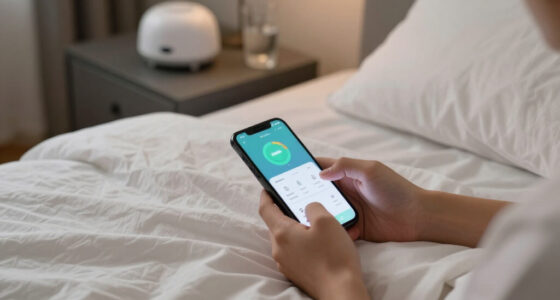
Many white noise machines now come with smart features that make setting the right volume easy. Devices with auto-volume adjustment can sense ambient noise and adapt in real time, which is especially useful in fluctuating environments. For example, if your partner starts snoring louder, the machine might automatically bump up the volume slightly—then dial back when the noise stops—maintaining consistent masking without manual adjustments. Some models include volume limiters, preventing accidental loud settings that could harm your ears. Others let you set custom timers or schedules, so your sound levels are tailored to different parts of your sleep routine. These features not only simplify the process but also ensure your volume remains within safe, effective ranges, reducing the risk of overexposure or discomfort. By leveraging modern technology, you get a more reliable and safer sleep environment, adapting effortlessly to your needs.
As an affiliate, we earn on qualifying purchases.
Safety tips: How loud is too loud for prolonged use?
White noise machines should stay below 70 dB for extended periods to protect your hearing health. Listening at or above 85 dB over hours can cause irreversible damage, as consistent exposure to loud sounds damages the delicate hair cells in your inner ear. For example, if your device’s maximum volume is near 80 dB, running it at full blast for many hours could gradually impair your hearing. Using the device’s volume limiter feature or setting the volume a few notches below maximum can mitigate this risk. Remember, your ears do not get a break during sleep; prolonged exposure to high volumes increases the likelihood of noise-induced hearing loss. Moderating your volume isn’t just about comfort—it’s a crucial step in preventing long-term hearing damage, ensuring you can enjoy peaceful sleep without compromising your auditory health.
Adjusting volume for different rooms and times of day
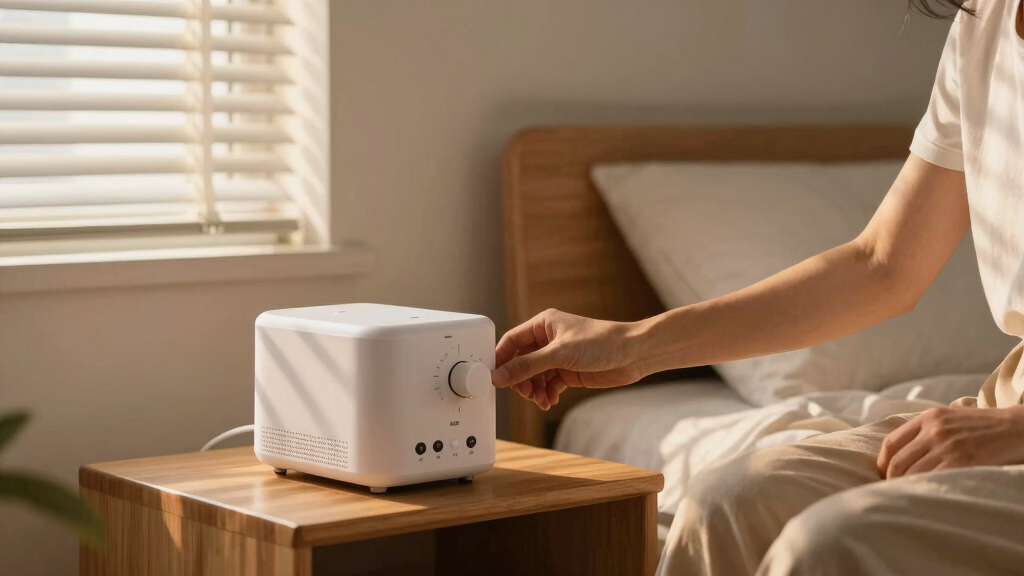
The size and acoustics of your room greatly influence how loud your white noise needs to be. A large, open space may require a slightly higher volume than a small, carpeted bedroom because sound dissipates more in bigger areas. For example, a big living room might need 70 dB to effectively mask sounds, while a cozy bedroom might do just fine at 55-60 dB. Similarly, your needs change throughout the day. During daytime naps, a softer setting might be enough, but for noisy nights, increasing the volume slightly can help maintain restful sleep—just be mindful of safety thresholds. Using your device’s adjustable controls and adding sound-absorbing materials like curtains or rugs can reduce the need for higher volumes, minimizing potential risks. Understanding how room characteristics and time influence your ideal volume helps tailor your environment for optimal sleep quality and safety.
Frequently Asked Questions
What is the safest volume level for a white noise machine?
The safest volume level is typically below 70 dB for prolonged use. Levels above 85 dB can risk hearing damage over time. Using the device’s volume limiter and regularly checking the sound helps maintain safety.How do I know if the volume is too loud or too soft?
If the noise causes ringing or ear fatigue, it’s probably too loud. If you can hear background noises, it’s likely too soft. Adjust gradually until you find a comfortable, effective level for your environment.Can setting the volume too high damage my hearing?
Yes, especially if sustained over hours. Listening at or above 85 dB can harm your ears. Keep the volume below 70 dB for safe, long-term use, and take breaks if needed.Should I change the volume based on time of day or room conditions?
Absolutely. You might need a higher volume in a noisy daytime environment and a softer setting when sleeping in a quiet room. Adjustments ensure comfort and effectiveness without risking safety.Are there recommended settings for different ages or environments?
Yes. Children and seniors often prefer lower volumes around 45-55 dB, while adults in noisy areas may need 60-70 dB. Always tailor based on individual sensitivity and surroundings.Conclusion
Setting the right volume for your white noise machine isn’t just about comfort—it’s a safety measure, too. Think of it as tuning a musical instrument: too loud, and it’s harsh; too soft, and it’s ineffective. Aim for that gentle hum that masks noise but stays easy on your ears.
With the right balance, you’ll sleep more soundly and wake up refreshed. Remember, a little adjustment goes a long way—your ideal volume might change with seasons, room changes, or your mood. Keep experimenting, and your sleep quality will thank you.
Cold & flu season Picks
humidifiers
As an affiliate, we earn on qualifying purchases.